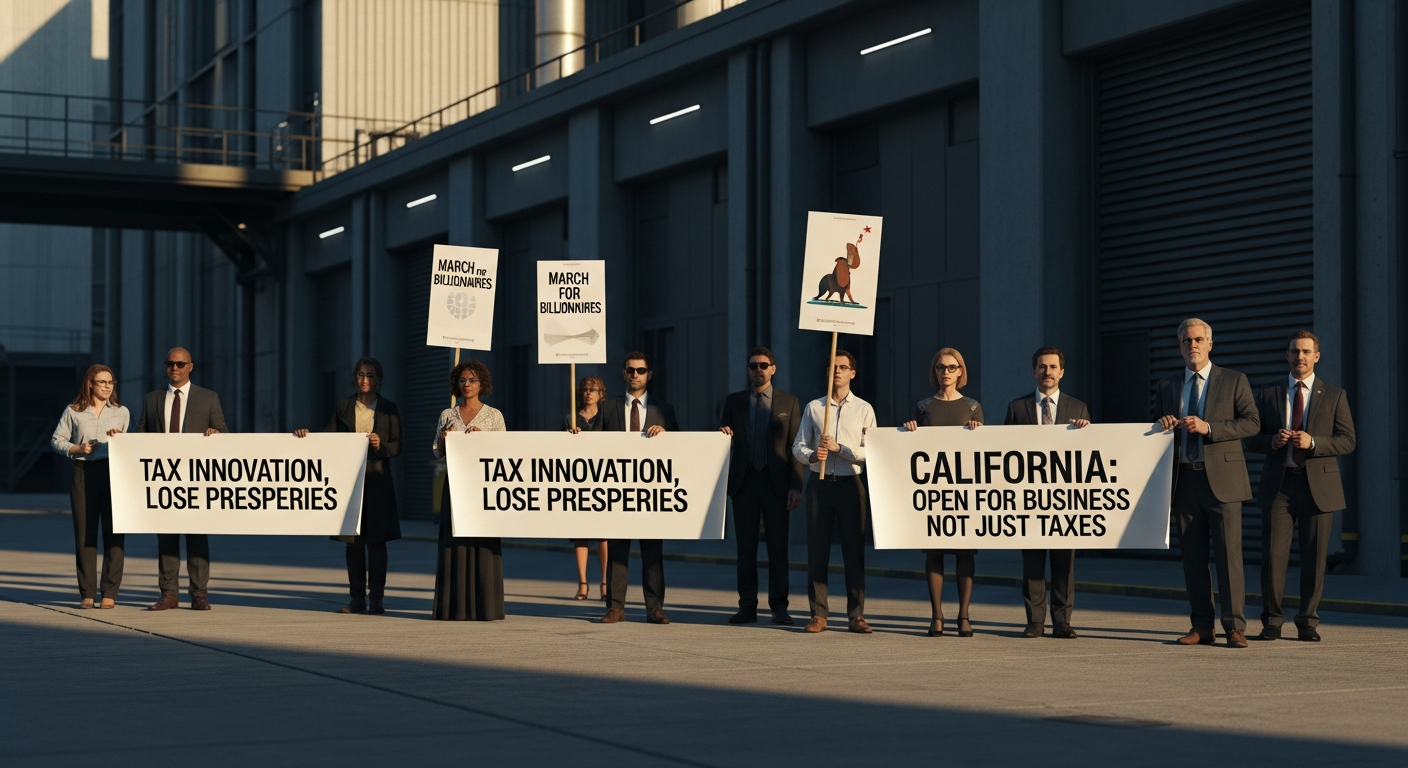
The notion of a 'March for Billionaires' initially might elicit a chuckle, or perhaps even derision. However, beneath the provocative headline lies a serious economic statement. An AI startup founder's plan to lead a protest against California's proposed wealth tax is not merely a PR stunt; it is a calculated effort to highlight the potential disincentives for wealth creation, innovation, and capital retention in a state that prides itself on being a global hub for technological progress and entrepreneurship.

Key Takeaways:
-
Economic Disincentives: Wealth taxes can discourage entrepreneurial risk-taking and investment, leading to capital flight and reduced economic dynamism.
-
Impact on Innovation: Policies that penalize wealth accumulation may inadvertently stifle the very innovation that drives job creation and technological advancement.
-
Broader Implications: California's approach could set a precedent, influencing other states or nations contemplating similar wealth levies, impacting global investment patterns.
-
Voice for Stakeholders: The protest serves as a crucial, albeit unconventional, platform for a significant economic stakeholder group to voice their concerns directly to policymakers.
Main Analysis: The Genesis of Dissent
California's legislative landscape has long been a battleground for progressive taxation, and the proposed wealth tax is its latest front. Targeting high-net-worth individuals, the tax aims to address perceived inequalities and fund public services. However, from the perspective of many entrepreneurs and investors, such measures threaten the very ecosystem that generates wealth and opportunity. The AI startup founder leading this march, whose identity has gained prominence through this initiative, argues that the tax doesn't just impact the rich; it impacts everyone who benefits from the jobs, technologies, and philanthropic endeavours stemming from their success.
Economic Implications and Capital Flight
One of the most significant concerns raised by opponents of wealth taxes is the potential for capital flight. Wealth, particularly liquid assets, is highly mobile. Entrepreneurs and investors, faced with what they perceive as punitive taxation, might choose to relocate their businesses, their investments, and ultimately, their wealth, to more tax-favourable jurisdictions. This isn't just about billionaires moving their mansions; it's about the exodus of intellectual capital, investment funds, and future job-creating enterprises. For a state like California, heavily reliant on its tech sector and a vibrant startup culture, this risk is particularly acute.

Innovation and Risk-Taking: A Delicate Balance
Innovation is inherently risky. Startup founders often invest years, sometimes decades, of their lives and personal fortunes into ventures with no guarantee of success. The allure of substantial returns is a primary motivator. When a significant portion of that potential return is subject to additional taxation, especially on accumulated wealth rather than just income, the incentive structure shifts. The 'March for Billionaires' aims to articulate that such policies could deter future high-risk, high-reward ventures, ultimately slowing down the pace of technological progress and economic growth. It's a call to understand the delicate balance between social welfare goals and the need to foster an environment conducive to groundbreaking innovation.
The Broader Narrative of Fairness
While often portrayed as a move towards greater fairness, wealth taxes ignite a broader debate on what constitutes 'fair' taxation. Proponents argue that the wealthy can afford to contribute more. Opponents, including the founder organising this march, contend that taxing wealth repeatedly, often already subjected to income or capital gains taxes, represents an unfair double-taxation that punishes success and disincentivizes productive investment. This march seeks to reframe the narrative, arguing for a tax system that supports wealth creation and retention within the state, rather than one that inadvertently pushes it away.
Public Sentiment: A Divided but Discerning Discourse
The public discourse around wealth taxes is often polarized. However, a significant segment, particularly within the business and tech communities, expresses support for the concerns raised by the 'March for Billionaires'.
-
"It's not about protecting the rich, it's about protecting the future of our economy. If you tax success out of the state, who's left to create jobs?" – Tech CEO, Silicon Valley.
-
"This isn't just a march for billionaires; it's a march for economic common sense. Punitive taxes scare away the very people who build industries." – Economic Analyst, Los Angeles.
-
"While the optics are challenging, the core message about capital flight and disincentivizing innovation is valid and deserves consideration." – Investment Fund Manager, San Francisco.
Conclusion
The 'March for Billionaires' is more than just a peculiar protest; it is a calculated, high-profile demonstration against a policy perceived as detrimental to California's economic vitality. By taking to the streets, the founder is forcing a conversation that transcends the usual political rhetoric, bringing to the forefront the tangible economic consequences of wealth taxation. For policymakers, this march serves as an unambiguous signal: the architects of innovation and drivers of significant investment are paying close attention, and they are prepared to act if they believe policies undermine the foundational principles of economic growth and opportunity. Ignoring such a potent message would be to ignore the very forces that power the modern economy. The 'Rusty Tablet' maintains that a balanced approach, fostering both social equity and economic dynamism, is paramount for sustainable prosperity.