Bihar's Fiscal Future: Navigating Moderate Growth and Central Dependence
The financial blueprint for Bihar's fiscal year 2026-27 is shaping up to be a cautious affair, with projected outlays hinting at a moderate increase. According to officials familiar with the discussions, the state budget, expected to be placed in the assembly during the upcoming session, is likely to hover between ₹3.20 lakh crore and ₹3.24 lakh crore. This represents a modest jump of 3 to 5 percent from the current fiscal year's outlay of ₹3.17 lakh crore, a growth trajectory that raises questions about the state's capacity for independent fiscal expansion.
Key Takeaways:
-
Modest Budget Increase: Bihar's 2026-27 budget is projected to rise moderately to ₹3.20-₹3.24 lakh crore, a 3-5% increase from the current ₹3.17 lakh crore.
-
Critical Central Dependency: The final budget size is heavily contingent on central devolutions and grants announced in the Union budget, highlighting the state's reliance on Delhi.
-
Pending Devolutions: For 2025-26, Bihar was promised ₹1.43 lakh crore in central devolution, with ₹1.15 lakh crore received and ₹28,000 crore still expected.
-
New State Initiatives: The budget must accommodate increased allowances for old age pensions, widows, and the ₹10,000 assistance under the Mukhyamantri Mahila Rojgaar Yojana (MMRY).
-
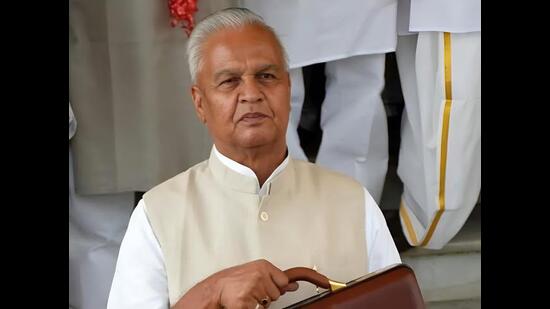
Strategic Demands: State Finance Minister Bijendra Prasad Yadav will press for higher central devolutions, support for state schemes, pending MGNREGA arrears, and flood control funds at the January 10 meeting with Union Finance Minister Nirmala Sitharaman.
-
Tight Timeline: The state budget is slated for finalisation by February 20, aligning with the assessment of central fund provisions.
A Modest Ascent Amidst Rising Expectations
The anticipated 3-5 percent increase in Bihar's budget outlay, from ₹3.17 lakh crore to a range of ₹3.20 lakh crore to ₹3.24 lakh crore, paints a picture of controlled, rather than expansive, growth. This incremental rise comes at a time when public expectations for development and welfare schemes are consistently high. Officials suggest that this moderate adjustment is a pragmatic response to financial realities, particularly the critical role of central transfers. The focus, it seems, is on ensuring stability and continuity rather than embarking on a significantly bolder fiscal journey.
The Delhi Nexus: Awaiting Central Devolutions
The most significant factor influencing Bihar's budget size, as finance department officials candidly admit, is the quantum of central devolutions and grants. "The budget size of the coming fiscal year would depend much on the central devolutions and grants to be announced by the Centre in the Union budget to be placed soon," an official stated. This reliance is evident in the current fiscal year (2025-26), where Bihar was promised ₹1.43 lakh crore in central devolution, of which ₹1.15 lakh crore has been received, with an additional ₹28,000 crore anticipated by March.
This dependency places the spotlight squarely on the upcoming meeting of state finance ministers on January 10, where Bihar's Finance Minister, Bijendra Prasad Yadav, is scheduled to meet Union Finance Minister Nirmala Sitharaman. Yadav is expected to advocate strenuously for higher central devolutions, direct monetary assistance for state schemes, and the settlement of pending arrears under MGNREGA for material costs and wages. Demands for flood control measures and management for chronically flood-affected North Bihar are also high on the agenda. The outcome of this meeting, and subsequently the Union Budget, will directly shape Bihar's financial latitude.
Balancing Aspirations: State Schemes and Fiscal Realities
Bihar's government has recently embarked on several initiatives designed to enhance social welfare and empower its citizens. These include increased allowance money for schemes like old age pensions and widows, alongside the notable Mukhyamin Mahila Rojgaar Yojana (MMRY), which provides initial monetary assistance of ₹10,000. These programmes, while vital, place additional demands on state coffers. The second supplementary budget, placed in December 2025 by the new NDA government, had an outlay of ₹91,717 crore, with approximately ₹21,000 crore specifically provisioned for women empowerment, including the MMRY.
The finance department's ongoing assessment of fund availability is, therefore, a crucial exercise. Allocations for key departments such as rural development, education, health, and agriculture will be made after a meticulous evaluation of resources. Departments have already been asked to submit proposals for fund allocation, even for a third supplementary budget, underscoring the dynamic and often responsive nature of state financial planning.
The Road Ahead: Challenges and Demands
The finalisation of Bihar's budget by February 20 is a tight deadline, necessitating swift clarity on central devolutions. While officials anticipate only a moderate increase in the budget size, the state's aspirations extend beyond mere fiscal continuity. The perennial flood situation in North Bihar, for instance, requires substantial and sustained investment in flood control and management – an area where central support is desperately needed. The outstanding MGNREGA arrears also represent a significant fiscal burden that, if resolved, could free up crucial state resources.
Public Sentiment
Among officials, there's a prevailing sentiment of cautious pragmatism. While acknowledging the need for increased spending on welfare and development, there's a clear understanding that the state's financial independence is limited. The recurring refrain is that "the budget size… would depend much on the central devolutions and grants." This highlights a strategic patience, where state-level ambitions are carefully calibrated against the backdrop of anticipated federal support. There is an undercurrent of hope that discussions with the Union Finance Minister will yield a favourable outcome, paving the way for better fiscal health and sustained implementation of state-led initiatives.

Conclusion
Bihar's upcoming 2026-27 budget is poised at a critical juncture, reflecting a delicate balance between ambitious state-led initiatives and an intrinsic reliance on central government support. The projected moderate growth, while indicative of prudent fiscal management, also underscores the strategic imperative of securing higher central devolutions. As Finance Minister Yadav heads to Delhi with a comprehensive list of demands, the state's ability to translate its development aspirations into tangible realities will hinge significantly on the decisions made at the Union level, marking the forthcoming budget as a key indicator of Bihar's evolving fiscal narrative.