Key Takeaways
-
Apple AirTags offer unparalleled precision for iPhone users due to UWB and the extensive Find My network, despite requiring accessory costs.
-
Tile Pro remains the top recommendation for Android users and mixed households, excelling in range and network coverage via Tile Network and Amazon Sidewalk, though it lacks UWB.
-
Pebblebee trackers stand out as versatile, cross-platform alternatives with rechargeable batteries and support for both Apple's Find My and Google's Find Hub.
-
Google's Find Hub network is rapidly advancing, with increasing UWB support and privacy safeguards, though it still prioritizes privacy over the pinpoint precision of Apple's UWB.
-
Privacy and anti-stalking features have become paramount, with industry-wide standards evolving, but user awareness of each tracker's approach is still critical.
The Modern Quest for Lost Items
Bluetooth trackers have transcended their humble origins as simple ring-and-find devices. Today's iterations leverage sophisticated technologies like ultra-wideband (UWB) chips for precision tracking and tap into vast, crowdsourced networks—such as Apple's Find My and Google's nascent Find Hub—to locate items far beyond Bluetooth's direct range. This evolution has transformed them from niche gadgets into indispensable tools for the perpetually forgetful. Yet, this enhanced capability introduces a critical dialogue around privacy and potential misuse, a challenge the industry is actively addressing through new standards and features. As a consummate 'Loser of Things,' my extensive testing across wallets, keys, and luggage reveals a fragmented but increasingly capable market.
Apple's Unrivaled Precision: The AirTag Ecosystem
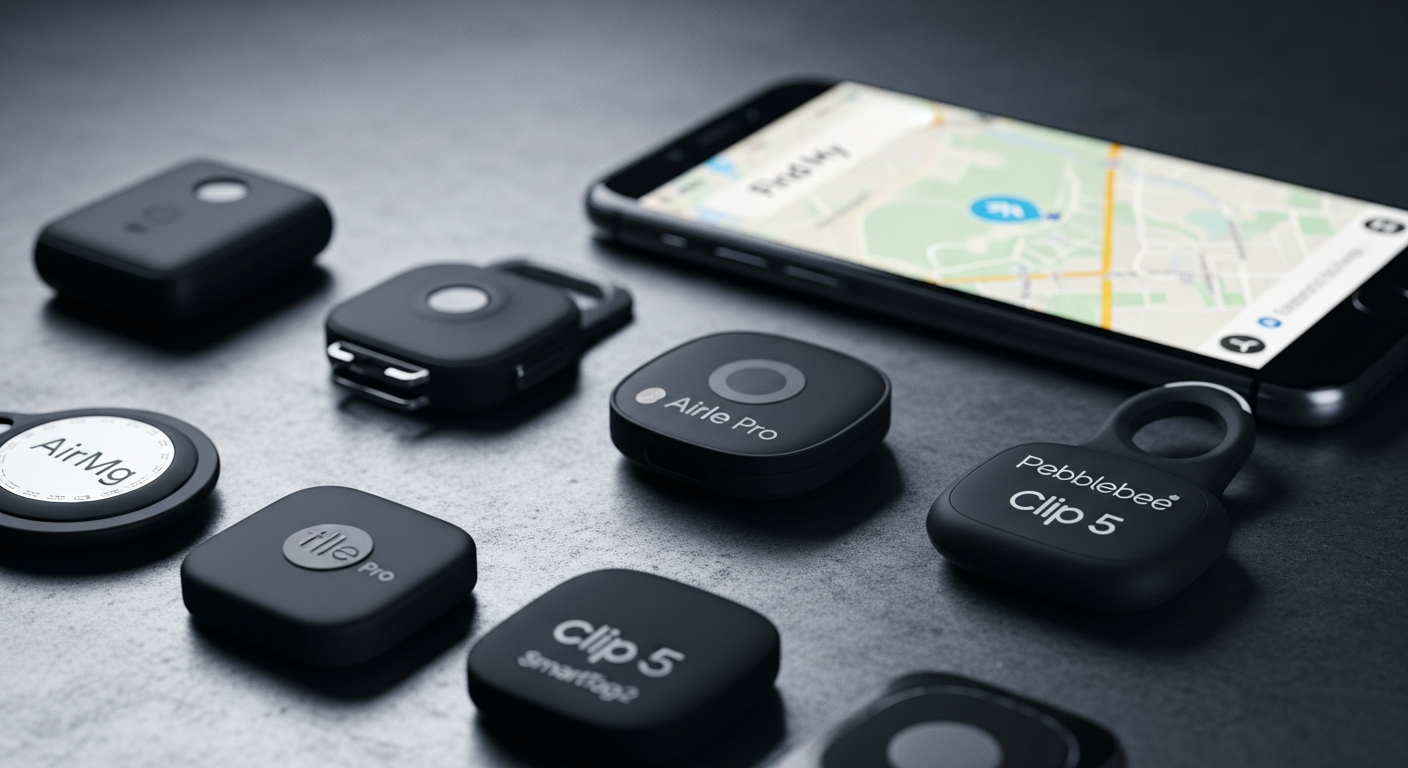
For iPhone users, the Apple AirTag (first-gen) remains the undisputed champion. Launched in 2021, AirTags redefined the category with Apple's UWB chip and seamless integration into the gargantuan Find My network. This combination delivers precision tracking that can direct you exactly to your item within a room, while the Find My network—comprising over a billion Apple devices—ensures robust out-of-home location services. My personal experience, locating keys twenty minutes after a run using only the last reported location, underscores this unparalleled accuracy.
However, this precision is a double-edged sword. Early concerns about unwanted tracking led Apple to significantly enhance its anti-stalking features, including louder chimes, shorter notification times, and a dedicated Android app for scanning unknown AirTags. The introduction of AirTag sharing in iOS 17 and temporary location links in iOS 18.2 further refines their utility for legitimate shared items or lost luggage scenarios. The main detractor remains the necessity of purchasing separate accessories to attach AirTags, adding to the initial $29 cost, though user-replaceable CR2032 batteries mitigate some long-term expenses. The recently announced new AirTag iteration promises even greater UWB range and a louder speaker, solidifying Apple's lead in precision tracking.
Android's Ascent: The Versatility of Tile and Google's Growing Network
For Android users or mixed households, the Tile Pro stands out. Priced at $34.99, it boasts the company's loudest ring and widest Bluetooth range (500 feet, improved from 400), alongside a user-replaceable battery. While Tile trackers lack UWB precision (a feature announced in 2021 but yet to materialize), they compensate by tapping into the extensive Tile Network and Amazon Sidewalk for out-of-range tracking. My tests indicate Tile still outperforms early Google Find Hub-compatible trackers for finding items outside the home, though Google's network is rapidly catching up.
Tile's integration with Life360 has brought meaningful updates, including SOS alerts, shared maps, and free premium features like push alerts for forgotten items. While a $29.99/year subscription unlocks advanced features like 30-day location history and reimbursement, core functionality remains robust without it. Tile also offers versatility in form factors—the slim Tile Slim for wallets, the versatile Tile Mate, and the adhesive Tile Sticker—catering to diverse needs. Notably, Tile also introduced an anti-theft feature in 2023, allowing devices to become invisible to unwanted tracking detection if reported stolen, albeit with stringent verification requirements.
Google's Find Hub network, launched in 2024, mirrors Apple's Find My network with family sharing and unwanted tracking alerts. While it initially lagged, recent improvements, especially in busy areas, are closing the gap. Google's commitment to UWB support (seen in the Motorola Moto Tag) and satellite connectivity signals a strong future, though its emphasis on privacy over raw precision is evident.
The Cross-Platform Contenders: Pebblebee's Rechargeable Prowess
For those seeking alternatives that bridge the Apple-Android divide, Pebblebee offers compelling options. The Pebblebee Clip 5 ($34.99) supports both Apple's Find My and Google's Find Hub, offering seamless setup. Its standout feature is a rechargeable USB-C battery lasting up to a year, a 500-foot Bluetooth range, brighter LED strips, and a louder ringtone. Unlike AirTags, it includes a built-in key ring, eliminating extra accessory costs.
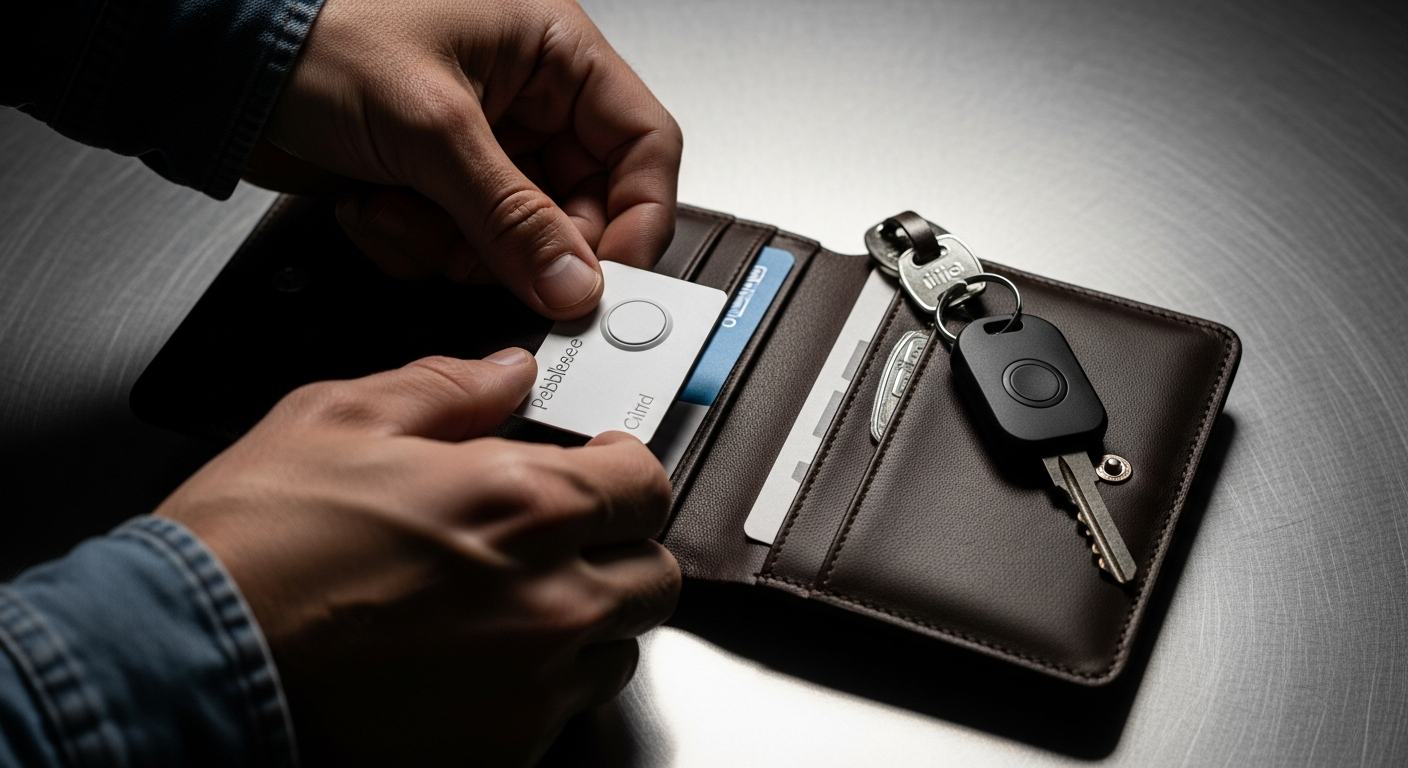
Similarly, the Pebblebee Card 5 ($34.99) is an excellent wallet-specific tracker. At a mere 1.8mm thick, it’s one of the thinnest available, matching the size of a credit card. It boasts wireless charging and an impressive 18-month battery life, all while supporting both major networks. Though it lacks UWB, its loud ringtone and robust IP66 rating make it a practical choice.
Niche Players and Future Visions
Beyond the leading contenders, several other trackers warrant consideration. Chipolo Pop ($29) and Loop ($39) offer lighter, more colorful designs with replaceable or rechargeable batteries, good Bluetooth range, and compatibility with both Find My and Find Hub (one at a time). They also feature convenient extras like remote camera shutter functionality and rapid out-of-range alerts.
Samsung Galaxy users have the dedicated Samsung SmartTag2 ($29.99), which provides UWB tracking via the Galaxy Find network, improved battery life, and a redesigned key ring. The Moto Tag ($29.99) is Google's first Find Hub tracker with UWB, offering directional cues for Motorola phones, proving effective for indoor tracking. For wallets, the Chipolo Card ($39) and Eufy Security SmartTrack Card E30 ($34.99) offer slim designs, rechargeable batteries, and network compatibility, with Eufy uniquely including a QR code for returns and multi-person sharing. The forthcoming Eufy SmartTrack Card E40 promises even thinner dimensions, dual-network support, and a louder alarm, signaling a competitive future.
Public Sentiment
Public sentiment around Bluetooth trackers is a complex tapestry, reflecting the dual nature of their utility. While the convenience of instantaneously locating a lost item is widely lauded, the inherent privacy implications stir considerable debate. The rapid evolution of anti-stalking measures by manufacturers and platform owners alike is a direct response to these concerns, yet a pervasive caution remains among users. The desire for precise location data often clashes with the fundamental right to personal privacy, a tension that continues to shape both product development and public perception.
Conclusion
Ultimately, the choice of a Bluetooth tracker is deeply personal, tethered to your primary mobile ecosystem and your specific priorities. Whether it's Apple's unparalleled precision, Tile's robust versatility, or Pebblebee's cross-platform rechargeability, the market now offers sophisticated solutions for every type of 'loser of things.' [FEATURED] Yet, as these devices become inextricably linked to our daily lives, a critical, informed approach to their capabilities—and their inherent privacy trade-offs—remains the most essential tool in any modern consumer's arsenal. The future promises even greater integration and precision, but the delicate balance between finding what's lost and protecting what's private will continue to be the industry's defining challenge.