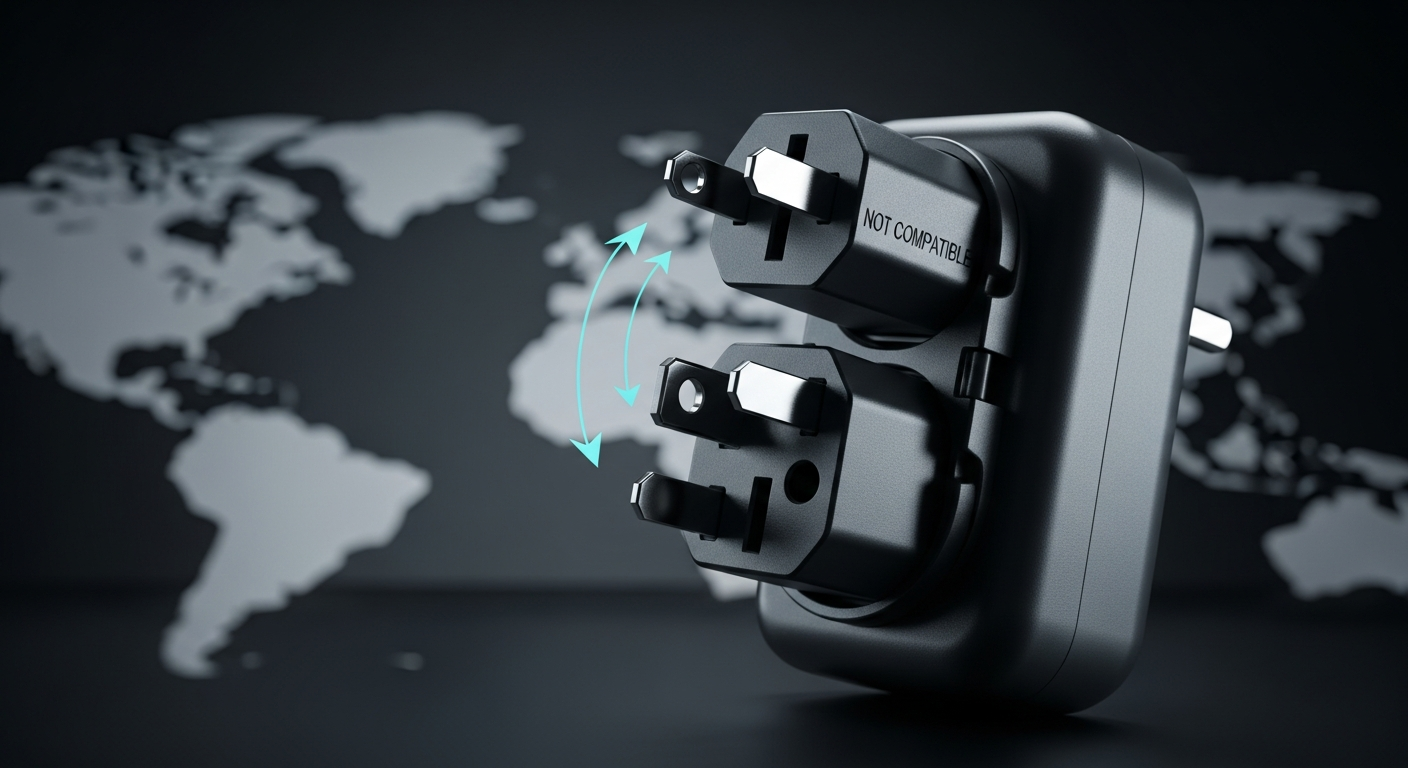
Packing multiple charging adapters can quickly become a cumbersome chore, a pain point the Baseus EnerCore CG11 aims to alleviate with its promise of a 6-in-1, retractable travel solution. Currently offered at a significant discount on Amazon, this device purports to be the ultimate companion for over 200 countries. Yet, as with many 'universal' claims in the tech world, the devil lies in the details—details that astute Indian travelers, accustomed to a specific set of electrical standards, would do well to scrutinize.
Key Takeaways
-
The Baseus EnerCore CG11's 'universal' compatibility is debatable; it conspicuously omits explicit support for the crucial Type D plug prevalent in India and other regions, potentially limiting its domestic utility or use when traveling from India to specific destinations.
-
Maximum power output of 70W, while seemingly robust, often falls short for modern high-power laptops, forcing slower charging times or the need for a separate, dedicated charger, undermining its all-in-one proposition.
-
The absence of surge protection is a critical safety omission, particularly risky in regions with unstable power grids, including many parts of India, where voltage fluctuations are common.
-
While touted as compact and 'palm-sized,' the device's overall bulk and half-pound weight are still considerable compared to minimalist alternatives, and its retractable cable design raises long-term durability concerns.
-
The enticing discount merely masks inherent design and functionality compromises that could prove frustrating for seasoned travelers seeking a truly reliable and comprehensive charging solution.
The Allure of 'Universal' – A Closer Look
The primary appeal of the Baseus EnerCore CG11 rests on its 'universal' claim, featuring four sliding plug types: Type A, Type C, Type G, and Type I. These are designed to cover outlets in over 200 countries, including major destinations like the UK, Europe, Australia, Asia, and South America. On paper, this sounds comprehensive. However, for an Indian user, a significant oversight becomes immediately apparent: the absence of explicit mention or inclusion of the Type D plug. Type D is the standard for most of India, Nepal, and parts of Africa, among others. While Type G might work in some sockets with an adaptor, relying on such workarounds undermines the very essence of a 'universal' adapter.
This omission raises a crucial question: how 'universal' can an adapter truly be if it doesn't directly support the primary standard of a major global economy and travel hub? Travelers from India planning domestic trips or venturing into regions predominantly using Type D might find themselves needing an additional adapter, negating the promised all-in-one convenience and adding to packing complexity.
Power Play: Performance vs. Promise
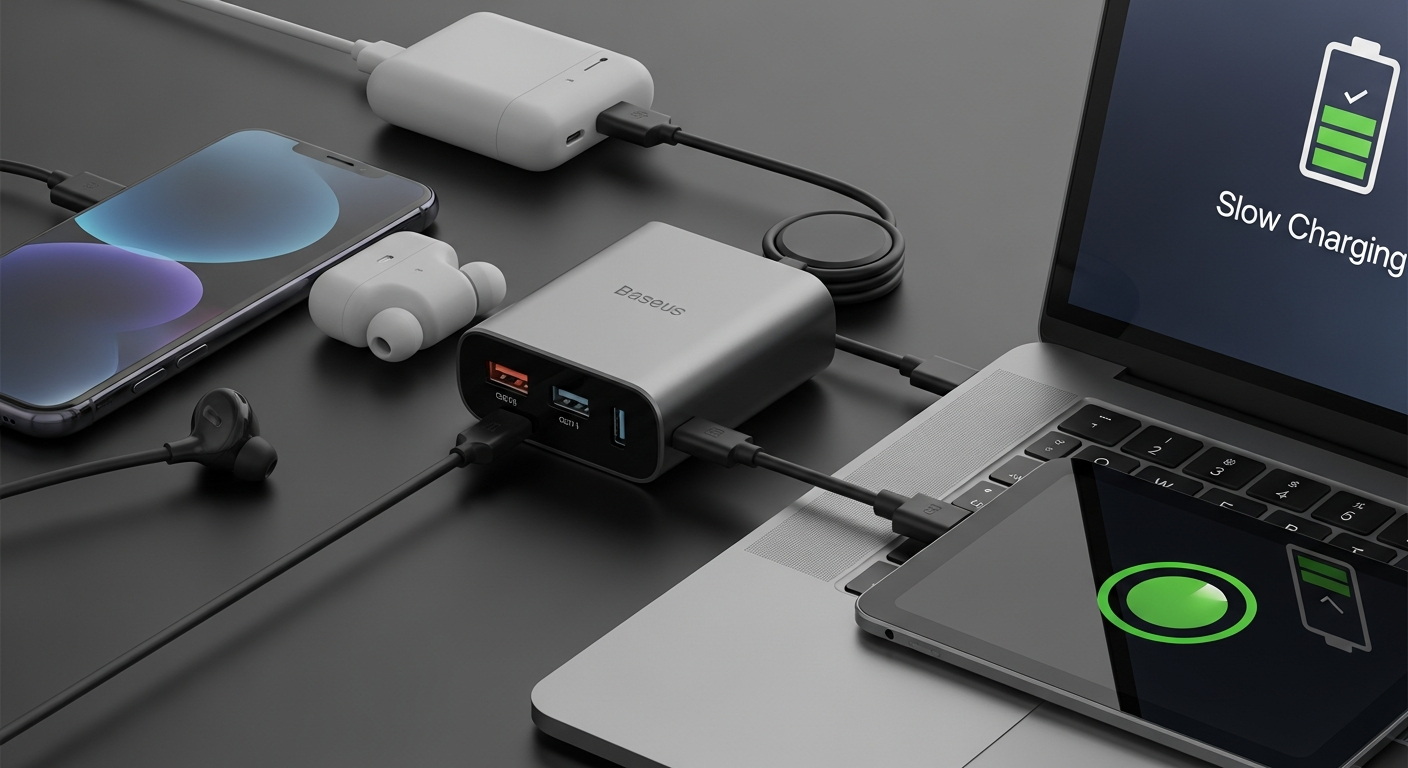
The EnerCore CG11 boasts a USB-C and a USB-A port, both delivering up to 60W of power, along with a third 5W USB-A port. Additionally, a retractable USB-C cable extends up to 27 inches and provides up to 70W. This configuration allows for charging multiple gadgets simultaneously, from smartphones and earbuds to tablets. The marketing even suggests charging 'beefier gadgets, including laptops, albeit at slower speeds.'
Herein lies a significant caveat. While 60W or 70W might suffice for some ultrabooks or smaller laptops, many modern laptops, especially those with dedicated graphics cards or larger screens, demand 90W, 100W, or even higher power inputs for optimal charging and performance. Relying on the EnerCore CG11 for these devices means significantly slower charging times, potentially failing to keep pace with power consumption during use, or simply not charging at all when the laptop is under heavy load. For a traveler needing to work on the go, this 'slower speed' is not merely an inconvenience but a fundamental limitation that could impede productivity and force a compromise.
Design and Durability: Convenience with Caveats
The retractable plug types and the built-in USB-C cable are undeniably clever design features, reducing cable clutter and making the unit seemingly more portable. The device is described as 'palm-sized' and weighing 'about half a pound.' While this might be less than 'a bunch of chargers and adapters,' it's still a noticeable chunk of weight and volume in a carry-on, especially for minimalist packers. Compared to more compact, single-country adapters or even some multi-port USB-C chargers, the EnerCore CG11's bulk is a trade-off for its purported versatility.
Furthermore, retractable cables and sliding mechanisms, while convenient, are often points of failure in electronic devices. The constant pulling and retracting can lead to wear and tear on the internal wiring and spring mechanisms, potentially compromising the adapter's longevity and reliability—a critical concern for a device intended for rigorous travel.
Safety First? A Glaring Omission
Perhaps the most concerning aspect of the Baseus EnerCore CG11, especially for travel within and from India, is the explicit lack of surge protection. The source context highlights this by stating, 'It lacks surge protection, too, so you can even safely bring it on board cruise ships.' While cruise ships might offer stable power, the real world, particularly in many developing nations and even older infrastructure in developed ones, is riddled with voltage spikes and power fluctuations.
In India, where power grids can be notoriously inconsistent, a lack of surge protection is not just an oversight; it's a significant risk. Plugging expensive electronics, especially high-value laptops or smartphones, into an unprotected adapter during a power surge could lead to irreversible damage to both the device and the adapter itself. This omission places the burden of risk squarely on the traveler, turning a convenience device into a potential liability.
Public Sentiment: Balancing Utility and Frustration
While initial impressions often highlight the convenience of an all-in-one solution, a deeper dive into user feedback reveals a recurring theme: the balance between perceived versatility and actual performance is often skewed. Many travelers praise the space-saving aspect, but quickly point out the 'universal' claim doesn't always translate to seamless real-world use across all desired destinations. The lack of surge protection is a frequent concern, particularly from users experiencing unpredictable power grids. 'It's great for what it does, but you still need your laptop charger for full speed,' notes one user, encapsulating the common sentiment that it's a compromise, not a complete solution. Another remarked, 'For the price, it's okay, but I wouldn't trust it with my expensive laptop in a hotel with dodgy wiring.' Such sentiments underscore the need for caution.
Conclusion
The Baseus EnerCore CG11 travel adapter, currently on sale, presents itself as an enticing solution for the modern globetrotter. Its retractable plugs and multi-port charging capability offer a degree of convenience. However, a critical examination reveals that its 'universal' claims are, at best, incomplete, particularly for Indian users. The power output, while decent, is insufficient for many contemporary high-draw devices, and the glaring absence of surge protection introduces a significant safety risk that discerning travelers simply cannot afford to overlook. While the discounted price might lower the barrier to entry, it does not alleviate the inherent compromises in functionality and safety. For truly universal, reliable, and safe power on your travels, especially from or within India, the Baseus EnerCore CG11 may prove to be a false economy, requiring additional planning and potentially separate, more robust solutions. Consider your specific travel needs and the true costs beyond the sale price before making this your primary travel companion.