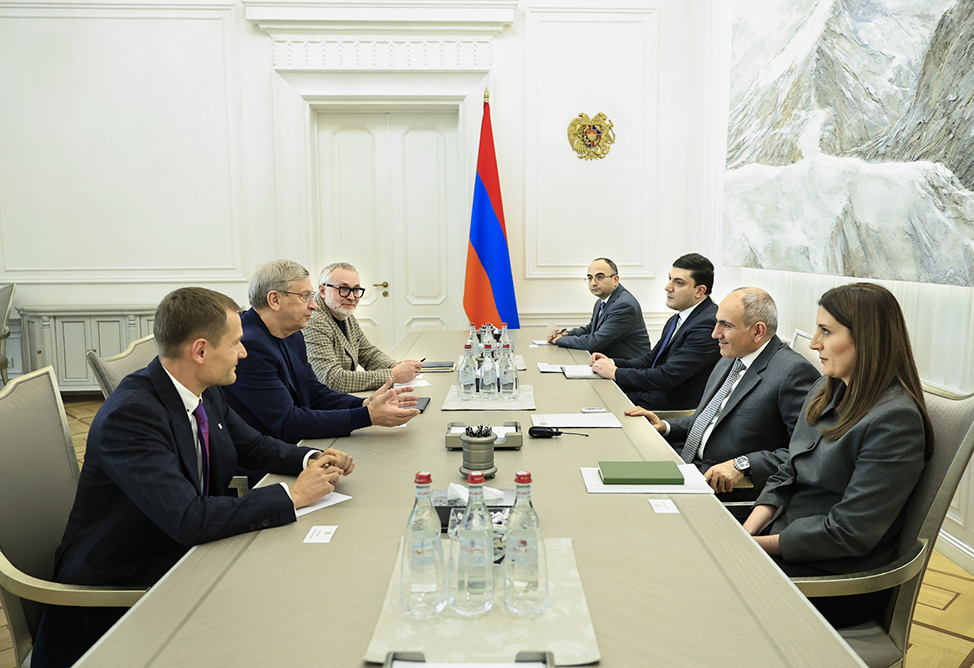
The hallowed halls of Armenian governance recently hosted a significant economic dialogue, as Prime Minister Nikol Pashinyan welcomed Vladimir Yevtushenkov, the influential Russian entrepreneur and founder of AFK Sistema. The encounter, reported by the government press service on January 21, centered on the general developments within the Armenian economy and, critically, the burgeoning potential of public-private sector cooperation. This high-level engagement reflects Armenia's strategic pivot towards fortifying its economic resilience through diversified investment and collaborative frameworks.
[FEATURED]
Key Takeaways
-
High-Level Economic Diplomacy: Armenian Prime Minister Nikol Pashinyan engaged in direct discussions with Vladimir Yevtushenkov, a prominent Russian investor and founder of the diversified AFK Sistema conglomerate.
-
Focus on Economic Developments: The core agenda revolved around an exchange of views on the current state and future trajectory of the Armenian economy.
-
Emphasis on Public-Private Partnerships: A significant portion of the discussion was dedicated to exploring and strengthening cooperation between the public and private sectors in Armenia.
-
Significance of AFK Sistema: Yevtushenkov's involvement, as the head of a major diversified holding, signals potential for investment across various sectors, from telecommunications and high-tech to healthcare and agriculture.
-
Yerevan's Investment Drive: The meeting underscores Armenia's continued efforts to attract foreign direct investment and integrate international expertise into its national development strategy.
Main Analysis: Charting Armenia's Economic Future
The Imperative for Diversification and Resilience
Armenia finds itself at a pivotal juncture, navigating regional complexities while simultaneously striving for robust economic growth and stability. The Pashinyan administration has consistently advocated for an economic policy centered on diversification, moving beyond traditional sectors and reducing over-reliance on a few key industries or markets. This strategy is crucial for building resilience against external shocks and creating a more competitive, innovation-driven economy. Discussions with figures like Yevtushenkov are integral to this vision, as they open doors to capital, technology, and management expertise that can accelerate development across multiple fronts.
For a nation like Armenia, attracting significant foreign direct investment (FDI) is not merely about capital injection; it's about fostering job creation, improving infrastructure, transferring modern technologies, and enhancing overall economic sophistication. The dialogue with a major player like AFK Sistema, which has interests spanning telecommunications, high-tech, healthcare, retail, finance, and agriculture, suggests Armenia is exploring a broad spectrum of potential investment areas. This multi-sectoral approach aligns with the goal of creating a more balanced and dynamic economic landscape.
AFK Sistema: A Russian Conglomerate's Strategic Lens
Vladimir Yevtushenkov's AFK Sistema is one of Russia's largest diversified public financial and industrial holding companies. Its extensive portfolio includes leading companies such as MTS (mobile telecommunications), Segezha Group (forestry and timber processing), Medsi Group (healthcare), and Steppe Agroholding (agriculture). The involvement of such a conglomerate in discussions about the Armenian economy naturally raises questions about potential areas of engagement.
AFK Sistema's track record suggests it could be interested in sectors where Armenia is actively seeking modernization and growth. Telecommunications, a sector where Armenia has made significant strides, could see further investment. Similarly, with a growing emphasis on digital transformation and high-tech, AFK Sistema's expertise in these domains could prove invaluable. Furthermore, given Armenia's agricultural potential and the global demand for food security, investments in modernizing agricultural practices or supply chains through companies like Steppe Agroholding could yield substantial returns. The discussions likely delved into identifying specific projects or policy frameworks that could facilitate such investments.
Strengthening Public-Private Partnerships: A Pillar of Modern Development
The explicit focus on public-private sector cooperation during the meeting is a testament to the Pashinyan government's understanding of contemporary economic development. Governments worldwide are increasingly leveraging the efficiency, innovation, and capital of the private sector to deliver public services and execute large-scale infrastructure projects. For Armenia, where state resources may be constrained, engaging the private sector through well-structured partnerships can unlock significant potential.

These partnerships can take various forms, from joint ventures in critical infrastructure to private sector involvement in managing public services, or even large-scale investment in strategic industries with government backing or incentives. Such collaborations aim to de-risk projects for private investors while ensuring that national development goals are met. The challenge, however, lies in establishing transparent, equitable, and efficient frameworks that protect public interest while providing attractive returns for private capital. The discussions with Yevtushenkov likely touched upon these foundational aspects, aiming to build a conducive environment for future collaborations.
Public Sentiment: Hopes and Expectations
In the aftermath of such high-profile meetings, public sentiment in Armenia typically oscillates between cautious optimism and a demand for transparency. There's a general hope that foreign investment, particularly from established entities, will translate into tangible economic benefits such as job creation, improved public services, and overall higher living standards. Many citizens look to these dialogues as signals of future prosperity and a stronger, more diversified national economy.
However, there is also a prevalent expectation for strict adherence to good governance and transparency. Armenians, like many global citizens, are keen to ensure that investments benefit the broader population and are not confined to a select few. Calls for clear regulatory frameworks, accountability in public-private partnerships, and a level playing field for all businesses are common. The administration's ability to demonstrate these principles in any ensuing agreements will be crucial in garnering and maintaining public trust.
Conclusion
The meeting between Prime Minister Pashinyan and Vladimir Yevtushenkov represents more than a courtesy call; it signifies Armenia's proactive engagement in shaping its economic destiny through strategic global partnerships. By focusing on both general economic development and the specific mechanisms of public-private cooperation, Yerevan is signaling its readiness to embrace external capital and expertise. The coming months will reveal the concrete outcomes of these discussions, but the dialogue itself is a clear indicator of Armenia's commitment to building a resilient, diversified, and investment-friendly economy, crucial for its long-term stability and prosperity in a challenging geopolitical landscape.