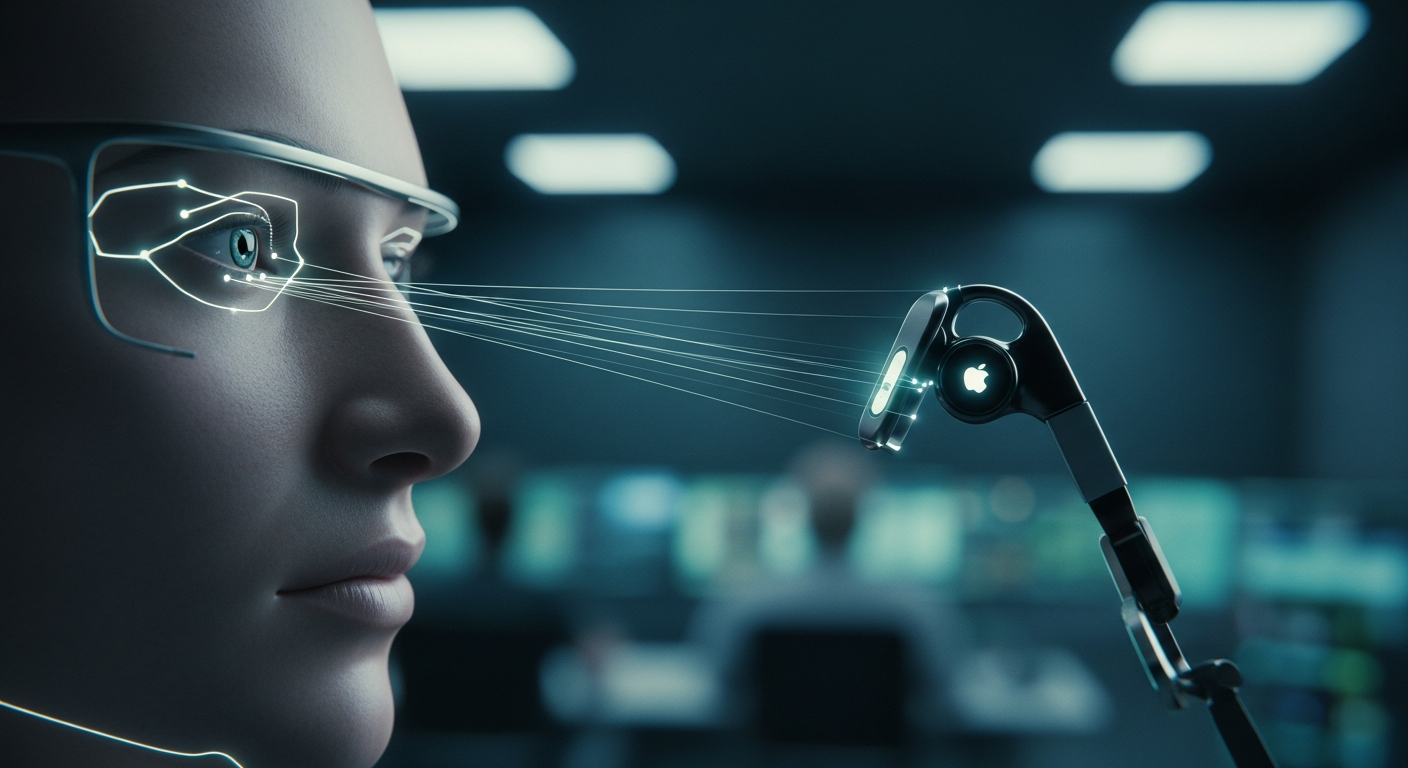
Apple’s latest financial flex, a staggering $2 billion commitment to acquire Q.ai, an AI audio startup, isn't just a headline – it’s a seismic tremor in the tech landscape. Surpassed only by the $3 billion Beats acquisition a decade ago, this represents Apple's second-biggest corporate buy, signaling an aggressive, almost prophetic, move towards a future where human-computer interaction transcends spoken words and physical gestures. This is a gamble on 'silent speech,' a technology poised to unlock a new, profoundly personal dimension of digital engagement.
Key Takeaways
-
Massive Investment: Apple commits $2 billion to Q.ai, marking its second-largest acquisition ever.
-
Silent Speech Technology: Q.ai specializes in recognizing 'silent speech' via optical sensors detecting facial skin micro-movements.
-
Strategic Re-engagement: Aviad Maizels, Q.ai's CEO and founder of PrimeSense (acquired by Apple in 2013), returns to the Apple fold.
-
Interface Revolution: This technology could fundamentally change how we interact with AI assistants, wearables, and future AR/VR devices.
-
Privacy Implications: The constant scanning and interpretation of micro-movements raise significant ethical and privacy concerns.
Main Analysis
The Unspoken Revolution: Decoding Intent
This isn't just about understanding words you don't say; it's about anticipating intent from the most subtle biological signals. Imagine controlling your devices, sending discreet commands, or even composing messages without uttering a sound. Q.ai's patents describe "optical sensor technology" embedded in headphones or glasses, designed to recognize "facial skin micro movements." This isn't science fiction; it's a direct path to a more integrated, less obtrusive digital existence. The implications for productivity, accessibility, and the sheer fluidity of interaction are immense. It promises to liberate us from the social constraints of vocal commands and the physical limitations of touch, offering a third, more intimate mode of control.
A Familiar Genius Returns: The Aviad Maizels Factor
The narrative deepens with the return of Aviad Maizels, Q.ai's CEO and a former architectural linchpin for Apple. Maizels previously founded PrimeSense, the company Apple acquired in 2013, whose 3D sensing technology formed the backbone of Face ID – a technology that fundamentally reshaped security and user experience across Apple's product lines. This isn't a mere coincidence; it's a pattern. Apple consistently invests in specific visionary talent and re-integrates them for their long-term strategic plays. Maizels' re-engagement suggests that Q.ai's technology isn't just an interesting tangent, but potentially another foundational layer in Apple's human-computer interaction stack, akin to Face ID's impact on security and user experience. It underscores Apple's conviction in the long-term potential of Maizels' vision for advanced sensing.
Beyond Siri: The Quest for the Seamless Interface
For years, Apple has struggled to evolve Siri beyond a competent, but often limited, voice assistant. While voice control has its place, it's inherently public and often inefficient for complex tasks. "Silent speech" offers a third way, transcending the binary of touch and voice. It promises a truly personal, discreet interaction model, perfectly suited for the intimate spaces of augmented reality glasses or advanced headphones. This signals a future where your devices don't just listen to your words, but perceive your nuanced intentions, creating an almost telepathic bond. This is Apple's ambitious answer to the limitations of current conversational AI, a leap towards a more intuitive, perhaps even predictive, user experience.
The Industrial Imperative: Apple's Hardware-Software Synergy
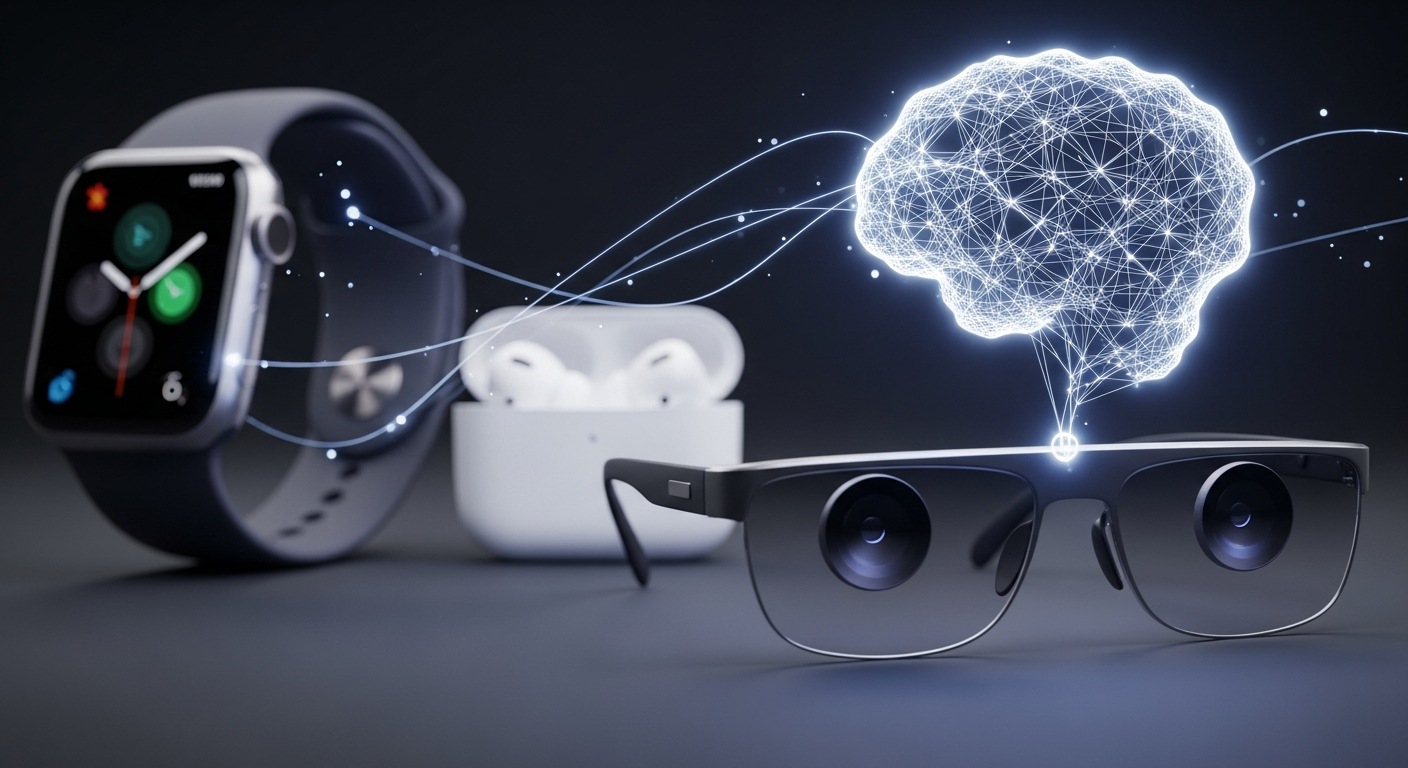
Apple's modus operandi has always been end-to-end control. Unlike many tech giants that primarily focus on software or services, Apple thrives on the symbiotic relationship between custom hardware and bespoke software. Q.ai's optical sensor technology fits perfectly into this philosophy, suggesting deep integration into future Apple devices. This isn't just about buying an AI algorithm; it's about acquiring the fundamental building blocks for a new sensory input system that can be optimized across the entire ecosystem – from Watch to Vision Pro. This $2 billion bet is a down payment on a proprietary, differentiated interface that competitors will struggle to replicate without similar hardware control. It's a strategic move to solidify Apple's lead in integrated hardware-software experiences.
Public Sentiment
The tech sphere is alight with speculation and diverse opinions. Early adopters are buzzing about the potential for truly seamless, discreet interaction. "This is the true next frontier for human-computer interaction," tweeted prominent AI ethicist Dr. Anya Sharma. "Imagine being able to give commands in a meeting without anyone noticing. Game changer for productivity and accessibility." Others are more guarded. "While fascinating, the privacy implications of a device constantly scanning and interpreting your facial micro-movements cannot be overstated," warned a cybersecurity analyst on LinkedIn. "Apple needs to be incredibly transparent about data handling and user controls, especially regarding such intimate biometric data." Meanwhile, many consumers are simply intrigued, envisioning a future where their AirPods anticipate their needs without a single spoken word or gesture.
Conclusion
Apple's acquisition of Q.ai is a declaration of intent, a bold, expensive statement that the next frontier of user experience lies beyond conventional input methods. By investing heavily in 'silent speech' technology and bringing back proven innovators like Aviad Maizels, Apple is not merely refining existing products; it is laying the groundwork for an entirely new paradigm of human-machine symbiosis. This move will undoubtedly spark intense debate about privacy and the nature of digital intimacy, but one thing is clear: the era of truly personal, non-verbal computing is rapidly approaching, and Apple intends to lead the conversation – or rather, the silence.