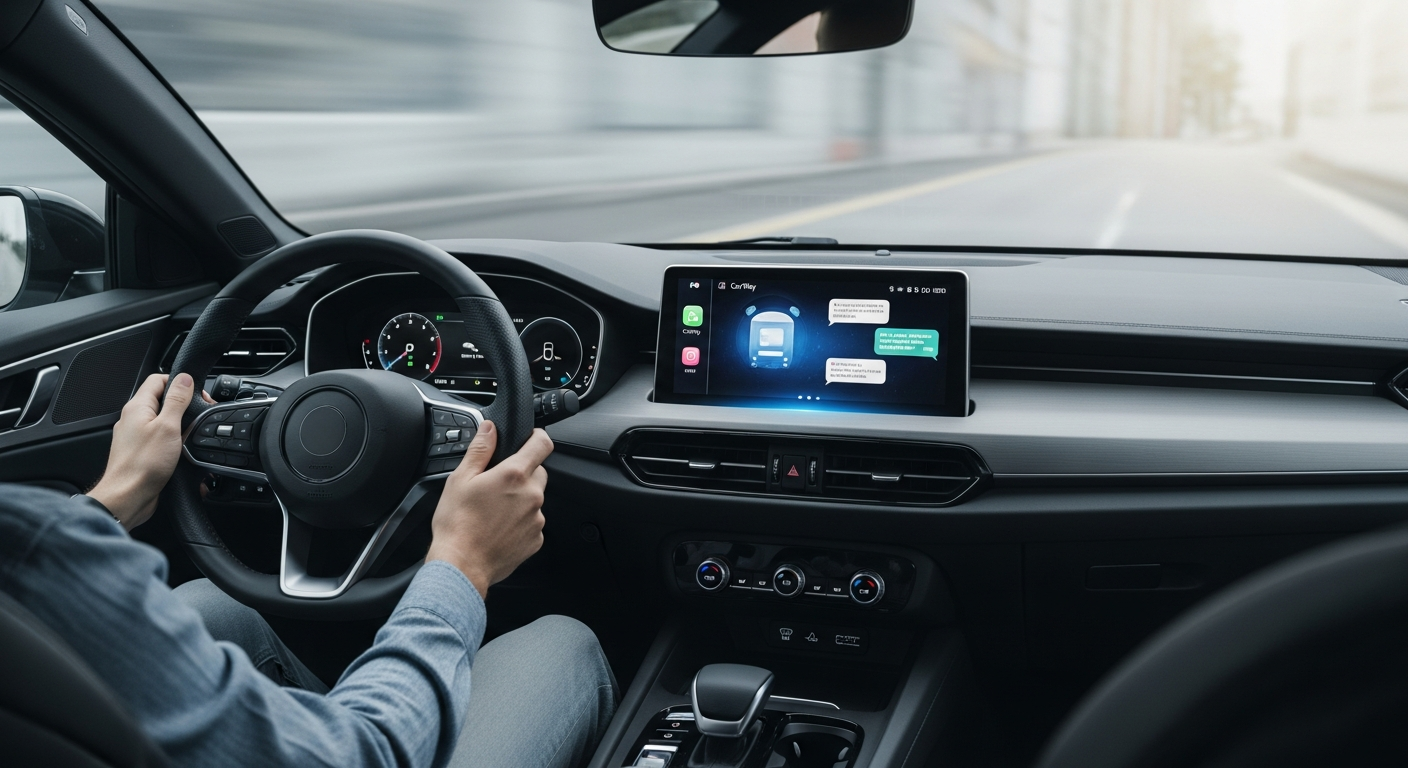
The digital landscape within our vehicles is on the cusp of a seismic shift. Apple, ever the orchestrator of user experience, is reportedly working to embed advanced AI chatbots, akin to the much-lauded ChatGPT, directly into its CarPlay system. For millions globally, and particularly for the tech-savvy, convenience-seeking Indian populace, this isn't just another software update—it's a fundamental reimagining of what our cars can do for us.
[FEATURED]
Key Takeaways
-
Enhanced Hands-Free Control: Generative AI promises more natural, context-aware conversations, moving beyond rigid voice commands.
-
Revolutionary In-Car Interaction: From advanced navigation queries to multi-faceted entertainment control, the potential for intelligent assistance is vast.
-
Driver Distraction Concerns: The complexity of AI interactions could paradoxically introduce new forms of cognitive distraction, a critical issue on India's often unpredictable roads.
-
Data Privacy Under Scrutiny: Integration of third-party AI raises questions about data ownership, sharing, and the security of personal information.
-
Apple's Ecosystem Fortification: This move solidifies CarPlay's position as the premier interface for a smart, connected car, potentially further locking users into the Apple ecosystem.
The Indian Commute: A Fertile Ground for AI?
India's roads are a symphony of chaos and order, a daily challenge where drivers juggle navigation, communication, and entertainment amidst dense traffic and diverse languages. Current voice assistants, while functional, often falter with the nuances of Indian accents, colloquialisms, and multi-lingual requests. The promise of generative AI like ChatGPT, with its ability to understand context, engage in multi-turn conversations, and process complex queries, could be transformative. Imagine asking your car, “Find me the nearest authentic South Indian breakfast joint with parking, and then tell me about its regional specialties while I drive there.” Siri, in its current avatar, would likely struggle. A ChatGPT-powered CarPlay, however, holds the potential to deliver precisely that.
This isn't just about finding directions; it's about having an intelligent co-pilot. From handling intricate scheduling requests to providing real-time information about traffic detours coupled with personalized recommendations for stops, the possibilities are compelling. For professionals navigating long commutes or families embarking on road trips, the ability to delegate complex information retrieval and task management to an intuitive AI could significantly reduce mental load.
Beyond Siri: The True Power of Generative AI
The fundamental difference between traditional voice assistants and generative AI lies in their conversational depth and contextual awareness. Siri operates on a rule-based system, excelling at predefined tasks. ChatGPT, on the other hand, understands intent, can learn from previous interactions, and generate coherent, human-like responses. This enables a far more natural and less frustrating interaction.
Consider the scenario where you're stuck in unexpected traffic. Instead of a simple query like “What’s the traffic ahead?”, you could ask, “Is this congestion normal for this time? What’s the fastest alternative route, and can you also recommend a podcast that’s about Indian history for the duration of the detour?” A generative AI could process these layered requests, synthesize information, and provide a coherent plan, making your journey not just tolerable, but potentially more productive or entertaining.
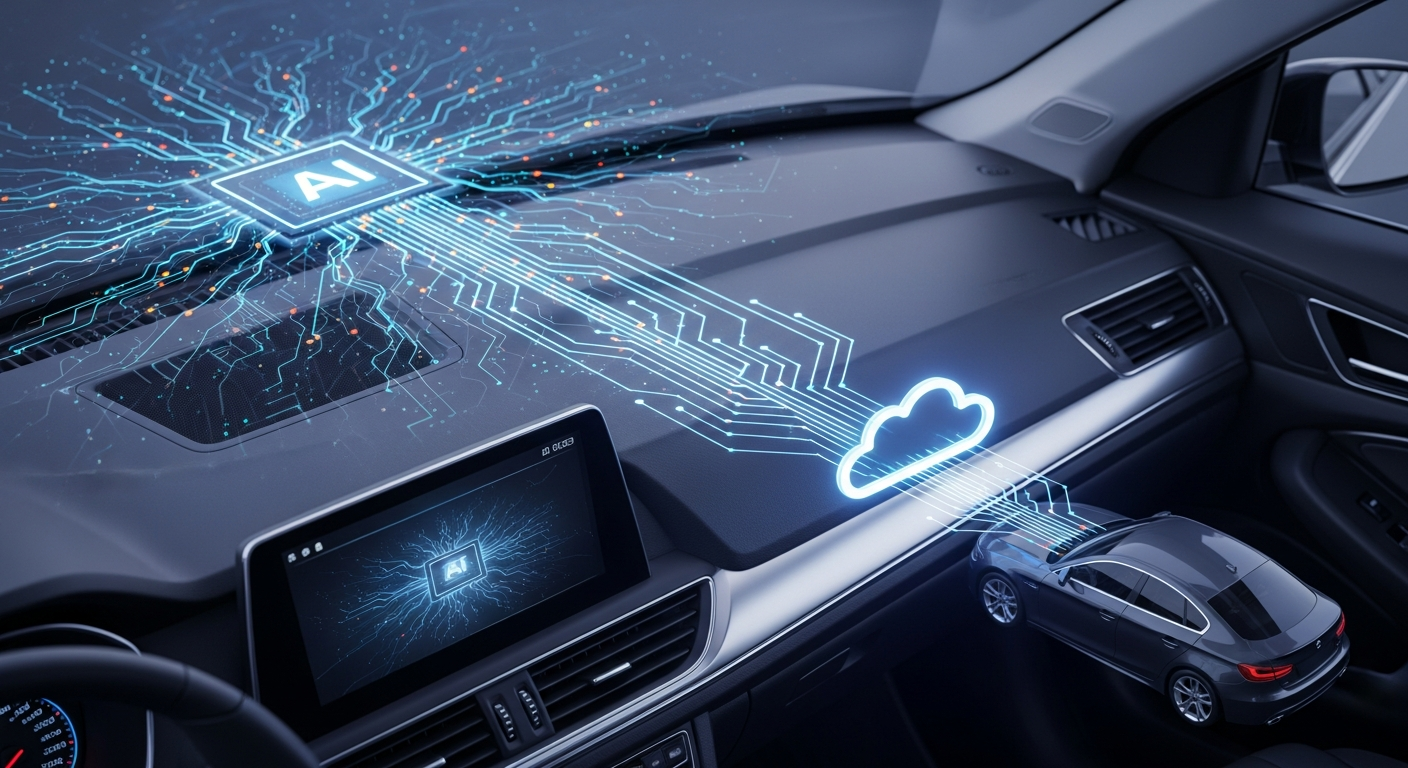
Safety vs. Distraction: The Eternal Debate on Indian Roads
While the allure of a smarter in-car assistant is undeniable, the implications for driver safety, particularly in a country notorious for its challenging road conditions, are paramount. Proponents argue that a truly hands-free, intuitive AI reduces the need to physically interact with screens, thereby enhancing safety. However, the very complexity of generative AI – its ability to engage in stimulating conversations and offer rich information – could itself become a cognitive distraction. A driver deeply engrossed in a debate with their AI co-pilot, or listening to a detailed explanation, might divert crucial mental resources away from the immediate task of driving, especially when navigating India’s notoriously unpredictable traffic, pedestrians, and livestock.
Apple will need to implement robust safeguards. Will certain functionalities be limited or disabled at higher speeds? Will the AI be designed to sense critical driving moments and interrupt conversations? The success of this integration hinges not just on technological prowess, but on a deeply considered understanding of human psychology and real-world driving environments. The goal must be to augment the driver, not overwhelm them.
Data Privacy and Ecosystem Lock-in: Unseen Costs?
The integration of third-party AI chatbots like ChatGPT also brings significant data privacy considerations. Who owns the conversational data generated within your car? Is it shared with the AI developer, with Apple, or both? How is this data secured, and could it be used for targeted advertising or other commercial purposes? For Indian consumers, who are becoming increasingly aware of digital privacy, these questions are not trivial. Apple’s reputation for privacy will be on the line, requiring transparent policies and robust encryption.
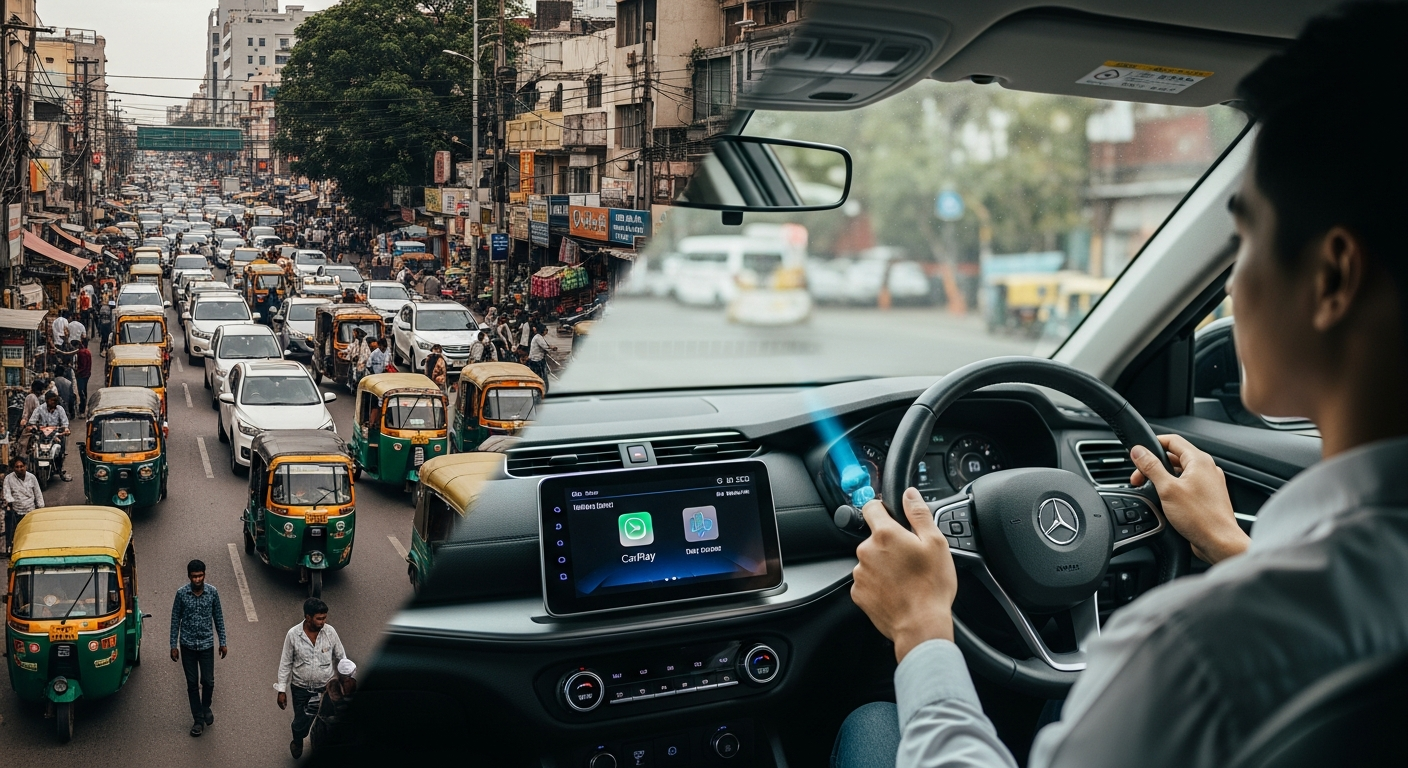
Furthermore, this move strengthens Apple's automotive ecosystem play. By integrating cutting-edge AI, Apple makes CarPlay even more indispensable, potentially solidifying its dominance and further locking users into its hardware and software universe. While beneficial for Apple, it raises questions about competition and user choice in the long run. Will car manufacturers be able to offer similarly advanced AI experiences outside the Apple ecosystem, or will CarPlay become the de facto standard for intelligent in-car interaction?
Public Sentiment: Hope, Caution, and Curiosity
Initial reactions from the Indian public are likely to be a mix of excitement and skepticism. Many will welcome the promise of a more intelligent assistant capable of understanding regional languages and complex queries – “Finally, an assistant that speaks my language, literally!” Others will voice concerns about distraction, data consumption, and privacy. “Will it distract me more than my phone already does?” and “Another way for tech giants to collect my data, I suppose.” There will also be questions about accessibility and cost, especially regarding internet connectivity requirements for advanced AI features – “Will this drain my data plan quickly?”
Conclusion: The Road Ahead for Intelligent Driving
Apple's push to integrate AI chatbots into CarPlay is not merely an incremental improvement; it's a bold vision for the future of in-car digital interaction. For India, with its unique driving challenges and burgeoning digital adoption, this technology holds immense promise for enhancing convenience, productivity, and enjoyment on the road. However, this transformative potential is tethered to significant responsibilities. Apple, alongside AI developers, must meticulously address the critical concerns of driver distraction, data privacy, and equitable access.
If executed thoughtfully, with an emphasis on safety and user agency, AI-powered CarPlay could evolve from a mere entertainment and navigation system into an indispensable, intelligent co-pilot, making every journey smoother, smarter, and safer. The balance between innovation and vigilance will ultimately define whether this technological leap becomes a true game-changer or merely another high-tech gimmick on India's complex road ahead.