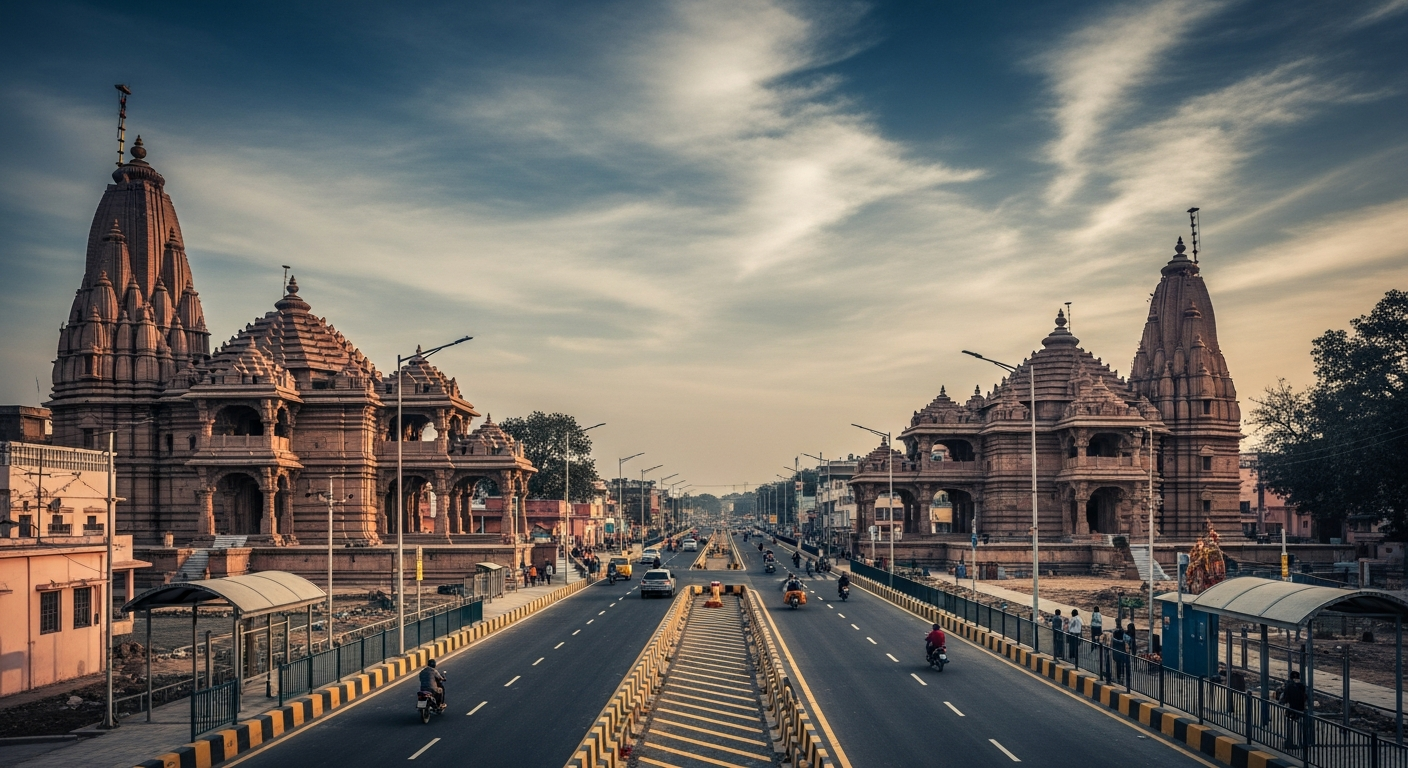
Uttar Pradesh Tourism and Culture Minister Jaiveer Singh’s recent remarks at the Pindra Festival in Varanasi have illuminated a potent strategic vision unfolding across the state. Beyond the immediate context of promoting local heritage, Singh articulated a grander narrative: the emergence of Mathura-Vrindavan as the third critical node in what he termed Uttar Pradesh's 'spiritual development triangle,' following the extensive transformations witnessed in Kashi (Varanasi) and Ayodhya.
This declaration isn't incidental. It represents a deliberate and comprehensive policy approach by the state government, led by Chief Minister Yogi Adityanath under the overarching vision of Prime Minister Narendra Modi. The intent is clear: to leverage the profound spiritual and historical legacy of these regions not only for cultural preservation but also as potent engines for economic development and, crucially, to reinforce a specific cultural and political identity for Uttar Pradesh on both national and global stages.
The Apex of Faith: Kashi, Ayodhya, Mathura-Vrindavan
Singh's effusive praise for the 'magnificent transformation' of Kashi through the Kashi Corridor and the 'pride' associated with the Ram Temple in Ayodhya provides the foundational context. These projects, he asserted, are not mere infrastructure upgrades but 'new chapters of development' that have 'strengthened the state's identity.' The inclusion of Mathura-Vrindavan, a region steeped in Krishna lore, into this strategic trinity underscores a systematic approach to spiritual tourism.
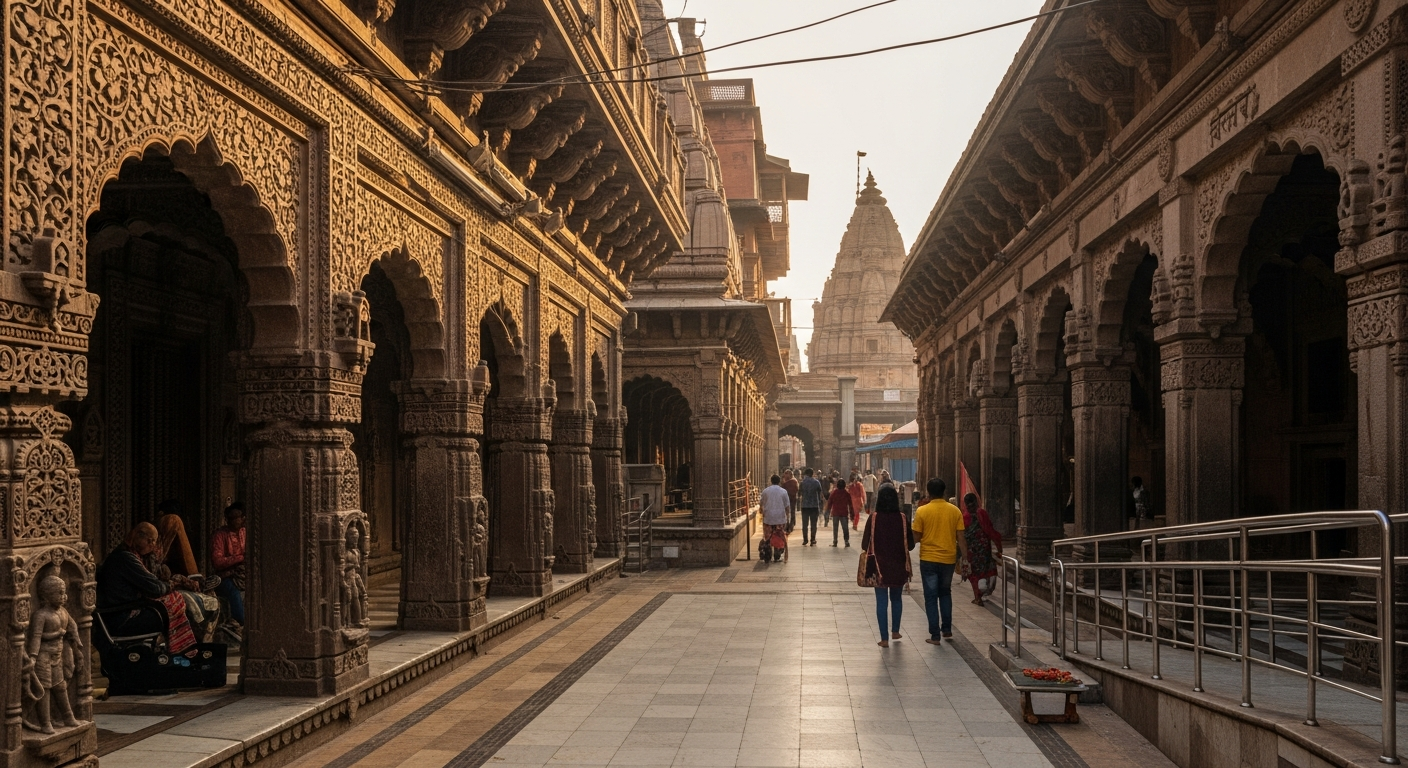
The Kashi Vishwanath Corridor project, completed in 2021, dramatically enhanced accessibility and amenities for pilgrims visiting one of Hinduism's holiest sites. Similarly, the construction of the grand Ram Temple in Ayodhya, after decades of socio-political contention, has been presented as a monumental achievement, fulfilling a long-standing cultural and religious aspiration. By now adding Mathura-Vrindavan, a key site for Vaishnavite devotion, the government is completing a circuit that taps into the spiritual sentiments of a vast populace, both within India and among the global Hindu diaspora.
Economic Impetus and Cultural Revival: A Dual Mandate
The thrust of these initiatives is dual-pronged. Economically, the development of world-class pilgrimage infrastructure is expected to significantly boost tourism, generating employment, attracting investment, and fostering ancillary businesses. The minister's assertion that such events are taking 'Uttar Pradesh's identity to new heights globally' directly links cultural promotion to economic prosperity and international recognition. The Pindra Festival itself, a local cultural event, is framed within this larger vision as a 'powerful means of promoting the state's rich cultural heritage, spiritual consciousness and historical traditions.'
Culturally, these projects are presented as a 'preservation of culture, traditions and Indian values.' This narrative appeals to a sense of historical pride and a desire for cultural reclamation. The 'echoes of 'Radhe-Radhe' and a new consciousness of culture, faith, and heritage' in Mathura-Vrindavan are not just poetic flourishes; they are indicators of an active state role in shaping and promoting specific cultural expressions and identities.
Beyond the Core: Expanding the Spiritual Map
Singh also pointed to a broader strategy, mentioning Naimisharanya Dham and Vindhyavasini Dham, stating that 'today there is hardly any assembly constituency in Uttar Pradesh where the religious, spiritual, and historical identity has not been strengthened by the rays of tourism and culture.' This statement signifies an ambition to extend the benefits and narrative of spiritual development beyond the prominent 'triangle' to encompass a wider array of religious and historical sites across the state. This expansive approach suggests an attempt to create a comprehensive spiritual tourism circuit, ensuring a widespread impact and reinforcing the government's commitment to cultural revitalization across diverse regions.
Public Sentiment
Public sentiment surrounding these developments is multifaceted. On one hand, there is a palpable sense of pride among many who view the Kashi Corridor and Ayodhya Temple as long-overdue recognitions of cultural heritage and national identity. The promise of economic development through tourism is also widely welcomed, particularly in regions that have historically lagged in infrastructure and job creation. Local businesses, artisans, and hospitality sectors anticipate significant boons from increased pilgrim footfall. However, critical voices question the extent of state involvement in religious promotion within a secular framework, raising concerns about resource allocation and potential communal implications. Debates also emerge regarding whether the focus on specific religious sites overshadows other critical developmental needs of the state, or if the economic benefits are equitably distributed across all communities.
Conclusion
The strategic articulation of Uttar Pradesh's 'spiritual development triangle' is more than a cultural initiative; it is a profound socio-economic and political statement. Under the stewardship of the Modi-Yogi government, ancient spiritual sites are being transformed into modern pilgrimage destinations, serving as both symbols of cultural resurgence and drivers of economic activity. The emphasis on Kashi, Ayodhya, and Mathura-Vrindavan reflects a clear blueprint for shaping the state's identity and future trajectory, positioning Uttar Pradesh as a pivotal hub of spiritual and cultural tourism with significant national and international implications. As these projects mature, their full impact on the state's economy, cultural fabric, and political landscape will continue to unfold, offering a compelling case study in state-led identity formation.