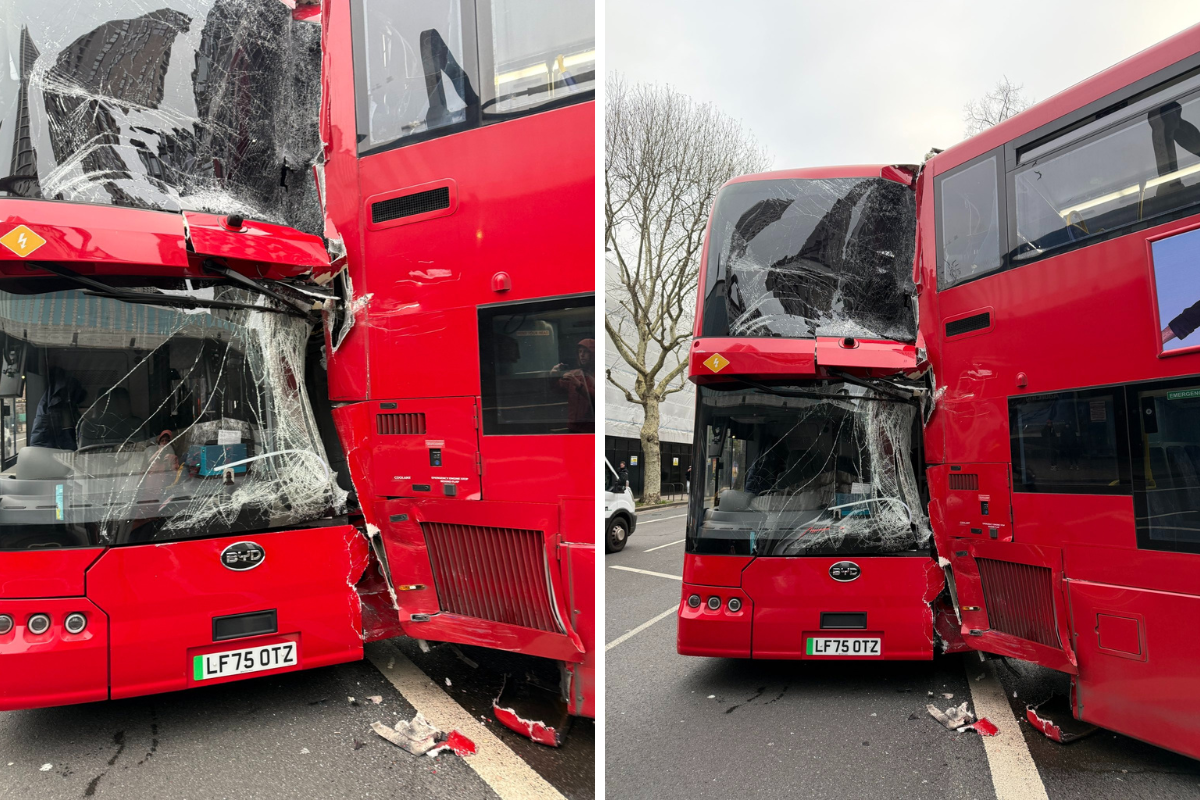
The morning of February 18th dawned, like many others, with the promise of routine urban locomotion. However, in the crucible of Newington Causeway, SE1, this promise was spectacularly re-negotiated when two of London's venerable 'iron horses' decided to engage in an unscheduled, yet undeniably impactful, architectural review of a local theatre.
Key Takeaways:
-
Unscheduled Urban Performance: Two buses, a service vehicle (Route 35) and a non-service vehicle (Route 333), orchestrated an impromptu collision near Southwark Playhouse Borough, pausing regular city life for over two hours.
-
Precision Emergency Response: London's emergency services, including the London Ambulance Service, London Fire Brigade, and Metropolitan Police, demonstrated commendable dispatch and coordination, treating 'a number of patients' and ultimately conveying six to hospital.
-
The Paradox of Efficiency: The incident highlights the delicate balance between high-volume urban transport and the inherent potential for systemic friction, even within highly regulated environments.
-
Architectural Redefinition: A theatre's window front received an unsolicited, though perhaps symbolically potent, upgrade in its facade, courtesy of urban kinetics.
The Unscheduled Rendezvous: A Study in Unintended Contact
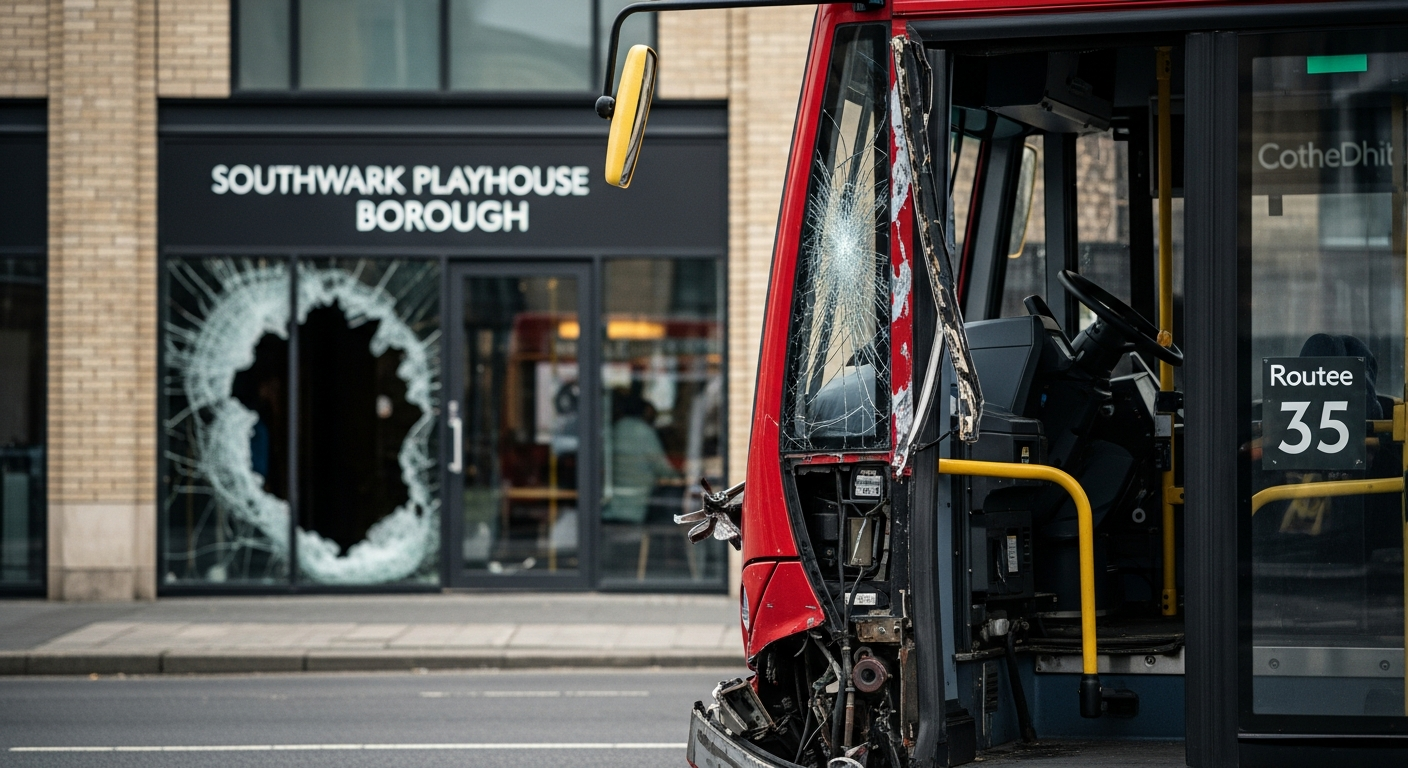
At precisely 8:06 AM, a moment now etched into the city's log of minor urban cataclysms, a single-decker Type 35 bus, presumably en route to fulfil its civic duty, encountered an out-of-service Type 333 bus. This was not a passing glance but rather a committed interaction, culminating in the latter's rather assertive introduction to the architectural integrity of Southwark Playhouse Borough. The initial reports, disseminated with characteristic British understatement, noted 'a number of patients' requiring attention, a phrase that delightfully underplays the dramatic potential of two multi-ton vehicles engaging in an unsanctioned automotive tango.
One might ponder the philosophical implications of an out-of-service bus becoming an active participant in an incident that brings 'service' to a grinding halt. Is it a commentary on the latent energy of dormant machinery, or simply a testament to the unpredictable nature of urban physics? The Metropolitan Police have, quite rightly, found 'no arrests' necessary, suggesting that blame in such complex urban ballets is a nuanced affair, perhaps best left to the algorithms of insurance adjusters rather than the handcuffs of the law.
The Efficacy of Response: A Well-Oiled Machine Meets Spontaneous Disorder
The immediate aftermath saw a rapid deployment of London's emergency services, a testament to the city's preparedness for incidents ranging from the mundane to the utterly bizarre. Ambulance crews, paramedics in fast response cars, advanced paramedics, and even a Hazardous Area Response Team descended upon Newington Causeway.
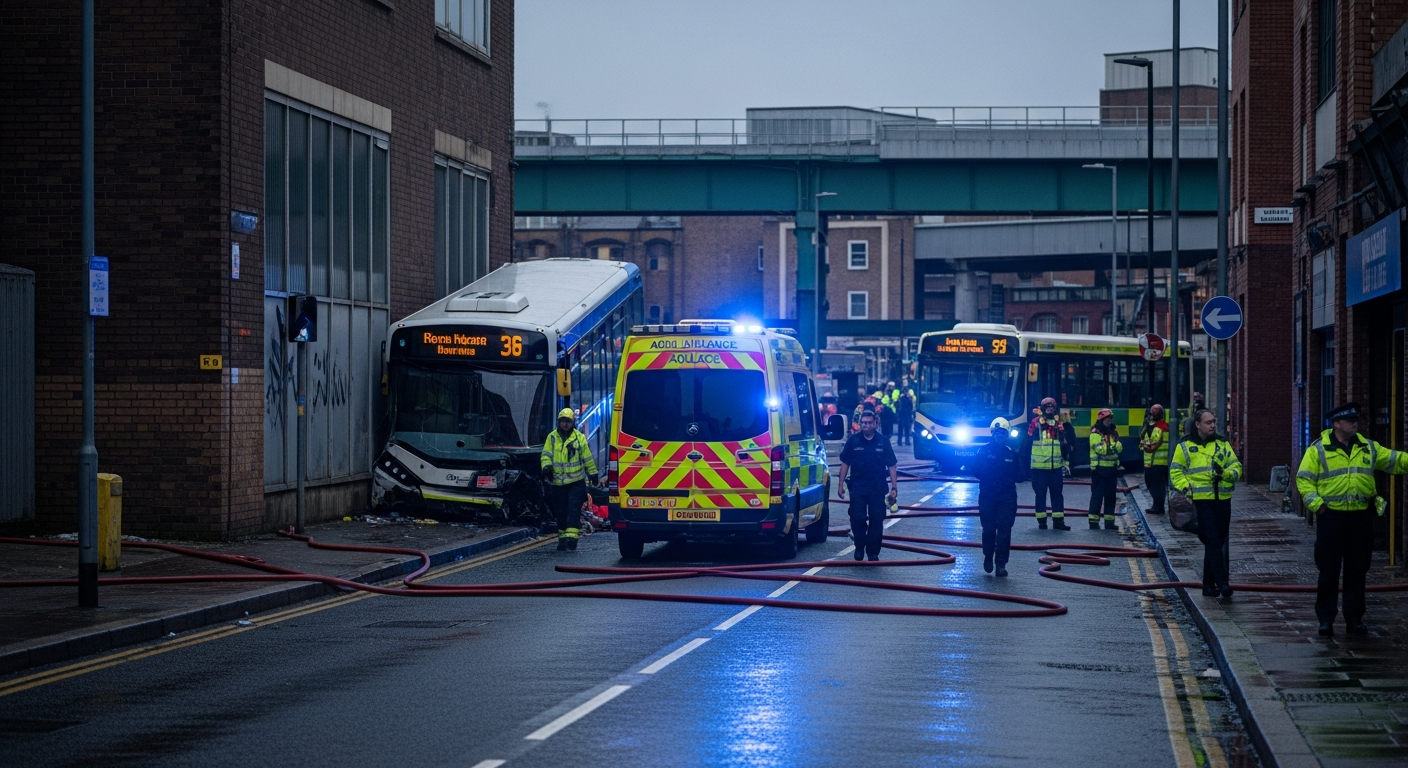
Not to be outdone, London's Air Ambulance dispatched a trauma team, sans helicopter, in a car – an image that conjures efficient land-based intervention, perhaps a commentary on the utility of air support in a dense urban gridlock already caused by, well, buses.
James Johnson, Strategic Commander for London Ambulance Service, provided a factual yet reassuring summation, detailing the impressive array of resources deployed. Six individuals, whose conditions remain undisclosed, were whisked away to hospital, thus completing the logistical chain of command. This swift action underscores the admirable professionalism of the emergency services, turning a scene of unexpected chaos into an exercise in choreographed recovery, albeit with an undercurrent of 'why, precisely, did this happen?'
The Unyielding Concrete Jungle: And Its Temporary Modifications
Newington Causeway, a thoroughfare accustomed to the relentless flow of commuters, became a temporary stage for this automotive drama. For over two hours, the artery was shut, rerouting the lifeblood of south-east London's transit network. The Southwark Playhouse Borough, a venue typically accustomed to planned dramatic productions, found itself hosting an unplanned, unscripted matinee, its window front bearing the indelible mark of an unanticipated vehicular embrace. This incident serves as a stark reminder that even the most robust urban infrastructure can, at times, be subjected to unforeseen and rather abrupt structural reviews.
Public Sentiment: A Tapestry of Mild Surprise and Resigned Acceptance
The 'Rusty Tablet' took to the digital ether to gauge the public's reaction to this most British of vehicular mishaps. Opinions ranged from the mildly intrigued to the stoically accepting:
-
“Just another Tuesday in London, isn't it? At least it wasn't a Tube strike,” quipped one commuter, highlighting the city's robust capacity for absorbing minor inconveniences.
-
“Two buses? Imagine the odds! Must have been a rare planetary alignment,” offered another, injecting a touch of cosmic fatalism into the proceedings.
-
A local resident noted, “I just hope the theatre's next production incorporates a giant bus-shaped prop. Method acting, you know.”
These sentiments reflect a collective psyche that, while not immune to surprise, possesses an admirable resilience and a dry wit, characteristics essential for navigating the daily vagaries of a bustling metropolis.
Conclusion: The Grand Unpredictability of Urban Living
The Newington Causeway bus incident, while thankfully not catastrophic, offers a potent, albeit satirical, lesson in the grand unpredictability of urban living. It reminds us that beneath the veneer of meticulous planning and sophisticated infrastructure, there remains a delightful, almost rebellious, capacity for the unexpected. As London continues its ceaseless churn, such incidents serve not merely as disruptions but as fleeting, dramatic punctuation marks in the ongoing narrative of a city that, much like its buses, continues to move, albeit occasionally, in spectacularly unconventional directions. Perhaps it is in these moments of unforeseen collision that the true, vibrant, and delightfully chaotic spirit of the urban machine is most brightly illuminated.