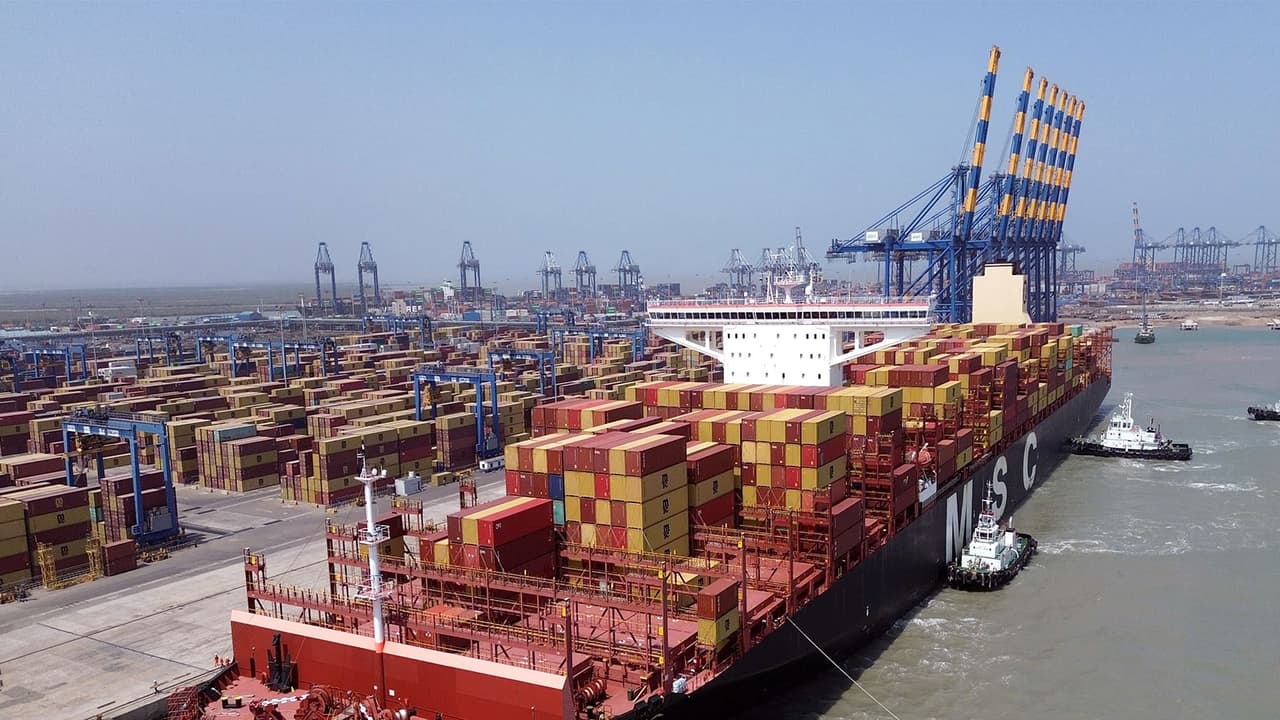
In a move that has left economists scratching their heads and diplomats reaching for their dictionaries, the United States has generously slashed tariffs on Indian imports to a rather precise 18%. This, according to President Donald Trump, is less a trade negotiation and more an act of profound bilateral bromance, a "friendship and respect" offering to Prime Minister Modi. One might almost imagine trumpets blaring and doves soaring, if the fine print wasn't so... well, oily.
This isn't merely about knocking a few percentage points off import duties; it's a grand geopolitical gesture, one that supposedly gives New Delhi a gleaming competitive edge over its regional rivals. China, Indonesia, Bangladesh, Vietnam, and even Pakistan are now looking at India's 18% with a mixture of envy and perhaps a slight burning sensation in their export strategies. But, as with all declarations of eternal friendship in the cutthroat world of international trade, one must always look for the hidden costs – or, in this case, the highly visible oil spill.
Key Takeaways:
-
Tariff Tango: US reduces tariffs on Indian imports from 25% to 18%, effective immediately.
-
Competitive Edge: India now faces lower tariffs than China (34%), Indonesia (19%), Bangladesh & Vietnam (20%), and even Pakistan (19%).
-
Presidential 'Friendship': Donald Trump announced the deal, citing his close bond with PM Modi.
-
The Oil in the Ointment: Trump claimed India agreed to cease buying Russian oil and reduce its own trade barriers against the US.
-
White House Confirmation: A White House official explicitly confirmed that India must "cease, not just reduce," Russian oil purchases.
-
Modi's Delight: PM Modi welcomed the "wonderful announcement" of reduced tariffs for "Made in India" products.
The Art of the Tariff Tangle
The numbers, at least on paper, are compelling. India's new 18% tariff rate stands proudly against China's formidable 34%, suggesting a significant realignment of trade winds. Indonesia's 19%, Bangladesh and Vietnam's 20% each, and Pakistan's 19% all trail India's newly acquired fiscal advantage. It’s like winning a race where your competitors suddenly have to run with lead boots, while you’re given a slight tailwind.
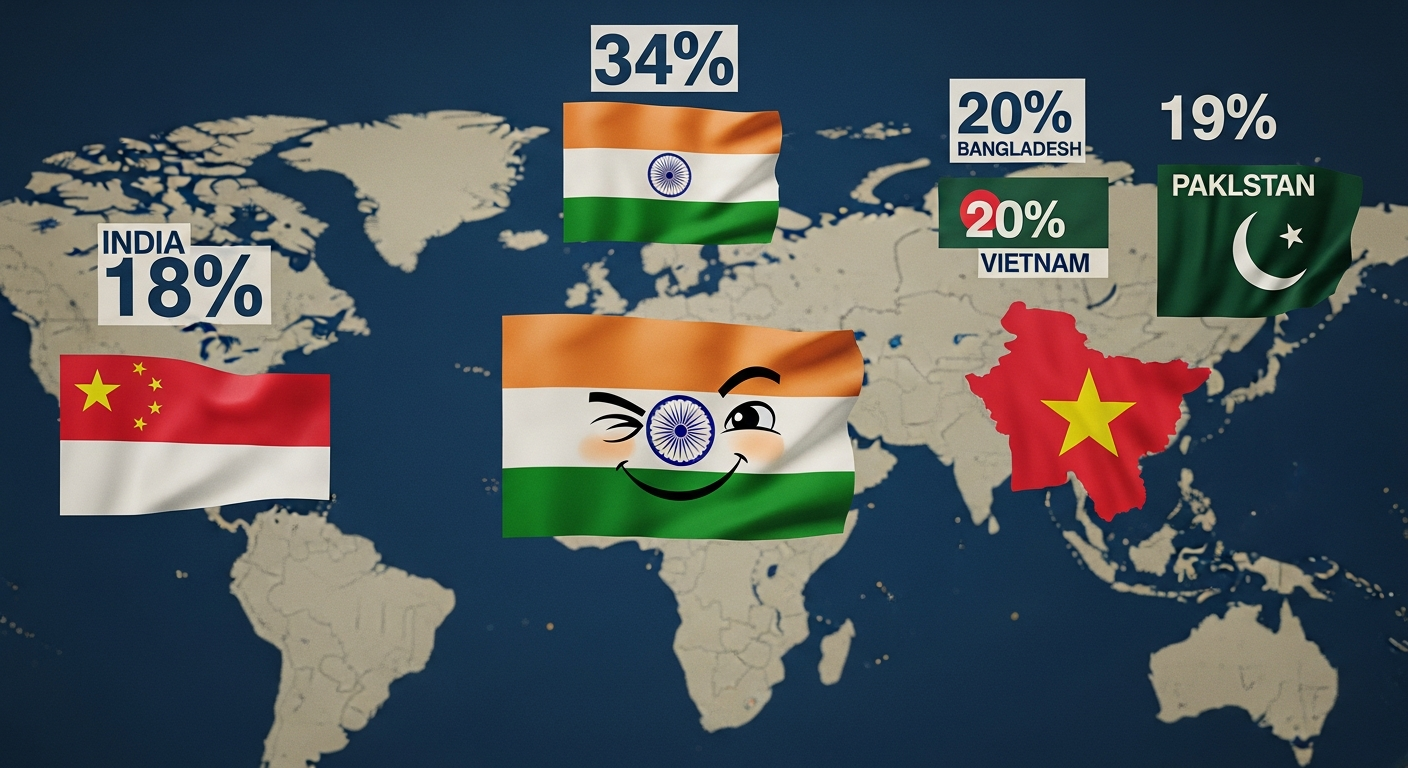
The official narrative posits this as a win for "Made in India" products, promising them a smoother, cheaper passage into the lucrative American market. PM Modi, in his post on X, expressed delight, confirming that "Made in India products will now have a reduced tariff of 18%". It’s a delightful thought, indeed, unless you're one of the aforementioned competitors suddenly facing a more uphill battle.
Friendship, Favour, or Fait Accompli?
Donald Trump, never one to shy away from grand pronouncements, declared the deal an outcome of his profound "friendship and respect" for PM Modi. His Truth Social post painted a picture of two powerful leaders, bosom buddies on the global stage, sealing deals with a mere phone call. The initial reciprocal tariff reduction from 25% to 18% was presented as a gesture of goodwill, a 'favour' granted out of respect. However, Trump's post didn't stop there. It quickly pivoted from effusive praise to a rather specific list of concessions India supposedly agreed to, including – and this is where the plot thickens – an immediate cessation of Russian oil purchases and a reduction of India's own tariffs and non-tariff barriers against the US to "ZERO". Now, that's quite a friendship indeed, one that comes with a very detailed shopping list.
The Oil in the Ointment
This is where the "friendship" takes on a distinctly transactional hue. While PM Modi's initial reaction focused purely on the tariff reduction for Indian goods, Trump's post was unequivocal: "He agreed to stop buying Russian Oil, and to buy much more from the United States and, potentially, Venezuela. This will help END THE WAR in Ukraine..." The implication is clear: the tariff cut is less a gift and more a carrot for a significant geopolitical shift. And if Trump's statement wasn't explicit enough, a White House official, speaking to ANI, clarified with the precision of a surgeon: India must "cease, not just reduce, Russian oil purchases."
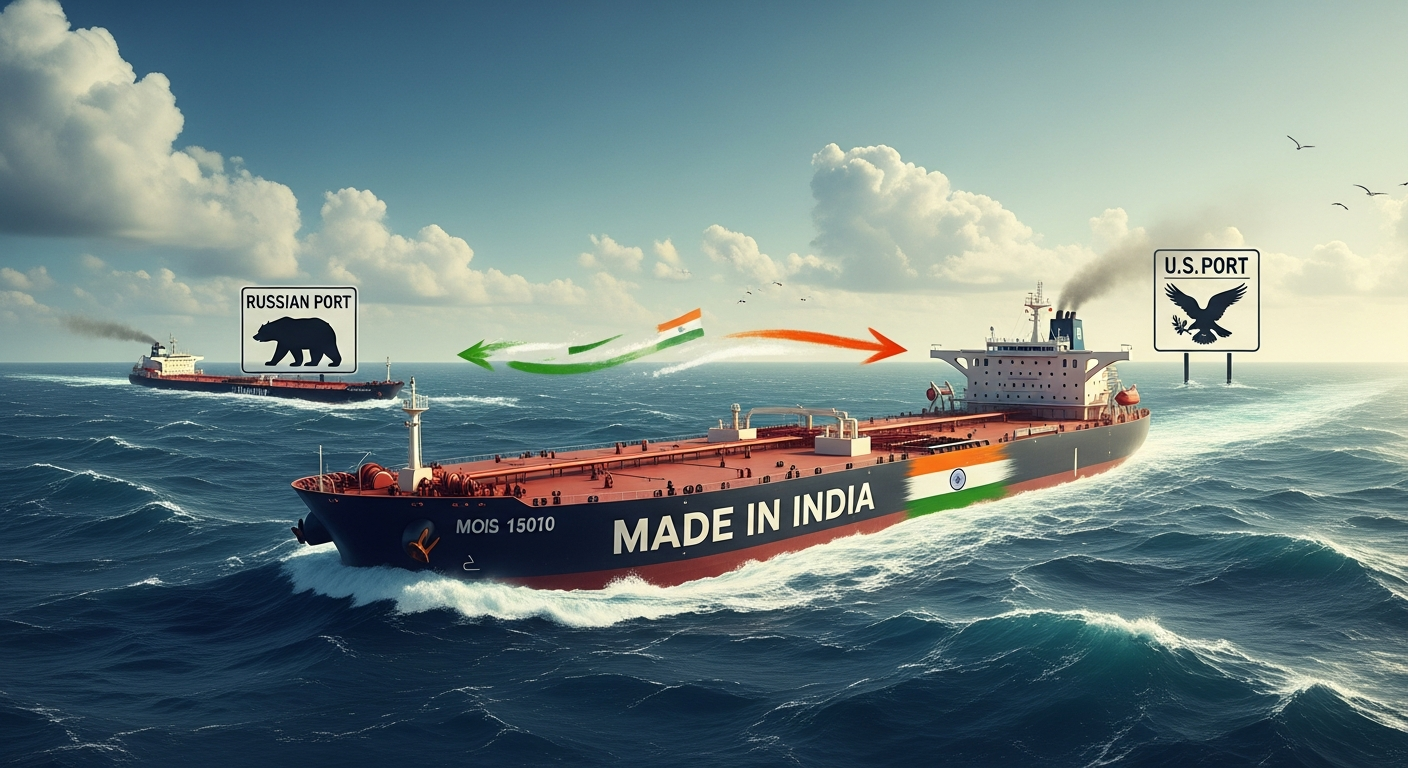
This isn't merely a request; it's a condition, transforming a seemingly straightforward trade deal into a complex geopolitical manoeuvre with far-reaching implications for India's energy security and its traditionally non-aligned foreign policy. The prospect of pivoting from discounted Russian crude to more expensive alternatives, potentially from the US or Venezuela, adds a layer of economic complexity to this sudden burst of diplomatic affection.
Decoding the Diplomatic Dance
The narrative, therefore, is a fascinating study in contrasts. On one hand, a celebratory announcement of economic advantage for India, a boost for its manufacturing and export sectors. On the other, a very clear, very public demand for a dramatic shift in its energy procurement strategy, directly linking economic benefits to a geopolitical stance on the Ukraine war. The "friendship" between Trump and Modi, while perhaps genuine on a personal level, has seemingly been leveraged as a vehicle for strategic objectives. It begs the question: how much sway does a 7% tariff reduction have over long-standing energy agreements and a nation's sovereign policy choices? The silence from official Indian sources regarding the Russian oil condition speaks volumes, or perhaps, speaks in the quiet language of 'negotiation ongoing'.
Public Sentiment
The streets of India, always a barometer of public opinion, reflect a delightful mix of optimism, cynicism, and characteristic humour. "Finally, a discount for our chappals and handicrafts!" declared one street vendor in Delhi, oblivious to the geopolitical currents. A college student, scrolling through news feeds, quipped, "Friendship with Trump? What's the catch? Oh, wait... is it oil? Always oil." An economics professor, with a wry smile, noted, "So, we trade oil for tariffs? Seems like a fair deal, as long as it lasts and doesn't plunge us into a new energy crisis. Diplomacy, after all, is just advanced bargaining." The underlying sentiment, however, remains consistent: while the economic boost is welcome, the conditions attached are certainly not going unnoticed.
Conclusion
India's new tariff advantage is undoubtedly a moment for celebration for its export sector. However, the accompanying expectation – or rather, requirement – to cease Russian oil purchases casts a long shadow over this economic triumph. What began as a narrative of mutual respect and friendship has quickly evolved into a high-stakes geopolitical bargain, where economic incentives are directly tied to foreign policy shifts. As "Made in India" products prepare for their red-carpet entry into the US market, the world watches to see if India will truly swap its energy independence for a tariff discount, and what the long-term price of such a "friendship" will truly be. The curtain has just gone up on this particular geopolitical drama, and the audience, particularly in India, is waiting with bated breath for the next act.
[FEATURED]