
India Takes a Necessary Pause: Election Day Silence
Today, the bustling trading floors of Mumbai lie silent, and the digital screens typically ablaze with flashing numbers are dim. Both the Bombay Stock Exchange (BSE) and the National Stock Exchange (NSE) have halted operations across all segments, a direct consequence of Maharashtra holding crucial elections for its municipal corporations, most notably the Brihanmumbai Municipal Corporation (BMC). This isn't just about stocks; currency and commodity markets have also joined the temporary shutdown.
For investors, this enforced break offers a unique moment for introspection. While frustrating for active traders, it provides a chance to step back from the daily grind and assess the deeper currents influencing India’s economic narrative. The question on many minds isn't if the markets will react to election outcomes, but how profoundly these local political shifts will intersect with the formidable global pressures currently shaping financial landscapes.
Key Takeaways:
-
Indian stock, currency, and commodity markets are fully closed today due to BMC elections.
-
Before the pause, benchmark indexes Sensex and Nifty saw slight declines, pressured by foreign investor selling and high crude oil prices.
-
Infosys reported a Q3 profit dip but unexpectedly raised its revenue forecast.
-
Foreign Institutional Investors (FIIs) net sold shares worth ₹4,781 crore, while Domestic Institutional Investors (DIIs) net bought ₹5,217 crore on Wednesday.
-
Global markets were mixed, influenced by tech stock pullbacks, fluctuating oil prices, and statements from U.S. Federal Reserve officials.
Global Headwinds and Local Reactions: A Pre-Election Snapshot
Before the electoral quiet descended, Indian markets had already experienced a turbulent Wednesday. Benchmark indexes Sensex and Nifty both shed around 0.3 percent. This modest dip, however, tells a larger story of persistent foreign investor selling – a trend that continues to raise eyebrows – coupled with elevated crude oil prices fueled by ongoing geopolitical tensions. The rupee, often a bellwether for India’s economic health, also pared initial gains, settling 6 paise lower against the U.S. dollar, reflecting a broader risk aversion sweeping through global markets. It makes one wonder if a single election could truly counter such entrenched global jitters.
Corporate Earnings & Investor Activity: A Mixed Bag
Adding to the complexity, Wednesday saw some significant corporate news. After market close, IT giant Infosys reported a fall in net profit for the third quarter. While not ideal, the company unexpectedly raised its revenue forecast, a move that undoubtedly sparked curiosity and perhaps a glimmer of optimism among tech investors. This mixed bag of results is a stark reminder that even during a market pause, the underlying corporate machinery continues to turn, laying the groundwork for future performance.
Provisional exchange data from Wednesday offered further insights into investor behaviour. Foreign investors net sold shares worth a substantial ₹4,781 crore, signaling a continued cautious stance or perhaps a reallocation of funds. In contrast, domestic institutional investors (DIIs) stepped in, net buying shares to the tune of ₹5,217 crore, effectively cushioning the blow. This dynamic between foreign outflows and domestic resilience is a crucial narrative for Indian markets, highlighting the growing strength of local capital.
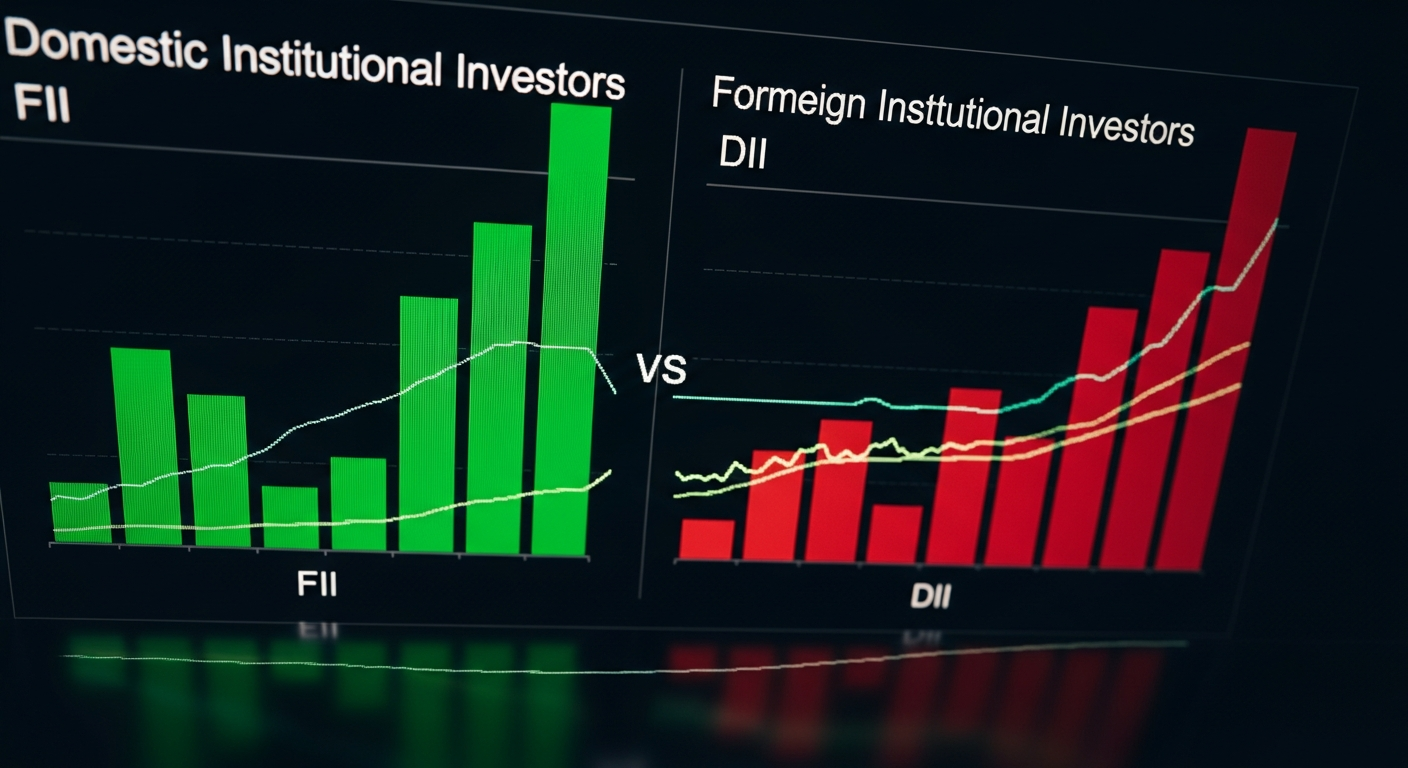
The perpetual dance between foreign caution and domestic confidence is certainly something to watch closely once trading resumes.
International Market Pulse: A World in Flux
While India rested, the global financial engine continued its churn. Asian markets started Thursday mixed, notably impacted by reports of Chinese customs blocking Nvidia's H200 AI chips, leading to a pullback in tech stocks. This development underscores the ongoing technological rivalry and its direct market consequences.
Oil prices, after a six-day rally, tumbled nearly 3 percent, with WTI crude futures reacting to U.S. President Donald Trump's statements about Iran. Gold, too, saw a dip after hitting record highs. The dollar index, however, held firm near a one-month high, reflecting its safe-haven appeal amidst global uncertainty.
Overnight, U.S. stocks extended losses, with mixed bank earnings and President Trump’s escalating pressure on Iran, Denmark, and Greenland creating an uneasy backdrop. Economic data, however, painted a slightly brighter picture: U.S. retail sales surged, producer prices rose modestly, existing home sales accelerated, and the current account deficit significantly narrowed. The Fed's Beige Book indicated "slight to moderate" economic activity, further complicated by statements from Federal Reserve officials Anna Paulson, Neel Kashkari, and Raphael Bostic, leaving traders with much to chew on.

European markets also ended Wednesday mixed, with investors sifting through U.S. bank earnings and geopolitical developments. The pan-European Stoxx 600 edged up, while Germany's DAX and France's CAC 40 slipped, and the U.K.'s FTSE 100 gained slightly. This global picture of mixed signals and underlying tensions makes India's election day pause feel less like a break and more like a collective holding of breath.
Public Sentiment: A Blend of Anticipation and Apprehension
"It's frustrating to have the markets closed, especially with so much happening globally," remarked a young investor, echoing a common sentiment of impatience. Another analyst mused, "While the BMC elections are local, their outcome could set a tone for broader political stability, impacting investor confidence." There's a palpable sense of curiosity about how the election results will translate into market movements, but also a healthy dose of skepticism regarding any immediate, dramatic shifts given the overpowering international factors. "Will a new municipal body truly overshadow high crude oil prices or the Fed's next move?" questioned a veteran trader, articulating the prevailing apprehension that global dynamics might simply be too large to ignore.
Conclusion: A Moment to Reflect, A Future to Watch
As India's markets observe a day of democratic duty, the pause serves as a valuable, albeit enforced, opportunity for reflection. The BMC elections are undoubtedly important for Maharashtra, but the financial world is far from insular. The interplay of foreign investor behaviour, corporate performance, and a volatile international landscape driven by geopolitical tensions and central bank pronouncements will continue to dictate the rhythm of the markets. When trading resumes, all eyes will be on how election results are digested against this complex backdrop, and whether domestic catalysts can truly offer a shield against the relentless ebb and flow of global economic tides. The silence today is not empty; it's pregnant with questions about tomorrow.