
Key Takeaways
-
Gold (XAU/USD) is experiencing unprecedented intraday volatility due to conflicting market forces.
-
The Federal Reserve's unclear rate-cut timeline and stronger-than-expected US data are strengthening the dollar and yields, pressuring gold.
-
Persistent geopolitical tensions are simultaneously creating safe-haven demand, leading to whipsaw price action.
-
For leveraged CFD traders, this environment drastically magnifies both profit potential and, critically, loss potential.
-
Stop-loss orders are unreliable in fast markets, increasing the risk of slippage and forced liquidation.
-
Rigorous risk management, including smaller position sizes and wider stops, is imperative to avoid catastrophic losses.
The Volatility Crucible: Gold's Treacherous Swings
The XAU/USD pair is currently engaged in a dangerous dance, responding with lightning speed to every shift in macroeconomic sentiment and geopolitical whisper. Fresh US employment figures and stubbornly firm inflation metrics from last week's CPI and PPI reports continue to reverberate, forcing traders to aggressively re-evaluate the Federal Reserve's 2026 interest rate trajectory. The renewed debate over a potential delay in aggressive easing has bolstered US Treasury yields and underpinned the US dollar, creating significant headwinds for gold.
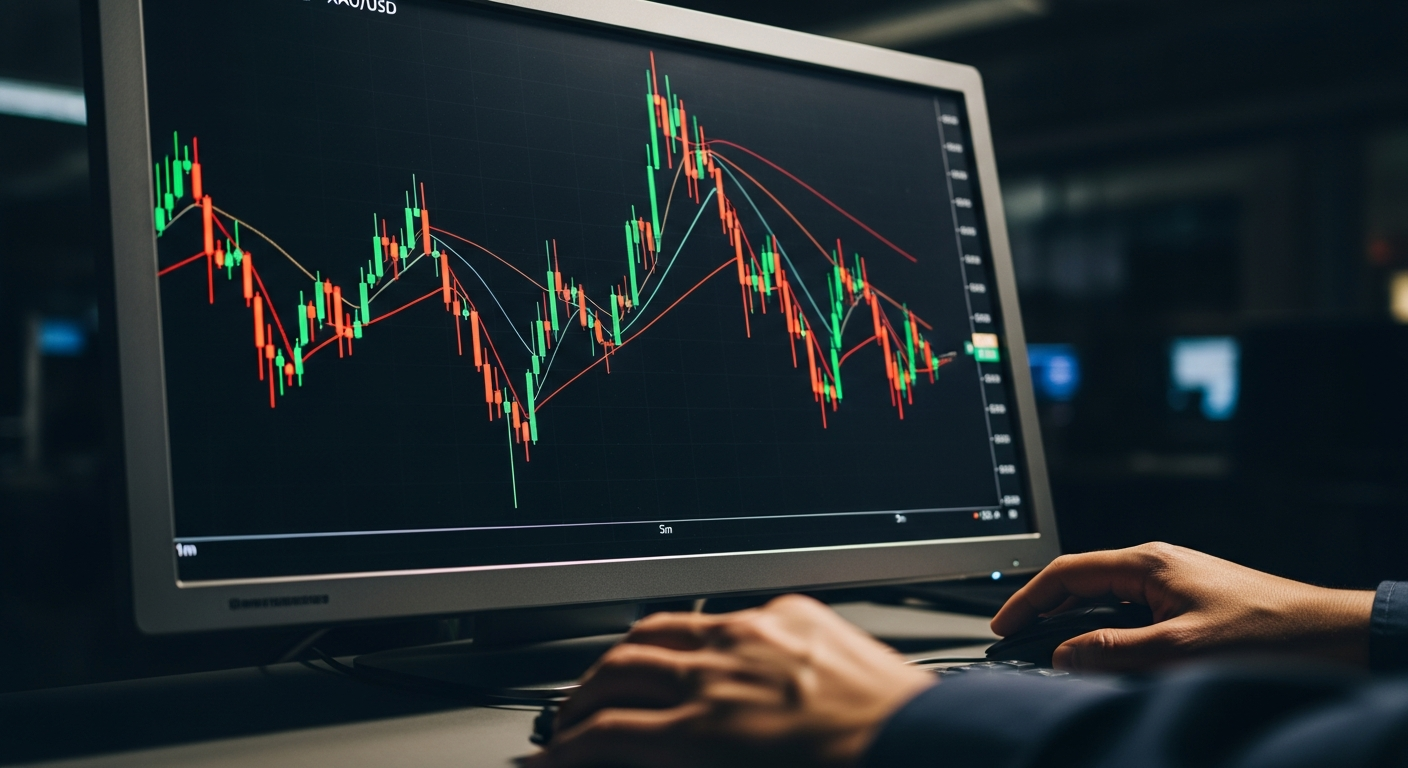
Simultaneously, the persistent specter of geopolitical instability, particularly in the Middle East and concerns over global shipping routes, injects a conflicting dynamic. This underlying safe-haven demand acts as a floor for gold prices, preventing a clear downward trend. The result is a whipsaw market: rapid rallies on geopolitical fears are just as quickly unwound by a stronger dollar reacting to hawkish Fed rhetoric or robust US data. Intraday charts are a testament to this, displaying violent swings of several dollars per ounce within remarkably short timeframes.
The Illusion of Opportunity: A Leveraged Trap
While such dramatic intraday movements might appear to present lucrative opportunities for short-term gains, particularly for those deploying Contracts for Difference (CFDs), this environment is, in reality, a finely set trap. The "Rusty Tablet" must issue a stark warning: the perceived quick profits are overshadowed by an exponentially greater risk of catastrophic losses. The speed and magnitude of gold's reactions mean that typical trading strategies are under immense pressure.
Today, Gold Price Risk isn't just about direction; it's about velocity. A single central banker's comment or a surprise data release can trigger immediate and substantial moves across yields and the dollar, with gold responding within seconds. This rapid-fire market drastically shortens the decision-making window and amplifies the impact of any misjudgment.
Unseen Costs: Speed, Slippage, and Spreads
For leveraged CFD traders, this high-velocity environment presents a double-edged sword that is heavily weighted towards danger. The promise of capturing swift, multi-dollar moves per ounce is appealing, but the reality is harsher. The same volatility that creates opportunity can, in the blink of an eye, render stop-loss levels ineffective. Slippage — the difference between your intended execution price and the actual fill price — can widen considerably in fast-moving, thin markets, dramatically increasing losses.
Furthermore, unexpected spikes in margin utilization can lead to premature margin calls. When markets are reacting to surprise data or news, spreads — the difference between the buy and sell price — can temporarily balloon, hiking transaction costs and undermining profit potential. Even if gold's net daily move seems limited, the treacherous path it takes intraday exposes traders to significant execution risk.

The Perilous Promise of CFDs
CFDs on gold, by their very nature, magnify both potential profits and, more critically, potential losses. Operating with high leverage means that even a modest adverse move of a few dollars per ounce against your position can translate into a disproportionately large percentage loss relative to your initial margin. In today's hyper-risky environment, the probability of sudden, sharp price spikes is elevated beyond usual levels. Overleveraging is a direct route to forced liquidation, where your broker automatically closes your positions to prevent further losses, often at the worst possible time.
It is crucial for traders to internalize that intraday volatility can cause market gaps, significant slippage, and even partial fills of orders, particularly around high-impact news releases. A stop-loss order is not a guaranteed safety net; it may execute at a far worse price in rapidly deteriorating conditions. The grim reality is that a total loss of invested capital is a very realistic outcome if position size and leverage are not managed with the utmost conservatism and discipline.
Public Sentiment: A Market on Edge
"The market feels like walking on eggshells," remarked one veteran Indian commodity trader, "Every tick is a gamble when the Fed's next move is anyone's guess, and then you have global tensions flaring up. It's exhilarating but exhausting." Another analyst echoed this sentiment: "We're seeing a fundamental disconnect – safe-haven flows clashing with dollar strength. It's a recipe for chaos, and smaller, leveraged accounts are going to bear the brunt." These voices underscore the deep unease permeating the gold market.
Conclusion
Ultimately, the gold market on January 19, 2026, is defined not just by price direction, but by an unprecedented intensity of risk. The trifecta of Federal Reserve uncertainty, robust US economic performance, and persistent geopolitical hazards has engineered an environment where XAU/USD is less an investment and more a high-stakes lottery. For those contemplating positions in leveraged CFDs, "Rusty Tablet" implores extreme caution. Without an ironclad, disciplined risk management strategy — prioritizing smaller position sizes, well-calibrated stops, and stringent loss thresholds — even well-funded accounts face an existential threat in gold's dangerous dance.