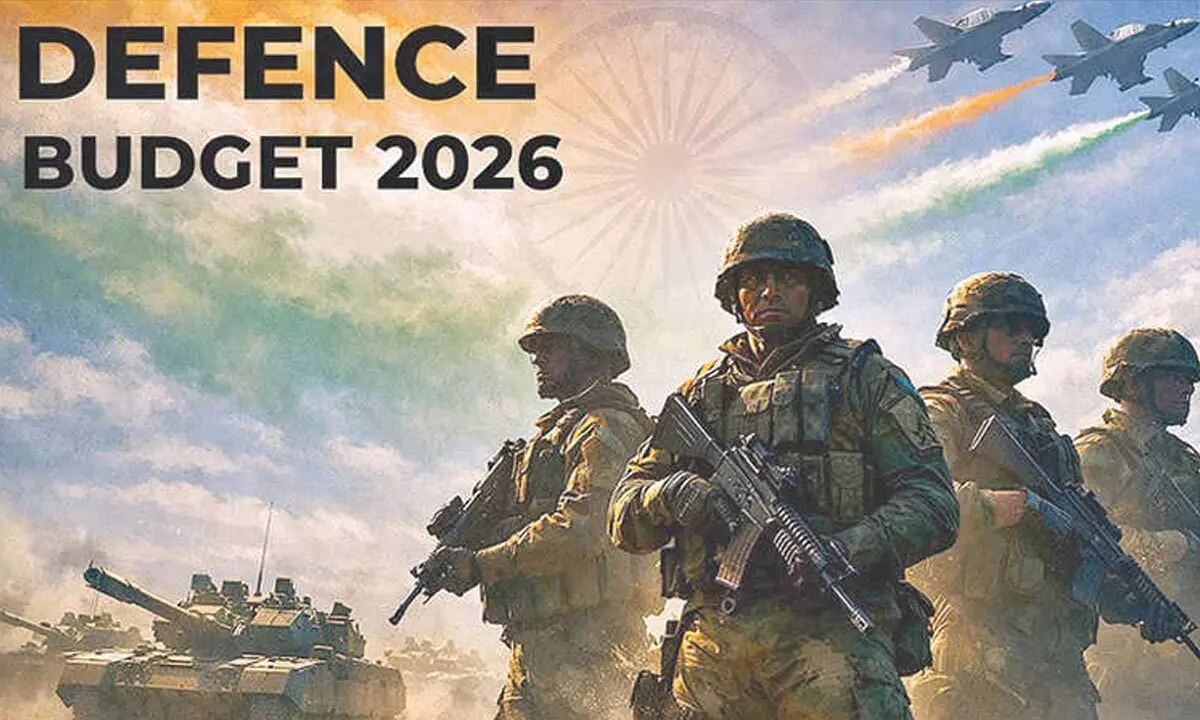
The Indian Union Budget for 2026-27 has unfurled a monumental commitment to national security, allocating a staggering Rs 7.85 lakh crore for defence. This fiscal muscle-flexing, representing a significant increase from the previous year's Rs 6.81 lakh crore, is not merely an incremental rise but a strategic pivot, driven by a palpable sense of urgency to enhance military readiness and technological superiority. At the heart of this allocation lies a pronounced focus on capital expenditure, which has seen a formidable 28 percent surge to Rs 2.31 lakh crore from Rs 1.80 lakh crore last year. This isn't just about maintaining the status quo; it's about fundamentally transforming India's defence capabilities to meet the complex demands of a volatile geopolitical theatre.
Key Takeaways:
-
Record Allocation: A colossal Rs 7.85 lakh crore defence outlay for the fiscal year 2026-27, marking a substantial increase from the previous year.
-
Capital Expenditure Surge: A significant 28% boost in capital outlay to Rs 2.31 lakh crore, earmarked for major acquisitions and infrastructure development.
-
Strategic Allocations: Specific, hefty sums allocated for critical assets, including Rs 63,733 crore for aircraft and aero engines, and Rs 25,023 crore for the naval fleet.
-
Modernisation Drive: Funding to expedite high-profile acquisitions, most notably a major fighter aircraft deal for 114 Rafale jets from France.
-
Domestic Boost: Incentives for local defence manufacturing, exemplified by the exemption of basic customs duty on raw materials for defence MRO (Maintenance, Repair, and Overhaul) units.
-
Geopolitical Imperative: The budget directly addresses heightened threats along India's eastern and western borders with China and Pakistan, respectively, emphasizing military preparedness.
The Fiscal Boost: Unpacking the Numbers
The sheer scale of the Rs 7,84,678 crore defence outlay for the upcoming fiscal year stands as a testament to India's unwavering resolve. This figure, a significant leap from Rs 6,81,210 crore in the preceding year, primarily bolsters the armed forces' long-standing demands for increased capital outlay. The emphasis here is critical: a 28 percent increase in capital expenditure to Rs 2.31 lakh crore, up from Rs 1.80 lakh crore, signals a clear intent to invest in tangible assets – new platforms, advanced weaponry, and critical infrastructure – rather than just operational maintenance.

Within this capital allocation, specific sectors have received focused attention. The allocation of Rs 63,733 crore for aircraft and aero engines highlights a clear priority on air power modernization, crucial for surveillance, rapid response, and strategic deterrence. Simultaneously, Rs 25,023 crore dedicated to the naval fleet underscores India's growing maritime ambitions and the imperative to secure its vast coastline and strategic sea lanes, particularly in the Indo-Pacific region. This granular breakdown of spending offers a window into the strategic thinking guiding India's defence planners, balancing immediate needs with long-term strategic objectives.
Strategic Imperatives: Threats on Two Fronts
This robust financial commitment is explicitly framed against a backdrop of a 'volatile geopolitical scenario and heightened threats on both eastern and western borders with China and Pakistan, respectively.' The Doklam standoff, ongoing border tensions with China in Ladakh, and persistent cross-border skirmishes and proxy activities with Pakistan have collectively underscored the urgent need for a potent and agile military. The budget, therefore, serves as a direct response to these dual-front challenges. It aims to bridge critical capability gaps, enhance surveillance capabilities along disputed frontiers, and project credible deterrence against any hostile adventurism. The focus isn't merely on numerical strength but on technological edge, ensuring India's forces are equipped with the latest tools to counter modern threats, whether conventional or hybrid.
Modernisation Drive: Acquisitions and Domestic Production
Crucially, the increased capital outlay is earmarked for funding major acquisitions of advanced weapon systems. The most prominent example cited is the biggest-ever fighter aircraft deal, where India inked an agreement with France to purchase 114 Rafale jets. This acquisition goes beyond merely adding aircraft; it signifies a qualitative leap in air superiority, multi-role capabilities, and technological sophistication for the Indian Air Force. Beyond this, the budget also aims to accelerate the procurement of other cutting-edge systems, from drones and missile defence systems to advanced infantry weapons and communication networks.

However, the strategy extends beyond foreign procurements. There's a pronounced push towards bolstering domestic defence manufacturing. This 'Make in India' initiative is not just an economic mantra but a strategic imperative to reduce reliance on foreign suppliers, foster self-sufficiency, and create a robust indigenous defence industrial base. The budget attempts to provide tangible support for this vision.
The 'Make in India' Push: Duty Exemptions and Self-Reliance
In a move designed to further energize the domestic defence ecosystem, the Finance Minister announced the exemption of basic customs duty on raw materials imported for the manufacturing of parts used in the maintenance, repair, and overhaul (MRO) of defence units. This seemingly technical detail holds significant strategic implications. By reducing the cost of imported raw materials, the government aims to make Indian-manufactured components more competitive, incentivize local production, and streamline the MRO process within the country. This not only enhances operational readiness by reducing turnaround times for repairs but also stimulates job creation and technology absorption within India's industrial sector, pushing the nation closer to genuine self-reliance in defence.
Public Sentiment
While the massive allocation has largely been met with approval from strategic analysts who view it as a critical necessity for national security in an increasingly unstable region, public discourse also hints at a desire for transparency and accountability. 'This budget is a clear statement of intent, vital for safeguarding our borders and interests,' remarked one defence expert, 'but the real test lies in its efficient and timely execution, ensuring every rupee contributes directly to bolstering our capabilities.' Others on social media platforms expressed a cautious optimism, hoping the emphasis on domestic production truly translates into job creation and technological self-reliance, rather than merely large contracts for foreign suppliers, calling for robust oversight to ensure optimal utilization of these significant funds.
Conclusion
India's record-breaking defence budget is more than just a financial statement; it is a strategic declaration. It reflects a nation acutely aware of its geopolitical vulnerabilities and determined to equip itself for the challenges of the 21st century. The focus on increased capital outlay, major acquisitions like the Rafale jets, and the concerted push for domestic manufacturing through duty exemptions, collectively paint a picture of a nation committed to modernizing its armed forces. The true measure of this budget's success will, however, be seen in its effective implementation – how swiftly new capabilities are integrated, how efficiently funds are utilized, and ultimately, how robustly India can secure its sovereignty and interests in an ever-turbulent world. The 'Rusty Tablet' will continue to monitor this crucial development, examining its long-term impact on India's strategic autonomy and regional power dynamics. [FEATURED]