In an age where corporate responsibility is under constant scrutiny, Disney's recent decision to delete a social media thread — ostensibly because its audience chose to highlight anti-fascist messages from Disney's own catalog — serves as a stark reminder of the often-contradictory pressures faced by global entertainment conglomerates. This incident not only exposes a deep-seated corporate timidity but also underscores the inherent tension when foundational narratives meet contemporary political sensitivities, forcing us to question where Disney truly stands on the very principles it champions in its most beloved stories.
Key Takeaways
-
Innocuous Prompt, Potent Response: Disney launched a Threads campaign asking for emotionally resonant quotes, only to be met with a deluge of anti-fascist messages.
-
Corporate Self-Censorship: The company swiftly deleted the post, revealing discomfort with the political interpretations of its own content or fear of external backlash.
-
Values Discrepancy: This act highlights a perceived disconnect between Disney's narrative themes of justice and rebellion, and its real-world corporate actions.
-
Erosion of Trust: The incident raises critical questions about corporate neutrality, brand integrity, and the delicate balance required of major entertainment entities in a politically charged environment.
The Unintended Echo Chamber: Disney's Challenge to Itself
The premise seemed benign enough: "Share a Disney quote that sums up how you're feeling right now!" It was a standard social media engagement tactic, designed to foster nostalgia and cultivate brand affinity. What Disney likely didn't anticipate, however, was the collective consciousness of its audience, which quickly transformed the benign prompt into a pointed political statement. Fans delved deep into the vast Disney-owned canon, unearthing lines from Star Wars, The Hunchback of Notre Dame, and even Mary Poppins that, when viewed through a contemporary lens, resonated with distinctly anti-fascist and anti-authoritarian sentiments.
Quotes like Padmé Amidala's chilling observation, "So this is how liberty dies... with thunderous applause," from Star Wars: Episode III – Revenge of the Sith, became particularly prominent. Similarly, lines that spoke to the dangers of prejudice and the courage to resist oppression, echoing the themes of Quasimodo's struggle against Frollo, or even the subversive cheer of Mary Poppins offering "a spoonful of sugar" to help swallow difficult truths, were deployed with clear intent. The subtext was undeniable: these were not just nostalgic musings but direct, if implicit, critiques aimed squarely at perceived authoritarian tendencies in current administrations.
The Swift Erasure: Corporate Retreat or Self-Preservation?
Then, as quickly as the conversation ignited, it was extinguished. Disney deleted the entire Threads post. This act of corporate self-censorship sends a stark, chilling message. It suggests one of two highly problematic scenarios, both indicative of a fundamental misstep by the entertainment giant:
-
Inability to Confront Its Own Narrative: Perhaps Disney genuinely couldn't handle the inherent anti-fascist messaging of its own movies. This interpretation suggests a startling lack of self-awareness regarding the foundational themes that have made its stories endure. Many Disney narratives, particularly those acquired or developed with greater artistic license, are deeply steeped in classic archetypes of rebellion against tyranny, the fight for justice, and the triumph of good over oppressive evil. To shy away from these themes when they are articulated by one's own audience is to betray the very spirit of those tales.
-
Fear of 'Pissing Off the Powers That Be': More cynically, and perhaps more likely for a conglomerate of Disney's scale, the deletion might have been a calculated corporate decision to avoid alienating powerful political figures or segments of the public. In a deeply polarized political landscape, major corporations often strive for perceived neutrality, even if that neutrality comes at the cost of authentic engagement or alignment with their own brand's historical values. The potential for a backlash from politically conservative groups, who might interpret anti-fascist messaging as partisan, could have driven this rapid retreat.
Regardless of the precise motivation, the outcome is the same: Disney chose to silence a conversation initiated by its own content, rather than stand by the timeless lessons embedded within its stories.
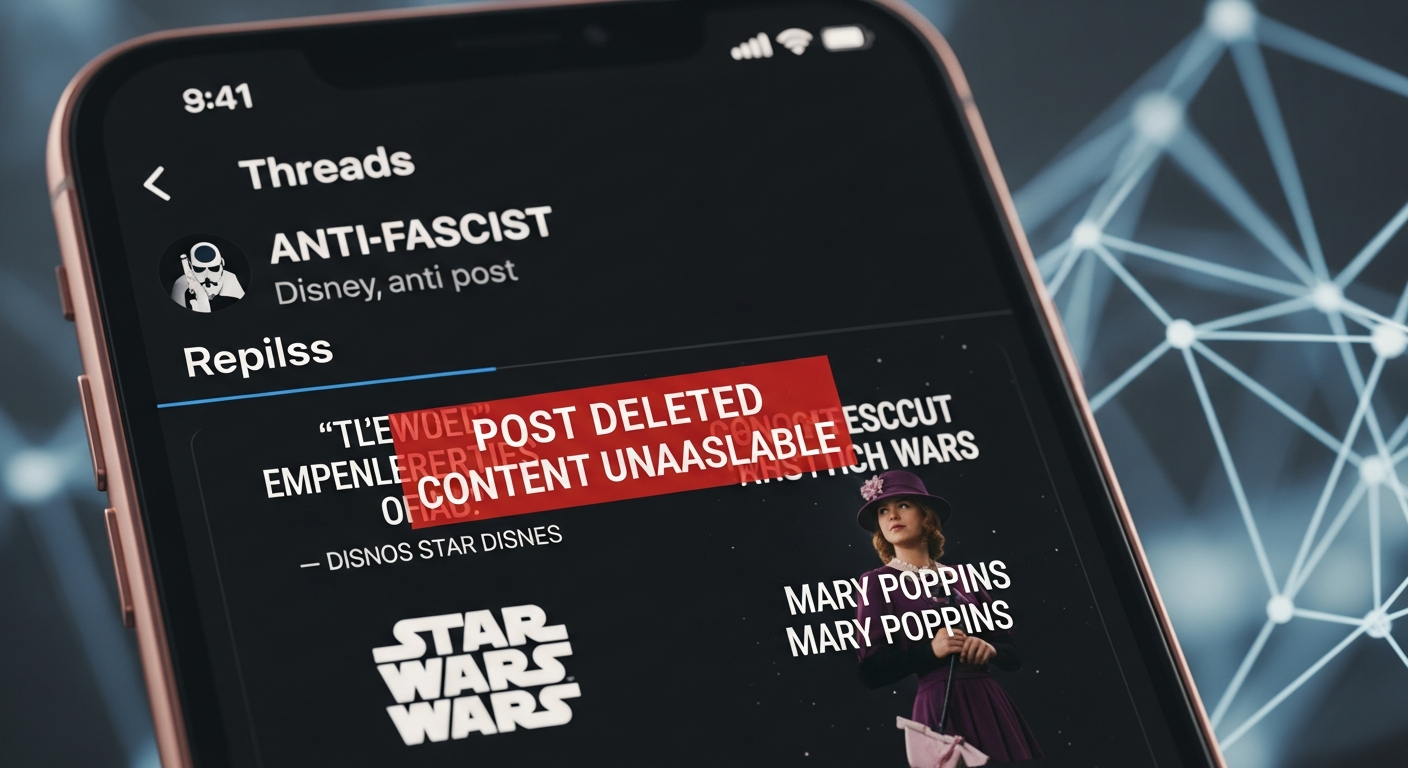
The irony is palpable, a digital whisper of 'content unavailable' echoing louder than any original post could have.
The Broader Implications: Brand Identity and Public Trust
Disney's brand is an intricate tapestry woven with threads of magic, wonder, and morality. For generations, its stories have shaped childhoods, imparting lessons about courage, compassion, and standing up for what is right. When the corporation behind these stories actively censors its audience for reiterating these very lessons, it creates a profound dissonance. How can Disney continue to champion narratives of heroes fighting oppressive forces if it fears the contemporary application of those same ideals?
This incident chips away at public trust. For a significant portion of its audience, particularly those who value the progressive and justice-oriented themes in its content, Disney's action feels like a betrayal. It signals a prioritizing of corporate timidity and perceived political neutrality over the ethical bedrock of its own creative output. In an era where consumers increasingly demand that brands align with tangible values, Disney's move risks appearing hypocritical and opportunistic, more concerned with appeasing a broad, potentially critical, demographic than with the integrity of its artistic message.
Public Sentiment: The Streisand Effect in Full Swing
The internet, ever vigilant, quickly documented the erasure, turning an attempt at corporate self-censorship into a potent symbol of its own failure. Social media platforms buzzed with a mix of irony, disappointment, and a renewed appreciation for the enduring power of these 'children's' stories to resonate with adult, complex issues. A resourceful Threads user ensured the deleted post and its poignant replies were recorded for posterity, highlighting that in the digital age, true censorship is a formidable, often impossible, task. The public's reaction underscored a collective refusal to let these critical messages vanish into the corporate ether.
Conclusion
Disney's deletion of its Threads post is more than just a momentary gaffe; it is a telling symptom of a larger corporate quandary. It highlights the precarious tightrope walk of a global entertainment empire trying to maintain a facade of universal appeal while its own stories inherently carry potent, often politically charged, moral lessons. By silencing its audience's anti-fascist echoes, Disney has inadvertently spotlighted the potential gap between its cinematic values and its real-world corporate actions. This incident serves as a stark reminder that in an interconnected world, a company's brand is not merely what it projects, but also how it reacts to the inevitable, often uncomfortable, reflections of its own narratives.