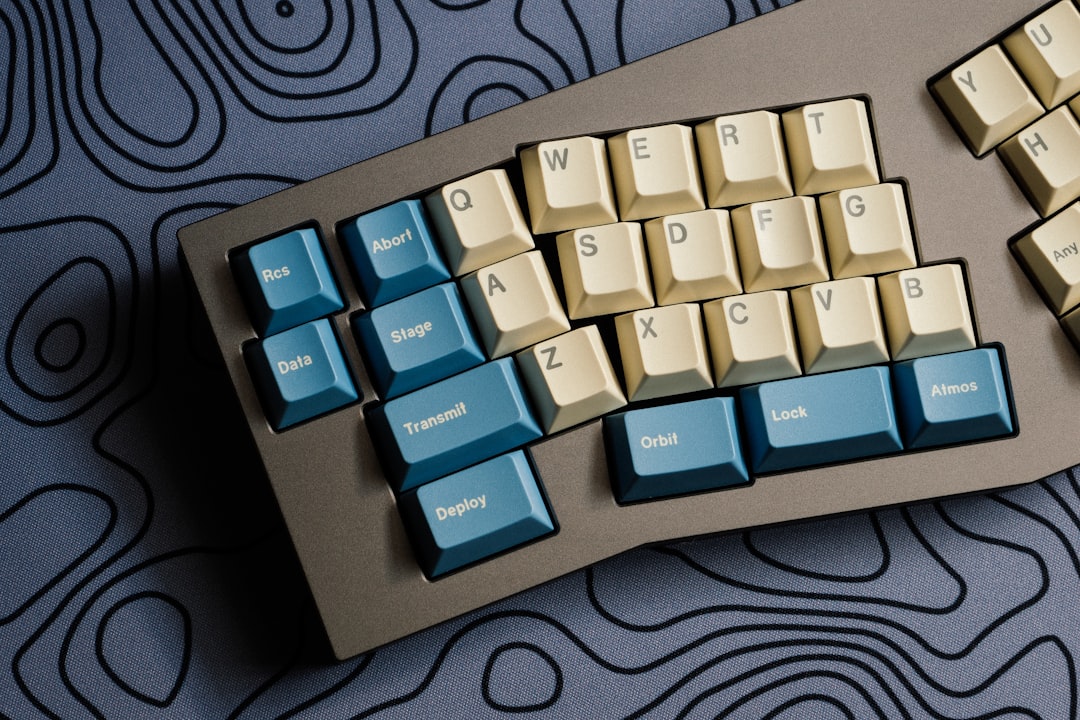
In the relentless pursuit of digital efficiency, the tools we employ are as critical as the intellect we bring to bear. Yet, for all the advancements in processing power and display technology, the fundamental interface between human and machine – the keyboard – often remains stuck in an anachronistic design paradigm. While the market is awash with mechanical marvels and low-profile wonders, a truly transformative shift occurs at the intersection of ergonomics and engineering: the split keyboard.
My conviction on this matter is absolute. My Kinesis Advantage, a sculpted fortress of keys, is not merely a tool; it is an extension of my professional self. You’ll pry it from under my cold, dead hands, not because of sentimentality, but because it represents the pinnacle of a well-considered interface, an industrial-grade solution to the inherent biomechanical flaws of the conventional QWERTY slab.
The Ergonomic Imperative: Why We Split
Traditional keyboards force our wrists into unnatural ulnar deviation and our forearms into pronation, leading to strain, fatigue, and ultimately, repetitive strain injuries (RSIs). The genius of the split ergonomic design lies in its direct confrontation of these issues. By separating the keyboard halves, users can position their hands and wrists in a neutral, handshake-like posture, alleviating stress on tendons and nerves. This isn't a luxury; it's an imperative for anyone spending significant time at a desk.
The Monoblock Maverick: Kinesis Advantage
The Kinesis Advantage series stands as an icon in the ergonomic landscape. Its fixed, concave keywells and integrated palm rests guide the hands into an optimal typing position, minimizing finger travel and placing common modifier keys within easy thumb reach. It’s a desk-bound behemoth, unashamedly idiosyncratic in its aesthetic, but unparalleled in its function. This device is an investment in long-term health and unhindered productivity, built like a tank to withstand years of rigorous use. Its learning curve, though steep for some, yields dividends in comfort and speed that rapidly justify the initial effort.
The Portable Pioneer: Glove 80
However, the modern professional is rarely confined to a single workstation. This is where devices like the Glove 80 enter the fray. Offering the distinct advantages of a split, sculpted layout in a portable, wireless form factor, the Glove 80 allows for ergonomic continuity whether you’re in the office, at home, or on the move. Its lightweight design and modularity mean that the benefits of a neutral wrist posture are no longer tethered to a fixed desk setup. This evolution addresses a critical gap, proving that robust ergonomics need not sacrifice mobility.
The Split Dilemma: Why Divide and Conquer?
The philosophical core of the split keyboard movement is simple: adapt the tool to the human, not the human to the tool. While the initial adaptation period can be challenging – retraining muscle memory to a new layout and key clusters – the long-term benefits are profound. Reduced pain, increased typing speed, and sustained focus are not merely anecdotal; they are the lived experience of countless users who have made the transition. The split allows for a customizable width, accommodating varying shoulder widths and personal preferences, further refining the ergonomic fit. It decouples the left and right hand, allowing for independent positioning and rotation, a freedom utterly absent in conventional designs.
Public Sentiment
The discourse surrounding split ergonomic keyboards often highlights a deep loyalty among users, coupled with an initial apprehension from newcomers.
-
"My Kinesis Advantage literally saved my career. My wrists were shot, and conventional keyboards were agony. Now, I can type for hours without a problem." – Software Engineer, Berlin
-
"I balked at the price and the look of the Glove 80, but after a week, I realized how much tension I was holding in my shoulders. It's a game-changer for working remotely." – Freelance Writer, Austin
-
"I tried a split once, and it felt like learning to type all over again. I just couldn't commit to it. My regular mechanical keyboard is fine." – Marketing Professional, London
-
"It's not just about the split; it's the concave keywells and thumb clusters. Once you experience that natural hand position, there's no going back to flat keys." – Data Analyst, Tokyo
Conclusion
The argument for split ergonomic keyboards transcends mere preference; it is a reasoned case for superior engineering, human-centric design, and long-term health. From the immovable, deeply sculpted permanence of a Kinesis Advantage to the liberating portability of a Glove 80, these devices represent a critical evolutionary step in our interaction with technology. In an increasingly digital world, investing in the tools that safeguard our well-being and maximize our output is not just smart—it’s essential. The traditional keyboard may cling to its market dominance, but for those who truly understand the stakes, the future is already divided, and infinitely more comfortable.