Key Takeaways:
-
Donald Trump unilaterally declared himself "Acting President of Venezuela" via Truth Social, a claim unverified by any international body or official records.
-
This came amidst the US-led abduction of Venezuelan President Nicolas Maduro and his wife, Cilia Flores.
-
The move drew severe international condemnation from China, Russia, Colombia, and Spain, decrying it as a blatant violation of international law.
-
Venezuela's acting president, Delcy Rodríguez, maintains legitimate leadership and vows Maduro's return, while Trump issues stark warnings.
-
The US is aggressively pushing American oil companies to invest up to $100 billion in Venezuela, aiming to control its oil sector and secure crude supplies.
A New Brand of Interventionism: The 'Acting President' Gambit
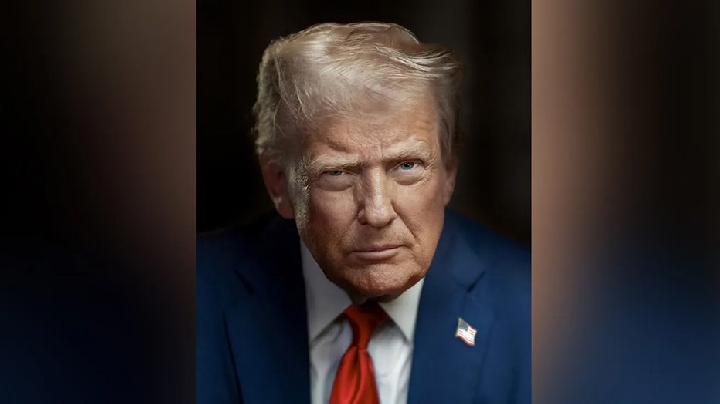
On January 12, 2026, the digital world was met with a startling claim: a screenshot, seemingly edited, posted by former US President Donald Trump on his Truth Social account, declaring himself "Acting President of Venezuela." This extraordinary assertion, made even as he maintains his current post as US president, followed the highly controversial abduction of Venezuelan leader Nicolas Maduro and his wife Cilia Flores by Washington on January 3. Trump’s post, stating the US would temporarily "run" Venezuela, is a breathtaking exhibition of unilateralism, bypassing all established norms of international diplomacy and sovereignty. The claim, predictably, holds no water with any international body and is conspicuously absent from official records, including the actual Wikipedia page it purports to emulate.
The Venezuelan Chessboard: Abduction, Sanctions, and Global Outcry
This audacious move is not an isolated incident but the culmination of months, if not years, of escalating US pressure, crippling sanctions, and overt military activities directed at the oil-rich South American nation. The abduction of President Maduro, now reportedly detained in New York on charges of narco-terrorism and drug trafficking, has ignited a fierce global backlash. Nations historically wary of US intervention, alongside unexpected allies, have unequivocally condemned Washington's actions. China, Russia, Colombia, and even Spain have voiced strong disapproval, characterising the US's behaviour as a blatant violation of international law and a dangerous erosion of state sovereignty. The international community watches, aghast, as the US appears to write its own rules for global engagement.
Defiance from Caracas: Rodríguez Stands Firm Against Threats
In Caracas, the response has been one of resolute defiance. Delcy Rodríguez, sworn in by the Supreme Court as Venezuela's acting president, has swiftly moved to reassure the nation and assert the continuity of legitimate governance. Speaking at a community event in the State of Miranda, Rodríguez unequivocally declared, "There is no uncertainty here. The Venezuelan people are in charge, and there is a government, that of President Nicolas Maduro." She has also publicly vowed an unwavering commitment to secure the return of Maduro and Flores, refusing to rest "for a single minute" until they are back on Venezuelan soil.
This unwavering stance has not been met with diplomatic overtures from Washington. Instead, Trump issued a chilling warning to Rodríguez, stating she could "pay a very big price" if she failed to cooperate with the US. He even suggested that her consequences could be "heavier" than those faced by Maduro, a statement that underscores the coercive and intimidating posture adopted by the US administration, bypassing any semblance of legal or diplomatic process.
Oil and Influence: The New Scramble for Venezuelan Riches
Beyond the political theatre, the economic motivations behind the US's aggressive stance are becoming starkly clear. Trump has openly urged major American oil companies to commit up to $100 billion in investments to accelerate Venezuela's oil production expansion. In a White House meeting with oil executives, he made it clear that the US would dictate which companies would be "allowed" to operate in Venezuela, effectively positioning Washington as the gatekeeper to the country's vast crude reserves. This arrangement, he argued, would facilitate the "rebuilding" of Venezuela’s deteriorating oil sector – a sector largely crippled by previous US sanctions.
The US President also lauded an "agreement" with what he termed the "interim leadership of Venezuela" – a leadership whose legitimacy remains unrecognised – to supply 50 million barrels of crude oil to the US, a shipment he suggested could continue "indefinitely." He proudly declared that this increased supply would contribute to lowering US energy prices, subtly linking the aggressive foreign policy to domestic economic benefits. Further cementing this control, Trump signed an executive order designed to "protect" funds held in the US resulting from the sales of Venezuelan oil, effectively freezing assets under US jurisdiction, ostensibly for future "rebuilding" efforts.
The "Peace" Ploy: Prisoner Release and a Warning
Amidst these heavy-handed manoeuvres, Trump also claimed a dubious diplomatic victory. Venezuela announced the release of a number of political prisoners, described as a gesture to "seek peace." On Truth Social, Trump swiftly claimed this release occurred "in a big way" after the US action, attributing the gesture directly to Washington's coercive tactics. In a stark message to the freed prisoners, he warned them to "never forget it," implying an ongoing obligation or loyalty derived from their release under US pressure. This "peace" offering, extracted under duress, further highlights the imbalance of power and the conditional nature of any diplomatic engagement orchestrated by the US in this volatile situation.
Public Sentiment:
"This isn't diplomacy; it's a digital coup. To declare oneself president of another sovereign nation, especially after abducting its leader, is an act of international gangsterism," remarked a prominent international law professor. A geopolitical analyst observed, "The world watches in disbelief as might makes right, turning international law into a mere suggestion." A Latin American ambassador, speaking anonymously, expressed grave concerns: "This is a direct assault on self-determination. The reverberations will be felt for decades." Social media also voiced outrage, with one trending post: "The 'free world' cannot stand by while a powerful nation simply annexes another through brute force."
Conclusion:
Donald Trump's self-declaration as Venezuela's "Acting President" marks a watershed moment, pushing the boundaries of international norms. By unilaterally asserting control, coupled with leader abduction and economic coercion, the US has plunged the region into profound uncertainty and ignited a global diplomatic firestorm. This move threatens to dismantle established legal frameworks, ushering in an era where power projection dictates global order. The critical global scrutiny and Caracas's defiant stance underscore Washington's perilous path, fraught with deeper instability and an erosion of America's international standing.