
Key Takeaways
-
Psychedelics primarily target the brain's serotonin 2A receptors, which dampen visual processing.
-
Reduced external visual input prompts the brain to compensate by integrating fragments from memory, leading to hallucinations.
-
These substances induce low-frequency brain waves (5-Hz) in visual areas, stimulating the retrosplenial cortex, a key memory hub.
-
This shift weakens awareness of external events, making perception more reliant on recalled information, likened to "partial dreaming."
-
Advanced real-time optical imaging in specially engineered mice revealed the precise neural pathways involved.
-
The findings offer a biological explanation for both psychedelic experiences and their potential to help 'unlearn' negative thought patterns in therapy.
The Serotonin Switch: How Psychedelics Redirect Perception
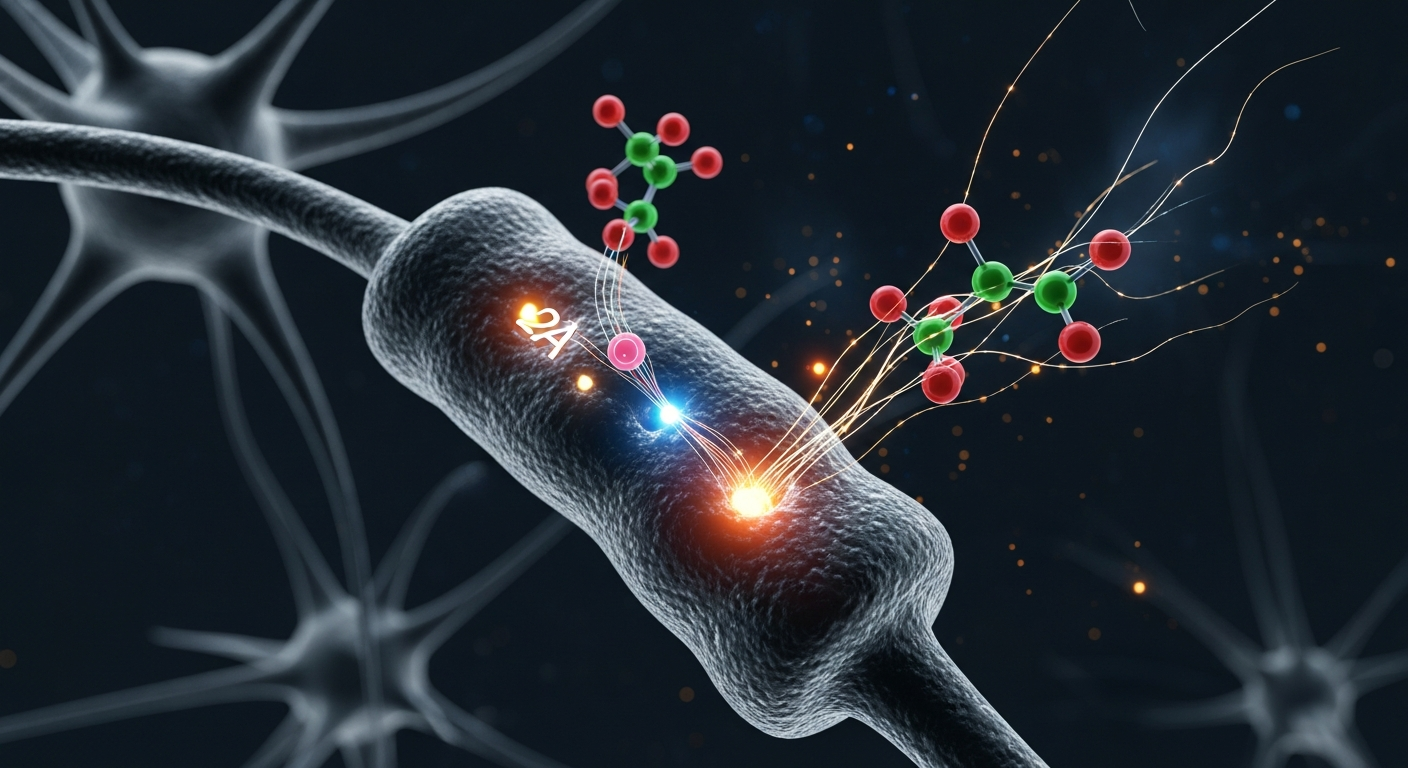
Psychedelic substances exert their profound effects primarily by engaging serotonin receptors within the brain. Among at least 14 known serotonin receptor types, psychedelics show a particular affinity for the 2A receptor. This specific receptor not only plays a role in learning but crucially, it actively dampens activity in brain regions dedicated to processing visual information. Callum White, the study's first author, explains: "We have observed in earlier studies that visual processes in the brain are suppressed by this receptor. This means that visual information about things happening in the outside world becomes less accessible to our consciousness." He adds that to bridge this sensory gap, "our brain inserts fragments from memory -- it hallucinates." Essentially, when the brain receives less real-time visual data, it instinctively draws upon its vast archive of stored images and experiences, integrating these internal fragments into an altered perception. This fundamental redirection from external to internal perception forms the core of the psychedelic experience.
Brain Rhythms and Memory Access
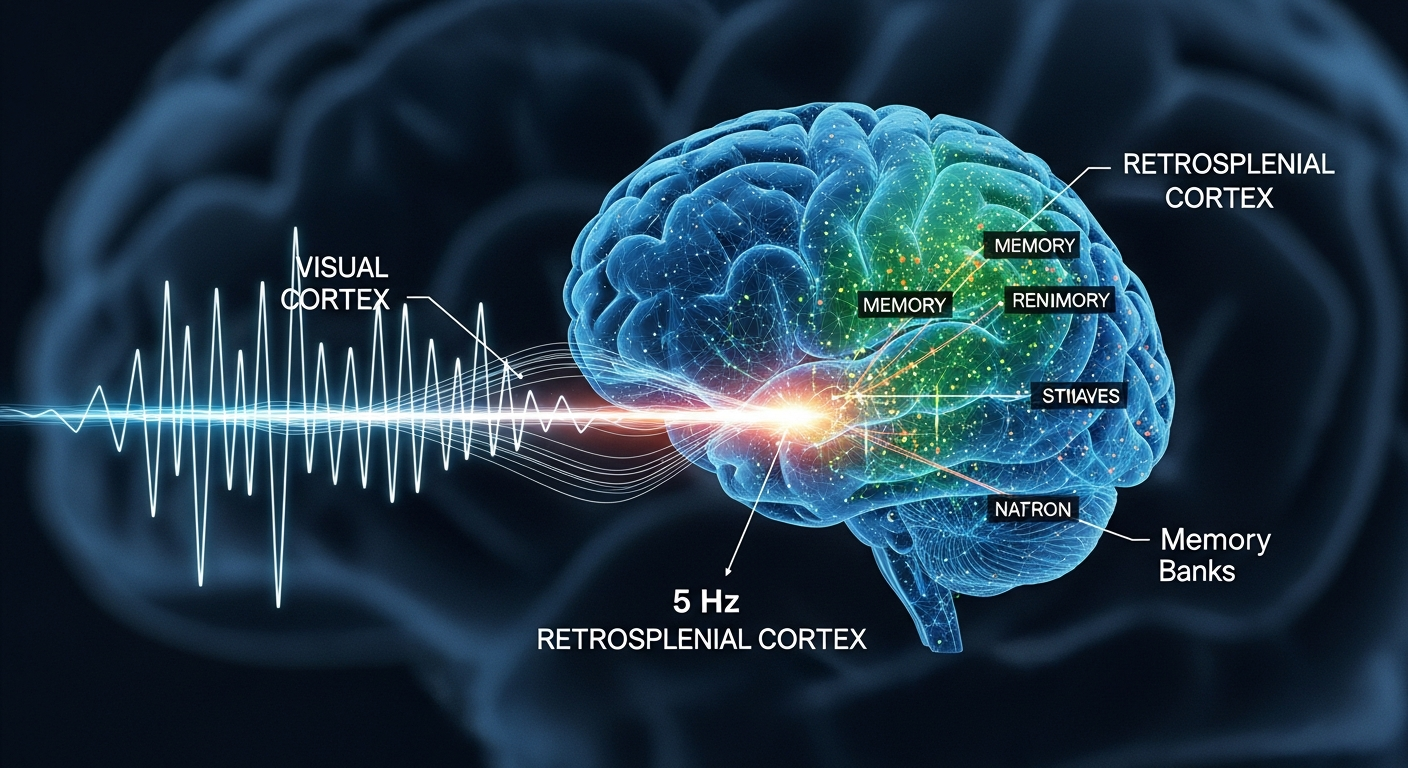
Beyond altering visual input, the research further elucidates how this shift unfolds in real time, focusing on rhythmic patterns of brain activity known as oscillations. These coordinated waves of neural firing are vital for inter-regional brain communication. Following psychedelic administration, scientists observed a notable increase in low-frequency (5-Hz) waves within the visual areas of the brain. These slower oscillations actively stimulated the retrosplenial cortex, a critical neural hub intricately linked to accessing stored memories. As communication between visual regions and the retrosplenial cortex intensifies, the brain transitions into a distinct operational mode. In this state, conscious awareness of immediate external events diminishes, while perception becomes increasingly shaped by recalled internal information. Professor Dirk Jancke, who spearheaded the study, aptly describes this unique state as "a bit like partial dreaming."
Real-Time Insights from Advanced Imaging
To precisely map these dynamic changes in neural activity, the research team employed an advanced optical imaging technique. This sophisticated method enabled them to track neural firing across the entire surface of the brain in real time, offering an unprecedented view. A crucial element involved specially engineered mice, developed by Professor Thomas Knöpfel, modified to produce fluorescent proteins within specific brain cells for highly targeted observation. This precise approach validated the signal source. As Jancke clarifies, "We therefore know exactly in our experiments that the measured fluorescent signals originate from pyramidal cells of the cortical layers 2/3 and 5, which mediate communication within and between brain regions." These specific pyramidal cells are fundamental conduits for transmitting information across the cerebral cortex, providing a clear understanding of the neural pathways activated.
Therapeutic Horizons: Unlearning Negative Patterns
The implications of these findings extend significantly into the burgeoning field of psychedelic-assisted therapy. By providing a clearer biological understanding of how these substances reshape perception and access memory, the study offers a scientific underpinning for their observed therapeutic effects. Researchers believe that, under stringent medical supervision, psychedelics possess the unique capacity to temporarily reconfigure brain activity. This shift can facilitate the recall of positive memories and, crucially, weaken deeply entrenched, often negative, thought patterns that characterize conditions like depression and anxiety. Jancke emphasizes: "When used under medical supervision, such substances can temporarily change the state of the brain to selectively recall positive memory content and restructure learned, excessively negative thought patterns, i.e., to be able to unlearn negative context." He anticipates, "It will be exciting to see how such therapies are further personalized in the future." This research illuminates a promising pathway for developing more targeted mental health treatments.
Public Sentiment
The public response to such scientific advancements in psychedelic research is generally characterized by a cautious optimism. Many express hope for new, more effective treatments for mental health conditions, particularly those resistant to conventional therapies. There's a growing appreciation for rigorous scientific inquiry that moves beyond historical stigmas, providing biological explanations for profound subjective experiences. However, a significant portion of the public also emphasizes the critical need for medical supervision and careful regulation, acknowledging the powerful nature of these substances. The idea of "unlearning negative context" resonates deeply with individuals and families grappling with chronic mental health struggles, fostering a sense of anticipation for personalized therapeutic approaches.
Conclusion
This pivotal study from the University of Freiburg marks a significant leap in our understanding of how psychedelics interact with the brain. By revealing the precise neural mechanisms through which these substances shift perception from external reality to internal memory, the research provides a robust biological framework for both psychedelic-induced hallucinations and their burgeoning therapeutic applications. As science continues to unravel the complexities of brain function, this work paves the way for a new era of personalized psychedelic-assisted therapies, offering renewed hope for individuals seeking to overcome deep-seated psychological challenges.