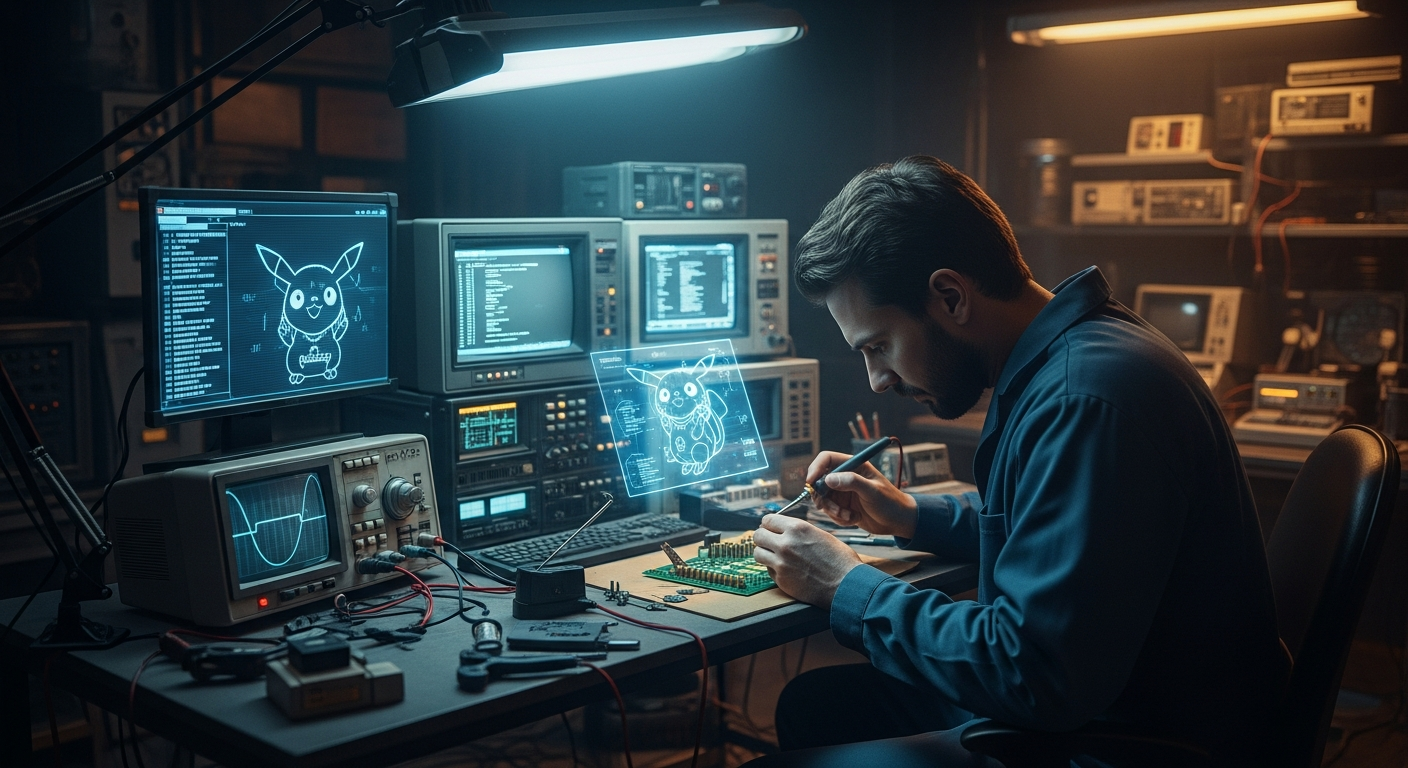
In an increasingly fragmented digital age, where attention spans are measured in microseconds and new hardware emerges with the regularity of monsoon rains, the notion of dedicating oneself to a twenty-year-old, commercially overlooked handheld console might seem... peculiar. Yet, within the hallowed, often dimly lit, chambers of the internet, a vibrant and fiercely dedicated community thrives: the homebrewers of the Pokémon Mini.
Originally launched in late 2001, initially as an exclusive novelty at the Pokémon Center New York, the Pokémon Mini was never destined for mainstream glory. Its adjusted price tag, a princely $80, immediately branded it as a curiosity for the affluent or the truly fanatical. A brief foray into Japan and Europe followed, cementing its status not as a gaming revolution, but as a charming, if ultimately inconsequential, footnote in Nintendo's storied history. Few could have predicted that this diminutive device, with its monochrome screen and rudimentary controls, would one day become the canvas for an artisanal coding movement of almost spiritual intensity.
Key Takeaways:
-
The Relic Reimagined: The Pokémon Mini, once a costly curiosity, is now a paradoxical beacon for digital craftsmanship.
-
Beyond Commercial Imperatives: Homebrew on the Mini isn't about profit or popularity; it's a testament to the sheer, unadulterated joy of creation.
-
A Purer Form of Play: In its hardware constraints, developers find a liberation from modern gaming bloat, fostering ingenuity and a return to foundational principles.
-
The Price of Passion: Acquiring and developing for this device demands significant investment, both financial and intellectual, cementing its status as an elite pursuit.
The Altar of Obscurity: Why the Mini, Why Now?
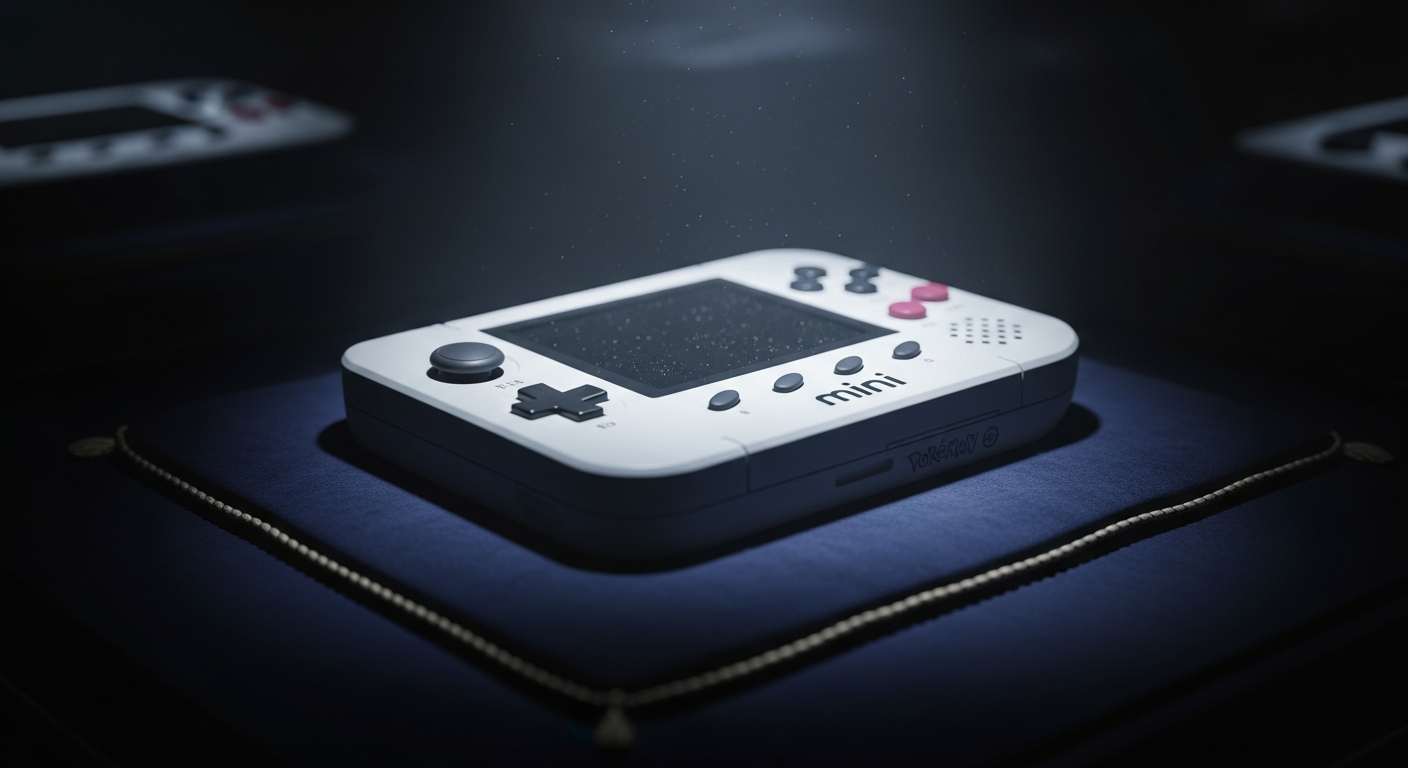
One might logically query: why the Pokémon Mini? Why not the Game Boy Advance, or even the original Game Boy, both of which boast richer ecosystems and broader appeal? The answer, according to the scene's most fervent acolytes, lies precisely in its obscurity and its limitations. The Mini is not merely a platform; it is a philosophy. Its tiny processor, 128x96 pixel monochrome screen, and a mere 4MB of ROM and 8KB of RAM do not present obstacles; they offer a minimalist canvas, a digital haiku where every byte counts, every pixel is a deliberate brushstroke. It’s a defiant stand against the bloat of modern software, a return to the foundational purity of programming where efficiency is king and ingenuity reigns supreme.
This isn't merely a hobby; it's an intellectual challenge of the highest order, a form of digital archaeology where one must reverse-engineer proprietary hardware and develop custom toolchains. It requires a level of dedication that borders on the ascetic, a monk-like devotion to understanding the device's deepest secrets. To coax new life from this relic is not merely coding; it is communion with the spirits of forgotten silicon, a ritual of resurrection performed byte by byte. Every custom game, every proof-of-concept, is a small triumph against the tyranny of obsolescence.
The Artisanal Code: Crafting Digital Dreams on a Dime-Sized Canvas
The homebrew offerings for the Pokémon Mini are, predictably, not grand epics. There are no photorealistic open worlds or complex physics simulations. Instead, one finds a delightful array of micro-experiences: faithful ports of classics like 'Snake' or 'Tetris', charming original puzzle games, and even experimental art pieces that push the boundaries of what a 128x96 monochrome screen can convey. These aren't games merely played; they are experiences to be savored, each flicker of a pixel a testament to immense effort and love.
The development process itself is a testament to human stubbornness and brilliance. Without official SDKs or robust documentation, developers must piece together knowledge from fragmented forum posts, disassemblies, and sheer force of will. Custom flash carts are engineered, bespoke compilers are written, and debugging is often a process of trial and error measured in days, not hours. It is an industrial art, where the meticulous crafting of code rivals the precision of a Swiss watchmaker.
Public Sentiment: Echoes from the Digital Crypt
Quotes from the community often reveal this blend of reverence and playful self-awareness:
-
"People say the Mini is 'limited.' I say it forces a purity of design unattainable on other platforms. Every pixel is a precious diamond." – 'RetroPixelSage' on a forum post.
-
"My partner asked why I spend weeks on a 'Flappy Bird' clone for a console no one owns. I told her it's an act of profound existential rebellion against digital banality." – Anonymous Developer, 'MiniBytes' Discord.
-
"The click of the Mini's buttons, the subtle hum of its ancient processor... it's like listening to the whispers of ancient gods. And then I code a new tile engine for them." – 'SiliconAlchemist' in a Reddit AMA.
Conclusion: A Legacy Forged in Niche Passion
In an industry obsessed with the next big thing, the Pokémon Mini homebrew scene stands as a glorious, pixelated anomaly. It is a testament to the enduring power of human ingenuity, the magnetic pull of intellectual challenge, and the bizarre, beautiful capacity for niche obsession. The device, once a fleeting commercial venture, has been elevated to an almost mythical status, not by corporate marketing, but by the dedicated hands and minds of those who see beyond its humble origins. The Pokémon Mini is not just a console; it is a monument to the spirit of digital creation, a tiny titan in the vast, ever-expanding universe of gaming. And in its continued, improbable existence, it offers a poignant, often satirical, commentary on what truly defines value in the digital age.