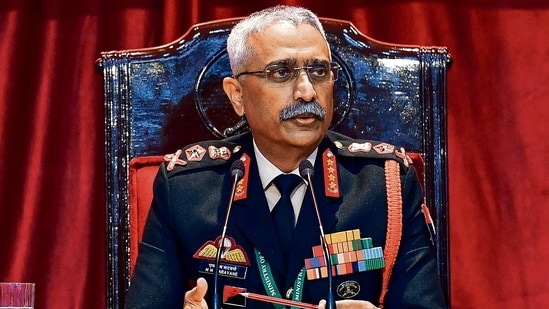
The hallowed halls of India's Lok Sabha, often a stage for impassioned debate, transformed into a theatre of pandemonium this Monday, all thanks to a book that hasn't even hit the shelves. At the heart of the storm: General MM Naravane, the 28th chief of the Indian Army, and his yet-to-be-published memoir. The incident, featuring a dramatic face-off between Leader of Opposition Rahul Gandhi and the Modi Government, offers a fascinating, if somewhat farcical, glimpse into the current state of Indian political discourse.
Key Takeaways:
-
The Accidental Catalyst: General MM Naravane's unpublished memoir has inadvertently become a potent political weapon, sparking a major parliamentary disruption.
-
Rahul Gandhi's Gambit: The Leader of Opposition strategically used excerpts to counter BJP's 'patriotism' narrative, aiming to turn the tables on the ruling party.
-
Lok Sabha in Uproar: The incident saw immediate, heated exchanges between the opposition and treasury benches, culminating in the House's adjournment.
-
Blurred Lines: The controversy highlights the increasingly permeable boundaries between military narratives, national security, and partisan political agendas.
-
Civil-Military Scrutiny: It reignites debates about the appropriateness and implications of former military chiefs publishing sensitive recollections.
The Unfolding Drama: When Words Become Weapons
Monday’s Budget Session began with the usual parliamentary decorum quickly dissolving into familiar chaos. Rahul Gandhi, armed with a magazine article reportedly carrying excerpts from General Naravane’s typescript, launched his offensive. His target: the BJP's oft-repeated charge of the Congress party lacking patriotism. The chosen phrase, extracted from the memoir, was a short, sharp jab: ", Chinese tanks in Doklam."
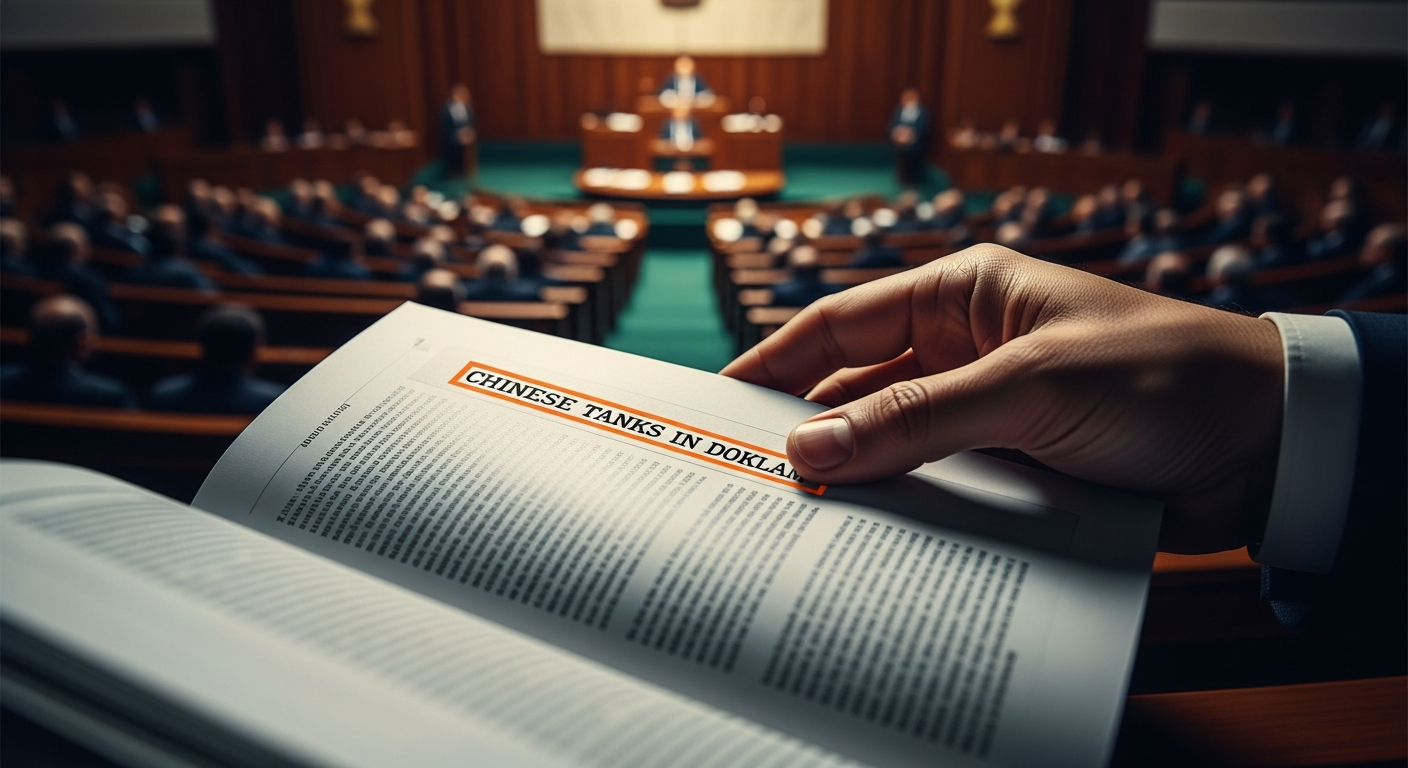
This seemingly innocuous quote, stripped of its original context, was enough to ignite the fuse. Defence Minister Rajnath Singh immediately rose to interject, his objection a clear signal of the government’s discomfort. What followed was a spectacle of shouts, counter-shouts, and furious gesticulations that would do any masala film proud. Prime Minister Narendra Modi, present in the House, was a silent observer to the unfolding drama. The Lok Sabha, unable to proceed amidst the din, was summarily adjourned till 3 PM, leaving General Naravane and his 'unseen' manuscript firmly at the epicentre of the nation's political conversation.
General Naravane: An Unwitting Protagonist in the Political Theatre
General Manoj Mukund Naravane is no stranger to the spotlight. Having served as the 28th Chief of Army Staff (COAS) from December 31, 2019, to April 30, 2022, after taking over from General Bipin Rawat, he commanded the Indian Army during a period of significant geopolitical challenges, including the Galwan Valley skirmishes. He also held the temporary charge of Chairman of the Chiefs of Staff Committee. [FEATURED]
Yet, it's his post-retirement foray into authorship – or rather, the pre-publication leak of it – that has unwittingly cast him as a central figure in a political slugfest. The very idea of a former Army chief detailing sensitive operational or strategic insights, even posthumously or long after retirement, always carries an element of intrigue. When these details spill into the public domain via a magazine, and then into the Lok Sabha, the intrigue escalates into outright controversy. The question isn't just what he wrote, but why it's being revealed now, and who benefits from its political deployment.
The Doklam Dilemma and the Politics of 'Patriotism'
The reference to "Chinese tanks in Doklam" is particularly potent. The Doklam standoff in 2017 was a watershed moment in India-China relations, a tense border confrontation that captivated national attention. Any perceived intelligence failure or strategic vulnerability related to Doklam, especially when attributed to the period preceding or during a change of command, can be politically devastating. Rahul Gandhi's intent was clear: to challenge the BJP's narrative of being the sole custodians of national security and patriotism. By quoting a former Army chief, he sought to lend an air of unimpeachable authority to his assertions, forcing the government onto the defensive.
This incident vividly illustrates how national security issues, rather than being deliberated with gravitas, are often reduced to soundbites and political footballs. The phrase itself, ripped from its context, becomes a convenient shorthand for criticism, while the actual implications for national defence are buried under partisan rhetoric.
Whispers from the Barracks: Civil-Military Nexus Under Scrutiny
The episode also reignites a perennial debate within India: the delicate balance of civil-military relations and the appropriateness of retired military brass penning memoirs that might touch upon sensitive state secrets or operational details. While free speech is a fundamental right, the unique position of former service chiefs, privy to the highest levels of national security information, places a significant onus on them. Is there a need for stricter protocols on post-retirement publications? Or should the nation embrace greater transparency, even if it occasionally fuels political theatrics?
For many, such disclosures, whether intentional or leaked, blur the lines between professional duty, personal narrative, and potential political leverage. It compels us to consider the long-term impact on the institutional integrity of the armed forces and the trust placed in its leadership.
Public Sentiment: A Mix of Cynicism and Curiosity
The general public, accustomed to parliamentary disruptions, reacted with a familiar blend of cynicism and heightened curiosity. Social media, predictably, buzzed with reactions:
-
"Another day, another Lok Sabha circus. Are they debating policies or memoirs?" – Priya K., Bengaluru
-
"If 'Chinese tanks in Doklam' is from an unpublished book, what else is he hiding? And why is it suddenly public?" – Anand S., Delhi
-
"It's always about patriotism until someone brings up actual defence details. Then it's 'national security'. Hypocrisy, much?" – Deepa R., Mumbai
-
"Can't wait for this book now. Probably more revealing than any parliamentary debate!" – Vikram J., Pune
The sentiment largely points to a public weary of political grandstanding but acutely aware of the underlying tensions concerning defence and national security.
Conclusion: The Unfolding Narrative of Power and Publication
The Lok Sabha ruckus over General MM Naravane's unpublished memoir is more than just another parliamentary skirmish. It's a potent symbol of how deeply intertwined national security, personal narratives, and partisan politics have become in India. It highlights the dangers of weaponising sensitive information for political gain and poses pertinent questions about accountability, transparency, and the delicate code of conduct expected from former military leaders.
As the dust settles, one thing is clear: the political impact of General Naravane's memoir, even before its official release, has already been profound. The incident serves as a stark reminder that in the age of information, even whispers from the barracks can shake the very foundations of power, leaving us all to wonder what other 'unpublished truths' might be lurking in the wings, waiting for their moment in the political sun.