Key Takeaways
-
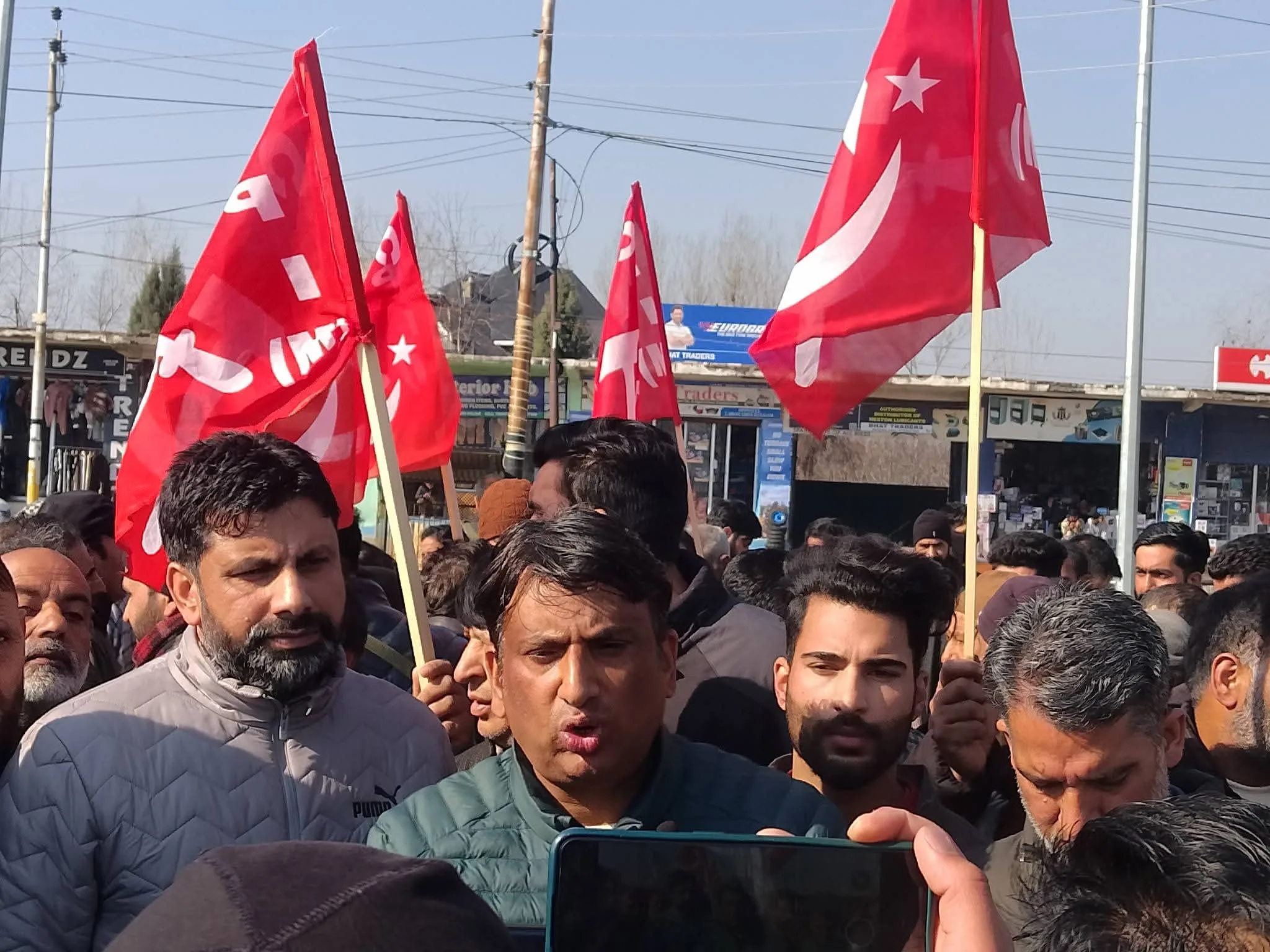
CPI(M) staged a major protest in Kulgam against unscheduled power cuts and steep tariff hikes, calling the increases arbitrary and unjustified.
-
Leaders cited verified cases of consumers with minimal usage (one bulb) receiving bills ranging from Rs 1,800 to Rs 2,200.
-
The party accused the government and KPDCL of operating like a "profit-making enterprise" rather than a mandated service provider.
-
A key demand is the immediate implementation of the Rangarajan Committee recommendations to achieve power self-reliance and ensure affordable rates for J&K residents.
The Dual Crisis: Darkness and Debt
The recent protests in Kulgam, spearheaded by the CPI(M), highlight a deep-seated disconnect between the service promises made by the administration and the harsh reality faced by consumers on the ground. Mohammad Abass Rather, the CPI(M) state secretary for Jammu and Kashmir and DDC member Qaimoh, framed the situation starkly, noting that electricity supply across villages, rural pockets, and even urban centers was demonstrably unreliable, yet power bills continued their upward trajectory without any discernible justification.
This simultaneous deprivation and imposition of cost defines the current power crisis. While frequent, unscheduled power cuts force families into darkness during the harshest months, the financial cost of this unreliable service continues to climb. Rather emphasized that this situation forces consumers into helplessness, compelling families, out of necessity, to restrict or completely avoid electricity usage simply because they cannot afford the prohibitive charges being levied by the KPDCL.
The gravity of the situation is compounded by the region’s reliance on electricity not merely for comfort, but for daily necessities—especially heating and lighting essential for surviving the harsh Kashmiri winter. When Rather asserts that electricity is used for "daily necessities, not for luxury," he underscores the fundamental violation of basic rights inherent in making essential services both unaffordable and unavailable. Senior party leaders, including DDC chairperson Mohammad Afzal Parry and youth leader Javaid Iqbal, joined the demonstration, urging the KPDCL to take immediate and comprehensive corrective measures.
The 'One Bulb' Burden: Exposing Arbitrary Billing
Perhaps the most damning evidence brought forward by the CPI(M) during the protest centered on the specific, shocking figures attributed to the revised tariff structure. Rather detailed multiple instances where consumers—whose homes barely feature more than a single operational bulb—were being slapped with bills as high as Rs 2,200, Rs 2,000, and Rs 1,800.
The investigative focus now turns to the justification behind these astronomical figures. If actual consumption levels are minimal, these charges point directly towards systemic failures: either flawed metering, arbitrary estimations (known euphemistically as ‘revision’), or a deliberate policy choice to increase revenue generation regardless of user consumption capability. Rather termed this mechanism as "arbitrariness being carried out in the name of revision."
Crucially, the economic implications are devastating for the most vulnerable populations. Party leaders reported verified cases where bills amounting to approximately Rs 2,100 were being issued to individuals whose total monthly income fell below that figure. This means that merely maintaining a connection, even with minimal usage, equates to consuming more than 100% of a family's income, pushing them inevitably into cycles of debt and desperation. Such actions, the CPI(M) argued, represent a fundamental abuse of the state’s duty, transforming a public service provider (KPDCL) into an aggressive, profit-driven entity.
Rather noted that on-ground verification confirmed that consumers were being compelled to limit usage, despite the essential nature of power during winter. This indiscriminate hike in charges, Rather stressed, was the primary target of the protest, emphasizing that their struggle was not against any individual but against the unfair policy implementation.
Government as a Profit Enterprise: The Rangarajan Mandate
The CPI(M) protest was not simply an emotional outcry; it was anchored in specific policy demands aimed at long-term structural reform. Key among these was the appeal for higher authorities to immediately implement the recommendations of the Rangarajan Committee.
This committee’s core mandate was focused on achieving self-reliance in power generation for Jammu and Kashmir and ensuring that electricity could be supplied to the populace at affordable, sustainable rates. By invoking the Rangarajan report, the protestors shifted the focus from immediate relief to fundamental systemic change, arguing that the government must fulfill its responsibility to provide basic facilities, rather than functioning "like a profit-making enterprise."
DDC Chairperson Mohammad Afzal Parry and youth leader Javaid Iqbal, who participated in the demonstration alongside Rather, reiterated the party’s stance: that such an overwhelming financial burden on the public threatens the "overall functioning of the system"—implying both socio-economic stability and political trust. They emphasized that the democratic protest was held specifically to appeal for policy action that ensures long-term public welfare and power security. The failure to implement these recommendations keeps J&K dependent and susceptible to the very tariff volatility and supply shortages currently plaguing the region.
Public Sentiment: Voices of Desperation
The political action by the CPI(M) reflects a deep well of public anxiety and frustration that has been mounting across the district. The narrative that families are penalized for poverty and minimal usage resonates powerfully among consumers who feel trapped by the utility provider.
Local Resident, Requesting Anonymity: “How can they expect us to pay Rs 2,200 when my entire family income is maybe Rs 60,000 a year? We are told to use less power, but the bills only increase. We are freezing in the dark, and yet, they demand our last rupee. This is not governance; this is persecution. It feels like they want us to choose between buying food and keeping a single bulb switched on.”
Conclusion and Ongoing Struggle
The peaceful demonstration in Kulgam serves as a critical warning shot regarding the sustainable provision of essential services in J&K. Mohammad Abass Rather made it unequivocally clear that while the protest was conducted democratically and focused on public welfare—explicitly noting that the issue should not be "politicised"—the CPI(M) is fully prepared to escalate its efforts.
The party leaders confirmed their resolve to continue this democratic struggle both on the ground across Jammu and Kashmir and within the legislative Assembly, should their demands for affordable power and reliable supply remain unmet. The appeal made by Rather to "all organisations to come forward and raise their voice" indicates a broad desire to consolidate public pressure against what is widely perceived as an indiscriminate and punitive hike in electricity charges that primarily targets the poor and vulnerable population of the region. The struggle for people's rights, they stated, will continue.