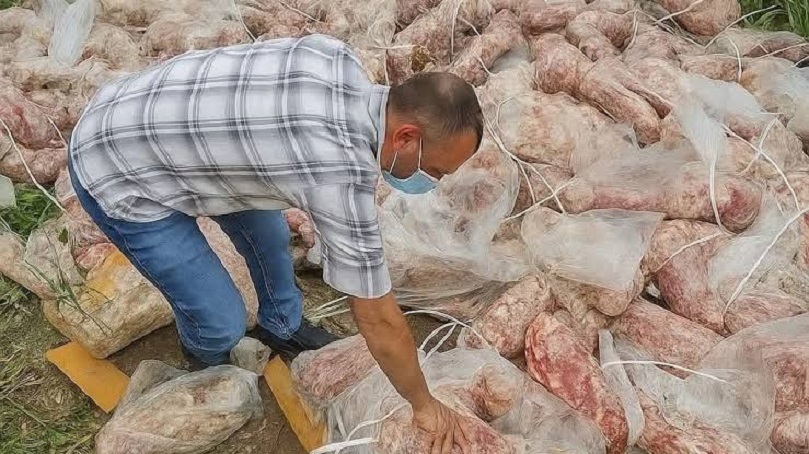
The Jammu and Kashmir administration has intensified its campaign against food adulteration, with official data revealing the destruction of more than 12,000 kilograms of rotten and unsafe meat across the Union Territory. This significant action, spanning the current financial year 2025-26 until December, represents a proactive stance against threats to public health and a concerted effort to uphold food safety standards.
Key Takeaways
-
Over 12,000 kg of rotten and unsafe meat, valued at Rs 29.19 lakh, was destroyed in J&K during FY 2025-26 till December.
-
An additional 7,665 kg of unsafe paneer, worth Rs 16.32 lakh, was seized and destroyed, primarily in Jammu and Samba.
-
Enforcement drives included 1,676 inspections and 144 samples, of which 18 were found to be of Non-Standard Quality (NSQ).
-
Srinagar, Jammu, and Kupwara recorded the highest volumes of meat destruction, indicating specific areas of focus for enforcement.
-
J&K operates two NABL-accredited food testing labs and 12 mobile labs but faces a critical shortage of 11 technical staff posts in each of its main laboratories, impacting testing capacity.
-
The government is strengthening enforcement under the Food Safety and Standards Act, 2006, through regular inspections, public awareness campaigns, and inter-departmental coordination.
The Scale of Contamination and Destruction
The sheer volume of condemned food products underscores the persistent challenge of maintaining food quality in the region. According to the Health and Medical Education Department, a staggering 12,183.5 kg of rotten and unsafe meat was destroyed, with a total estimated value pegged at Rs 29.19 lakh. This figure reflects not just seizures but definitive removal from the supply chain, preventing potential health hazards to consumers.
The problem extends beyond meat. Authorities also reported the seizure and destruction of 7,665 kg of unsafe paneer, valued at Rs 16.32 lakh. The majority of these paneer seizures occurred in Jammu (6,465 kg) and Samba (1,200 kg), highlighting specific vulnerabilities within the dairy product segment in these districts.
Targeted Enforcement and Identified Deficiencies
The actions taken are a direct result of ongoing vigilance. During routine surveillance and special enforcement drives, 1,676 inspections were conducted across the Union Territory. From these inspections, 144 samples of various food items were lifted for laboratory analysis. Out of these, 18 samples were officially classified as Non-Standard Quality (NSQ), confirming instances of adulteration or substandard products.
Crucially, the department noted that while incidents of unsafe meat sales were reported, food adulteration is not considered a generalised phenomenon across J&K. This suggests that the enforcement efforts are effectively targeting specific problem areas or rogue elements within the food distribution network, rather than indicating a systemic collapse of food safety standards universally.
Geographical Hotspots and Distribution of Efforts
District-wise data provides a clearer picture of where these enforcement activities are most concentrated and where the largest quantities of unsafe meat were found. Srinagar recorded the highest destruction figures at 4,220 kg, followed closely by Jammu with 3,881 kg, and Kupwara at 1,520.5 kg. Significant seizures and destructions were also reported from other districts, including Anantnag (700 kg), Ganderbal (770 kg), Pulwama (450 kg), Budgam (234 kg), Bandipora (162 kg), Baramulla (125 kg), and Shopian (121 kg). This widespread distribution indicates a comprehensive effort by authorities to monitor and act across the Union Territory.
Infrastructure, Capability, and Critical Gaps
J&K's food safety framework is supported by a network of testing facilities. The Union Territory boasts two NABL-accredited Food Testing Laboratories, one each in Jammu and Srinagar, complemented by 12 fully functional mobile food testing labs. These facilities are critical for the scientific analysis required to identify and quantify food safety breaches.
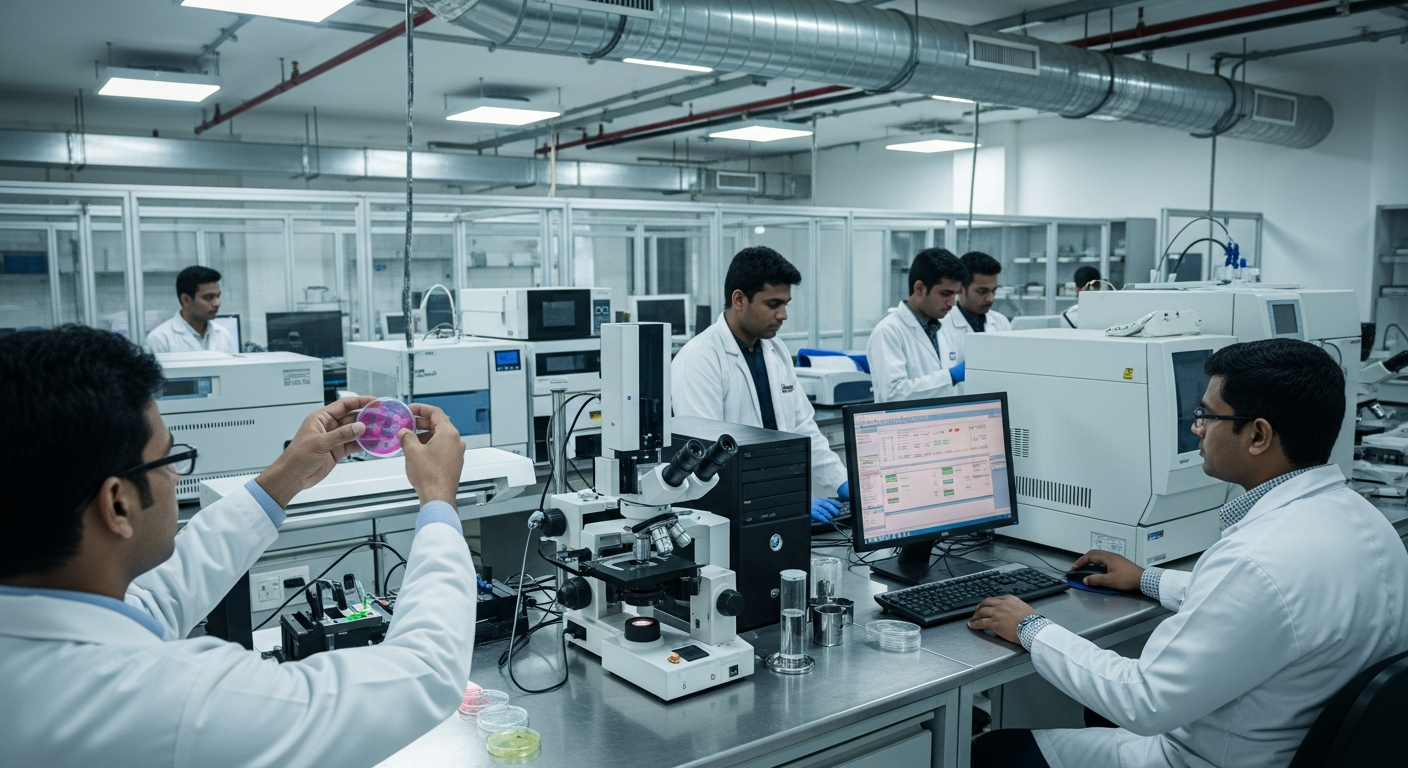
However, a significant challenge persists: a severe shortage of technical staff. The department acknowledged that out of 19 sanctioned posts for technical personnel at both the Jammu and Srinagar laboratories, a staggering 11 posts in each lab are currently vacant. This critical staffing gap potentially hampers the speed and volume of sample analysis, creating bottlenecks in the enforcement process and potentially increasing reliance on external laboratories recognised by the Food Safety and Standards Authority of India (FSSAI) and accredited by the National Accreditation Board for Testing and Calibration Laboratories.
Strategic Response and Future Outlook
The J&K government maintains that enforcement under the Food Safety and Standards Act, 2006, is being strengthened through a multi-pronged approach. This includes regular inspections, sampling, and the implementation of punitive measures such as the suspension or cancellation of licences, imposition of penalties, and prosecution of violators. Furthermore, special drives are being conducted during festivals and tourist seasons, periods often associated with increased demand and potential for lapses in quality control.
Public awareness campaigns are also a key component, aiming to educate consumers about food safety and encourage vigilance. Inter-departmental coordination is being enhanced to create a more integrated and effective response mechanism, ensuring that public health remains a top priority.
Public Sentiment
The revelation of substantial food seizures has elicited mixed reactions from the public and consumer advocates. "While the scale of destruction is alarming, it's reassuring to know that authorities are actively addressing the issue. However, the vacant lab positions are a major concern; we need faster testing to prevent unsafe food from reaching consumers," remarked a Srinagar resident. Another consumer rights advocate in Jammu commented, "Every citizen has a right to safe food. These seizures show the problem is real, and the government's efforts are commendable. But enforcement must be consistent, not just during drives." A local shop owner added, "It's not just about meat. When you hear about paneer, it makes you question everything. We rely on these checks, and the government must ensure our labs are fully staffed and equipped to protect us."
Conclusion
The destruction of over 12,000 kg of rotten meat and substantial quantities of unsafe paneer in Jammu and Kashmir underscores the persistent challenges in maintaining food safety. While the government's proactive enforcement drives and the existing infrastructure of NABL-accredited and mobile labs are commendable, the critical shortage of technical staff in key laboratories presents a significant hurdle. Sustained political will, immediate recruitment to fill vacant posts, and continued public-private collaboration will be essential to ensure the long-term integrity of the food supply chain and safeguard the health of citizens across the Union Territory.