Key Takeaways
-
Reciprocal Action: Iran's designation of EU militaries directly responds to the EU's decision to list the Islamic Revolutionary Guard Corps (IRGC) as a terrorist group.
-
Legal Basis: The move is explicitly tied to a 2019 Iranian law enacted after the US designated the IRGC, allowing for reciprocal actions against nations that follow suit.
-
Symbolic Defiance: The announcement, made by Parliament Speaker Mohammad Bagher Qalibaf while wearing an IRGC uniform, underscores Iran's unwavering support for the paramilitary force.
-
Escalation of Tensions: This tit-for-tat dynamic signifies a significant deterioration in diplomatic relations, with potential implications for regional stability and broader international engagement.
-
Uncertain Practical Impact: While largely symbolic for now, the declaration raises questions about the practical implications for European military personnel and diplomatic missions in or near Iran.
Main Analysis: A Dangerous Dance on the Brink
The declaration by Iran's Parliament Speaker, Mohammad Bagher Qalibaf, designating all European Union militaries as terrorist organisations, marks a sharp and perilous escalation in the ongoing standoff between Tehran and the West. This isn't an isolated incident but a direct, retaliatory blow following the EU's agreement to list Iran's powerful Islamic Revolutionary Guard Corps (IRGC) as a terrorist group. The move, underscored by Qalibaf and other parliamentarians donning IRGC uniforms, is a potent symbol of defiance and an assertion of national sovereignty, albeit one with potentially far-reaching consequences.
The Genesis of Reciprocity: Echoes of 2019
The current escalation is rooted in a 2019 Iranian law, passed after the United States designated the IRGC as a foreign terrorist organisation. This law explicitly authorises Iran to take reciprocal action against any nation that follows the US lead. For years, European powers debated listing the IRGC, a move often opposed by those who feared it would scuttle diplomatic channels or the revival of the Joint Comprehensive Plan of Action (JCPOA), the nuclear deal. However, the IRGC's deepening involvement in the bloody crackdown on nationwide protests within Iran, coupled with its regional activities, appears to have tipped the scales for the EU.
The IRGC, founded after the 1979 Islamic Revolution, is more than just a military force; it's a vast socio-economic and political apparatus wielding immense influence. It controls significant parts of the economy, commands its own ground, naval, and air forces, and operates intelligence and paramilitary wings, including the Basij militia and the Quds Force. Its designation by Western powers aims to isolate the regime and limit its operational capabilities, but it also risks bolstering hardliners within Iran and entrenching a "resistance economy" narrative.
Implications for Diplomacy and Regional Stability
While largely symbolic in its immediate practical effect — EU military personnel are unlikely to face direct legal action within Europe based on this Iranian designation — the declaration's diplomatic fallout is profound. It further complicates efforts to revive the moribund JCPOA, which has seen little progress amidst escalating tensions. It also places European diplomatic missions and personnel in Iran in a precarious position, potentially leading to increased scrutiny or heightened security risks.
The move sends a chilling message about the state of international dialogue. When major powers resort to mutually designating each other's state apparatuses as terrorist entities, the scope for constructive engagement narrows dramatically. This environment of heightened distrust and antagonism could spill over into regional hotspots, where Iran and various European nations often find themselves on opposing sides. The Persian Gulf, in particular, remains a volatile area where miscalculations can quickly escalate into broader conflicts.

A Geopolitical Chessboard: Beyond EU-Iran
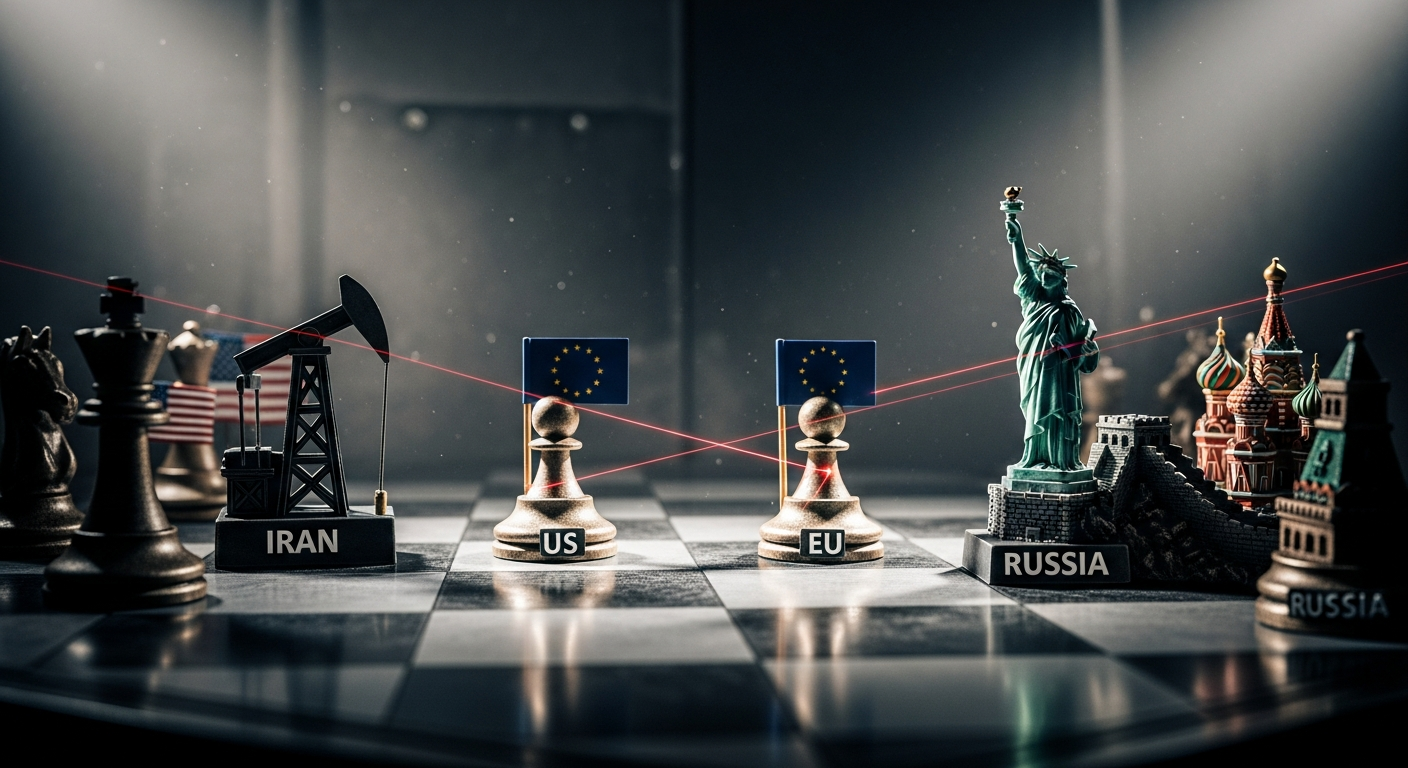
This tit-for-tat also plays into a larger geopolitical chessboard. For Iran, it's a demonstration of its resolve and its refusal to bow to external pressure, aiming to project strength domestically and to regional allies. For the EU, the IRGC designation was a significant foreign policy move, balancing human rights concerns with geopolitical realities. The subsequent Iranian response tests the EU's resolve and its capacity to navigate complex international crises without further destabilising the region. Other global powers are undoubtedly watching closely. China and Russia, strategic partners of Iran, might view this as further evidence of Western overreach, potentially solidifying their alignment with Tehran. The United States, having initiated the IRGC designation years ago, might see its approach validated, but also the potential for prolonged instability.
Public Sentiment: A Spectrum of Concern and Defiance
Across various social and political spheres, reactions to these designations range from staunch defiance to grave concern. In Tehran, hardline media outlets lauded Qalibaf's announcement as a "strong and timely response" to European "meddling," with one online commentator stating, "The EU thought they could intimidate us. Iran will not yield an inch. Our Revolutionary Guard is the shield of our nation."
Conversely, European political analysts expressed dismay. "This cycle of reciprocal designations is a dangerous game," noted a senior fellow at a European think tank. "It drains oxygen from diplomatic channels and makes de-escalation exponentially harder. We are moving into uncharted and perilous territory." International observers, meanwhile, voiced a mix of curiosity and alarm. "While largely symbolic now, the implications are unsettling," commented a former UN diplomat. "What does it mean for freedom of navigation in key waterways if one side considers the other's navy a terrorist entity? We need clarity, not more rhetorical fire."
Conclusion: Navigating a Fractured Landscape
Iran's reciprocal designation of EU militaries as terrorist groups is a high-stakes move, emblematic of a fractured international landscape. While immediate practical consequences for EU military forces remain to be seen, the symbolic weight and diplomatic ramifications are undeniable. It signals a hardening of positions, a further erosion of trust, and a heightened risk of miscalculation. The path forward demands shrewd diplomacy, creative solutions, and a conscious effort from all parties to prevent rhetorical escalation from morphing into concrete conflict, safeguarding stability in an already volatile region. The Rusty Tablet will continue to monitor this developing situation closely, seeking to uncover the deeper currents beneath the geopolitical waves.