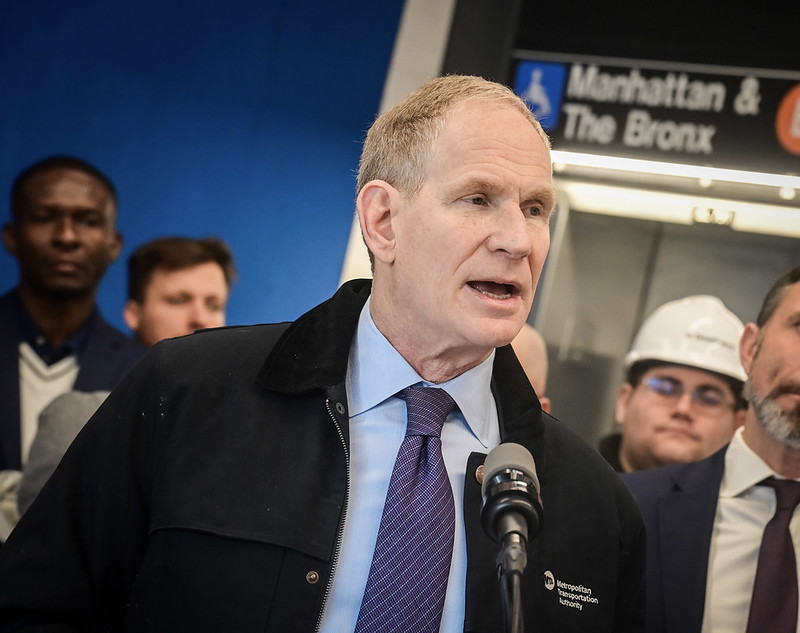
Decades of Delay: Harlem's Transit Dreams Held Hostage by Political Infighting
For the residents of East Harlem's El Barrio, the promise of the Second Avenue Subway has been an 80-year-long saga, a generational wait that now confronts an alarming new impediment: a federal funding freeze. What should be a celebratory period of progress, six months after a major tunneling contract award, has devolved into a political standoff, jeopardizing the imminent awarding of critical contracts and casting a shadow over New York's vital infrastructure ambitions.
Key Takeaways:
-
Generational Wait: East Harlem residents have endured an 80-year wait for the Second Avenue Subway, with Phase 2 now facing political delays.
-
Federal Funding Standoff: The Trump administration is reportedly withholding federal funds for regional infrastructure, including SAS2, over an unspecified "naming issue."
-
MTA's Renewed Efficiency: The MTA, backed by Governor Hochul, asserts a strong track record of delivering projects on-time and under budget, citing numerous examples.
-
Imminent Contract Freeze: If funds are not restored by March, the awarding of contracts for station caverns at 106th and 125th Streets will be impeded.
-
Significant Economic & Social Impact: SAS2 is projected to benefit 100,000 daily riders and create 70,000 jobs, making the funding freeze a considerable economic threat.
A Decades-Long Endeavor Under Threat
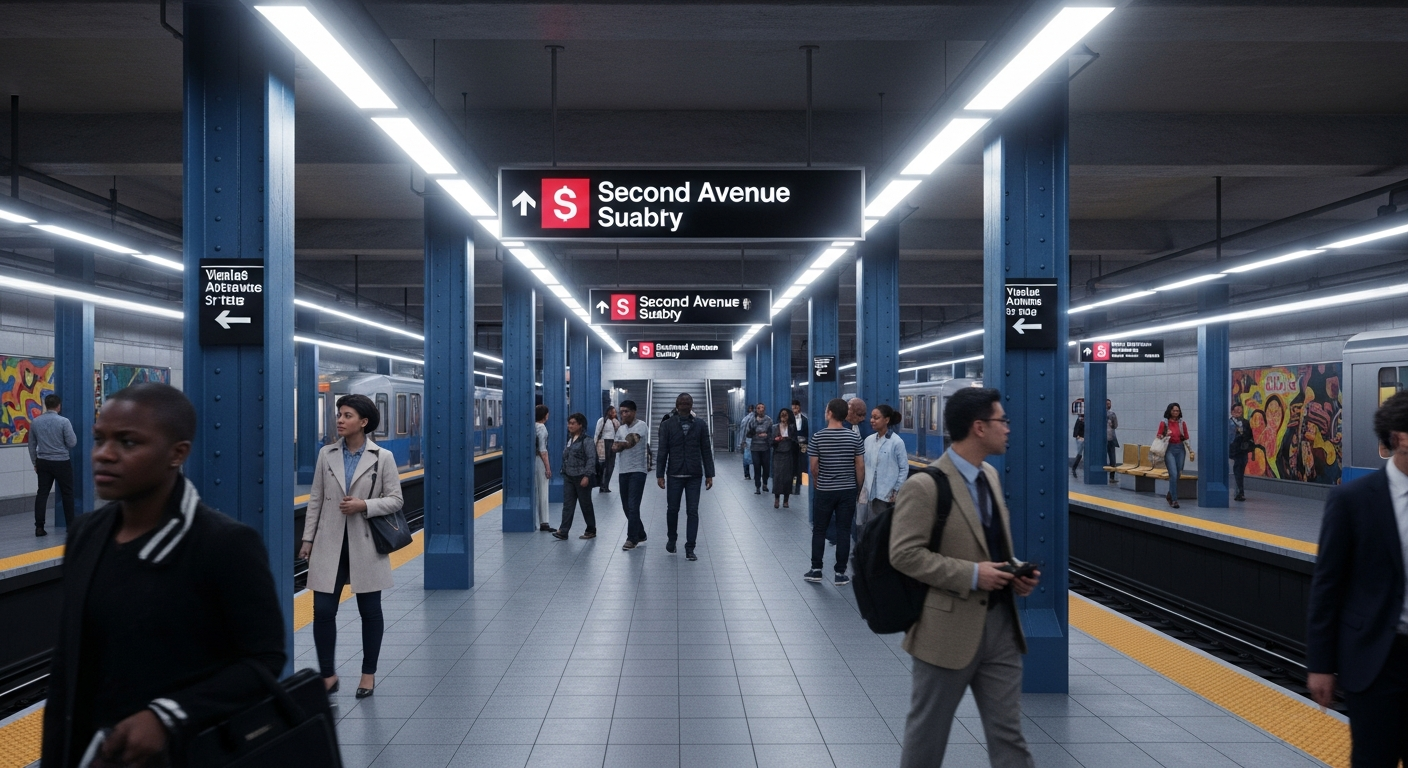
The Second Avenue Subway Phase 2 (SAS2) is not merely another transit project; it is the culmination of nearly a century of promises and planning for one of New York City's most vibrant and underserved communities. The expectation that federal tax dollars, paid by New Yorkers, would return to fund New York projects is a fundamental principle being aggressively challenged. With a major tunneling contract already awarded last August, the project has reached a critical juncture. The current political interference from Washington threatens to halt the momentum just as the MTA prepares to award a related contract crucial for digging out station caverns at 106th and 125th Streets. The implications are stark: delay here means delay for a community that has already waited for generations.
Political Gridlock vs. Regional Progress
The alleged reason for the federal funding freeze—a "naming issue"—highlights a disturbing trend where vital infrastructure projects become pawns in broader political disputes. This isn't just about New York; the report suggests similar issues have impacted other regional projects, notably the Gateway Tunnel. While the immediate impact on SAS2 might not be as severe as a complete work stoppage, the March deadline for restoring funds is a sword hanging over the project. Governor Hochul and the MTA have rightly called this maneuver "outrageous" and "unfair," arguing that such political machinations directly undermine the welfare and progress of New York citizens.
The MTA's Shifting Narrative: Efficiency and Delivery
For years, the Metropolitan Transportation Authority (MTA) has battled a public perception of inefficiency and cost overruns. However, under recent leadership, the agency has meticulously rebuilt its reputation, transforming into what it proudly touts as one of the nation's top-tier infrastructure developers. This transformation is not anecdotal; it is evidenced by a series of high-profile successes:
-
SAS2 Savings: Lessons learned from Phase 1 have already led to an estimated $1.3 billion in taxpayer savings for SAS2.
-
Park Avenue Viaduct: Trending 21 months ahead of schedule and $94 million under budget.
-
Grand Central Train Shed: Phase 1 completed $20 million under budget, with Phase 2 securing $70 million in private contributions.
-
Systemwide Elevator Installations: New elevators are being installed four times faster than in the past, with 10 completions anticipated in 2025 alone.
These examples paint a clear picture: the MTA has developed an operational standard of "on-time and on-budget," demonstrating its capability and readiness to execute complex projects with fiscal prudence and strategic foresight. [FEATURED]
Economic Imperatives and Community Impact
Beyond mere transit, the Second Avenue Subway Phase 2 represents a significant economic engine. The project is projected to serve 100,000 daily riders, dramatically improving connectivity and quality of life for a substantial segment of the population. Furthermore, it promises the creation of 70,000 jobs, a vital economic boost for the region. These aren't abstract figures; they represent real people, real livelihoods, and real progress that is currently being held in abeyance. New Yorkers have paid their federal taxes with the explicit understanding that a portion would return to support such critical local investments. To withhold these funds is not just a bureaucratic snag; it is a breach of trust and an obstruction of tangible economic and social betterment.
Public Sentiment: A Unified Call for Action
The prevailing sentiment across New York, from government officials to everyday citizens, is one of frustration tempered with a resolute demand for action. The source material captures this succinctly: it's "outrageous, it's unfair." There's a clear message to Washington: "get out of the way and let us deliver." The collective voice asserts that it would be "hard pressed to find a more worthy investment than Second Avenue Subway Phase 2." The desire is to deliver "better transit for today's Harlemites, not their grandchildren," directly accusing the administration of "holding them hostage."
Conclusion: A Demand for Unfettered Progress
The Second Avenue Subway Phase 2 stands as a testament to New York's enduring spirit of innovation and perseverance. The MTA has proven its capacity to deliver, showcasing a track record of efficiency that is both commendable and critical for large-scale infrastructure. The political quagmire from Washington, based on an alleged "naming issue," is not just an inconvenience; it is a direct affront to the progress, economic opportunity, and long-awaited transit improvements promised to Harlemites. Governor Hochul's vision for a potential Phase 3 extension along 125th Street to Broadway hinges on the timely and unencumbered completion of Phase 2. It is imperative that federal funds are released immediately, allowing New York to build the transit future its citizens have patiently, and persistently, awaited. The time for political games is over; the time for delivery is now.