The Unbreakable Chain: Why History Can't Be Fragmented
Speaking at the Kerala Literature Festival, Romila Thapar, a name synonymous with rigorous historical scholarship, did not mince words. Her assertion that "history is a continuous process and cannot be taught in fragments" is not merely an academic truism; it is a profound philosophical statement on the very nature of human civilisation. India, perhaps more than any other nation, exemplifies this continuity. Its history is a rich tapestry woven from countless threads – indigenous empires, foreign invasions, cultural syntheses, and ideological conflicts. To selectively snip out entire segments, particularly those as impactful and extensive as the Mughal era, is akin to attempting to understand a river by damming off its middle course.
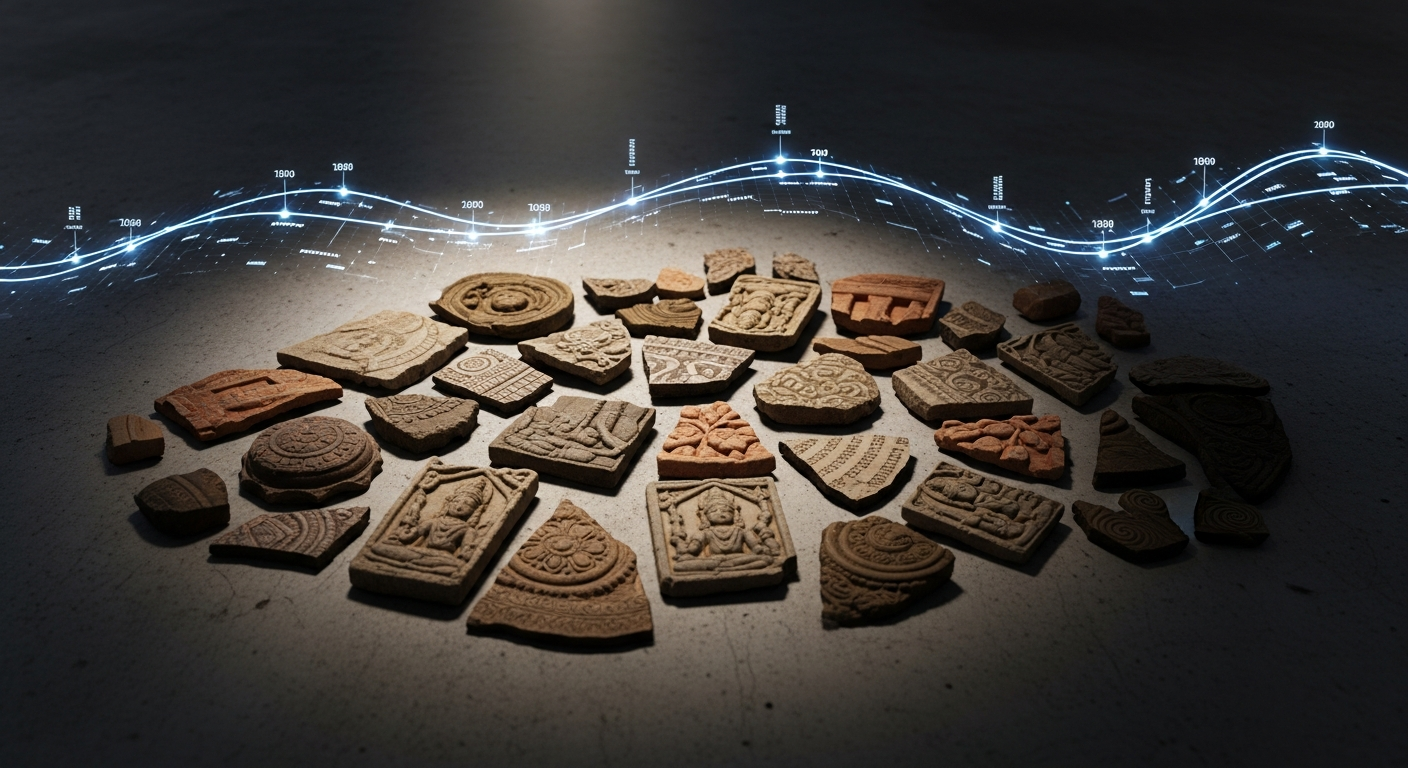
The Mughals, for all their complexities and controversies, were not an ephemeral footnote. Their rule spanned centuries, leaving an indelible mark on India's art, architecture, language, cuisine, administration, and social fabric. From the majestic Taj Mahal to the intricate land revenue systems, from the evolution of Urdu to the syncretic spiritual movements, their legacy is deeply embedded. To remove them is not to purify history; it is to create an intellectual vacuum, rendering subsequent developments incomprehensible and pre-Mughal history isolated from its inevitable future interactions. Thapar's "nonsense" is therefore a condemnation of intellectual dishonesty, a refusal to accept the premise that history can be conveniently edited to fit a pre-conceived narrative.
The Politics of Erasure: Reshaping Identity Through Omission
The impulse to excise the Mughals from textbooks is, at its core, a political manoeuvre, not an academic one. It aligns with a particular nationalist ideology that seeks to present Indian history as a linear, unbroken narrative of indigenous greatness periodically interrupted by "foreign" invaders, who are then demonised and expunged. This narrative wilfully ignores the complex dynamics of power, conquest, and cultural exchange that have characterised virtually every civilisation throughout history.
"Rusty Tablet" contends that such actions are not about promoting a more "authentic" Indian history, but rather about constructing a homogenised, often Hindu-centric, identity that denies the pluralistic realities of India's past and present. By portraying the Mughals as solely external oppressors, these revisionists conveniently overlook periods of relative peace, cultural patronage, and the vast number of Indians who thrived, served, and contributed under Mughal rule. This selective historical amnesia serves to fuel contemporary political agendas, creating divisions rather than fostering a nuanced understanding of shared heritage. The target isn't just textbooks; it's the national memory itself.
Education's Core Purpose: Beyond Rote and Revisionism
Thapar rightly highlights the "central role of education in questioning existing knowledge." The classroom, ideally, should be a crucible for critical thinking, a space where students learn to analyse, interpret, and challenge, rather than passively absorb dictated truths. When history is presented as a series of disconnected, ideologically vetted facts, this fundamental purpose is subverted. Instead of fostering informed citizens capable of discerning truth from propaganda, such an approach risks producing generations susceptible to simplistic narratives and historical distortions.
What message does it send to young minds when significant portions of their country's past are deemed unworthy of study? It teaches them that history is mutable, a tool to be wielded by those in power, rather than a discipline devoted to understanding the complexities of human experience.

This is not just a disservice to history; it is a disservice to the students themselves, robbing them of the intellectual tools necessary to navigate an increasingly complex world. A robust education encourages students to engage with multiple perspectives, even uncomfortable ones, to build their own informed conclusions.
Public Sentiment: A Divided Nation Reflects a Divided Past
The public discourse surrounding these textbook revisions is predictably polarised. On one side, proponents argue that such changes are necessary to correct "historical imbalances" and give due prominence to forgotten Hindu empires, claiming that Mughal history was overemphasised in previous curricula. They often frame it as reclaiming a national narrative from a 'colonial' or 'leftist' academic bias, echoing sentiments like, "Why should our children learn about foreign invaders when we have so much of our own glorious history?"
Conversely, a significant segment, including academics, intellectuals, and concerned citizens, views these changes with alarm. They argue that deleting historical periods is a dangerous act of revisionism, designed to erase inconvenient truths and promote a singular, monolithic identity. Voices from this camp resonate with Thapar's sentiment, stating, "You cannot wish away centuries of history. It's not just about Mughals; it's about the very methodology of history itself." This divide underscores the emotional and political stakes involved, where history is not just an academic subject but a potent battleground for cultural and national identity.
Conclusion:
Romila Thapar’s intervention is a timely and urgent reminder that the past is not a malleable resource to be shaped and reshaped by present political exigencies. History, in its true essence, is a meticulous, continuous, and often uncomfortable narrative that demands respect for its complexity and integrity. The attempt to excise the Mughals from India's textbooks is a dangerous precedent, undermining academic freedom, intellectual honesty, and the very spirit of critical inquiry that a democratic society requires. "Rusty Tablet" stands firm with Thapar's conviction: to fragment history is to profoundly misunderstand it, and to teach such fragments as whole is nothing short of intellectual "nonsense." India deserves a comprehensive, honest, and inclusive understanding of its past, not a curated version designed to serve partisan interests.