
The world of professional mountain bike racing is, in many respects, a bizarre theater of athletic prowess and mechanical ingenuity. At the highest echelons, the crucible of competition often boils down to time differentials less than a single second. This razor-thin margin between triumph and obscurity has propelled the sport into an era where gut feeling and raw talent alone are no longer sufficient. Enter data acquisition systems – the silent engineers behind many modern victories.
Key Takeaways
-
Professional mountain biking success hinges on sub-second differentials, necessitating extreme precision.
-
Data acquisition systems provide critical, objective insights into rider performance and bike dynamics.
-
Measured parameters include suspension travel, speed, power output, braking force, and GPS data.
-
Analysis of this data allows for targeted training adjustments, bespoke bike setups, and refined race strategies.
-
The integration of technology transforms mountain biking from an intuitive sport into a data-driven science.
[FEATURED]
The Pursuit of Milliseconds: Why Data Matters
For decades, mountain bike racing relied heavily on a rider's feel, a mechanic's intuition, and qualitative feedback. While invaluable, these subjective measures often fell short in identifying the microscopic inefficiencies that separate champions from contenders. A single botched braking point, a suspension setting slightly off, or an inefficient pedal stroke can collectively cost crucial milliseconds. In an environment where countless hours of training and engineering are poured into a race run lasting mere minutes, understanding every nuance of performance becomes paramount. Data acquisition (DAQ) systems offer an objective lens, providing quantitative insights that validate or challenge subjective perceptions, ultimately guiding athletes and their teams toward optimal performance.
Deconstructing the Ride: The Anatomy of a DAQ System
A modern mountain bike DAQ system is a complex network of sensors, loggers, and analytical software. These systems are designed to capture a comprehensive suite of data points during a ride, painting a detailed picture of both the bike's behavior and the rider's interaction with it. Key components typically include:
-
Suspension Potentiometers: Attached to forks and shocks, these sensors measure suspension travel and velocity, revealing how the bike reacts to terrain and rider input. Understanding suspension dynamics is critical for optimizing damping and spring rates.
-
Wheel Speed Sensors: Providing precise speed data, crucial for cornering analysis and identifying areas of acceleration or deceleration.
-
GPS Modules: Mapping the rider's exact line choice, speed at specific points on the track, and elevation changes.
-
Power Meters: Integrated into cranks or hubs, these measure the rider's power output in watts, offering insights into pedaling efficiency and fatigue.
-
Brake Pressure Sensors: Monitoring braking force and duration, helping riders refine their braking points and maximize momentum.
-
Accelerometers and Gyroscopes: Capturing g-forces, lean angles, and bike orientation, offering a deeper understanding of handling and stability.
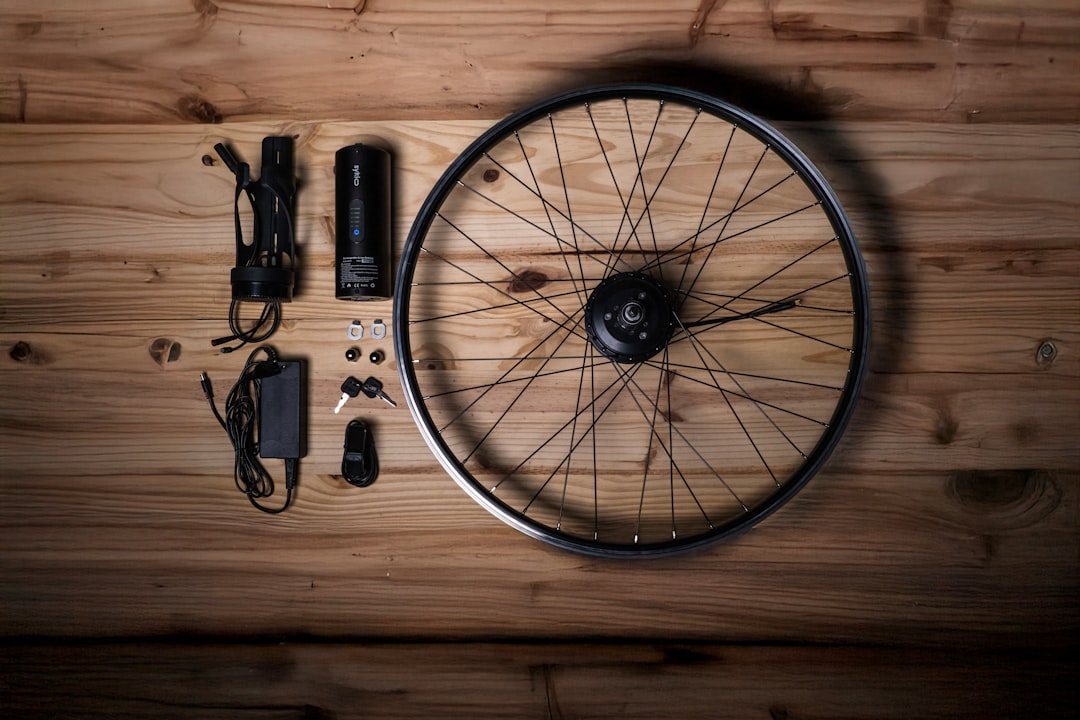
All this data is typically recorded by a compact, onboard logging unit, which can then be downloaded and analyzed post-ride. Some advanced systems also offer real-time telemetry, allowing engineers to monitor performance remotely during practice sessions.
From Raw Numbers to Race Wins: Applying the Insights
The real power of DAQ lies not just in collecting data, but in its meticulous analysis and application. For professional teams, this process is transformative:
-
Suspension Tuning: By correlating suspension activity with specific track sections, engineers can precisely dial in rebound and compression settings. For instance, data might reveal bottom-outs on a particular jump, indicating a need for stiffer compression, or excessive packing on repeated bumps, suggesting slower rebound is required. This data-driven approach replaces educated guesswork with empirical evidence.
-
Line Choice and Speed Management: GPS and speed data allow riders to review their lines through corners and technical sections. Comparisons between different runs, or even between teammates, can highlight faster approaches or areas where more speed could be carried. Braking pressure analysis reveals if a rider is braking too early, too hard, or for too long, enabling fine-tuning of this critical skill.
-
Power and Efficiency: Power meter data helps coaches understand a rider's energy expenditure, identify areas where power is being wasted, and tailor training to specific race demands. This is particularly vital in enduro or cross-country formats where sustained effort is key.
-
Bike Setup Validation: When a mechanic makes an adjustment – say, changing tire pressure or handlebar width – DAQ can provide objective data to confirm whether the change had the desired effect on performance and handling. This scientific validation accelerates the optimization process.
The Next Frontier: AI, Predictive Analytics, and Beyond
The evolution of data acquisition in mountain biking is far from over. The future promises even more sophisticated integration, potentially including real-time feedback systems integrated into helmets or displays, providing riders with immediate cues. Artificial intelligence and machine learning algorithms are also beginning to play a role, capable of identifying patterns in vast datasets that human analysts might miss. Predictive analytics could forecast optimal lines based on current track conditions or even suggest adjustments to bike setup mid-race based on physiological and mechanical inputs. The challenges, however, remain significant: managing data overload, ensuring sensor reliability in harsh conditions, and seamlessly integrating these technologies without distracting the rider.
Public Sentiment
Public perception of technology's role in professional sports is often bifurcated. On one hand, fans are captivated by the raw athleticism and daring displayed by mountain bikers, sometimes fearing that technology might diminish the human element. Yet, there's also an increasing recognition and appreciation for the 'behind-the-scenes' engineering and scientific rigor that contributes to peak performance. Coaches and engineers, on the other hand, almost universally laud data systems as indispensable tools. They provide unprecedented insights into performance bottlenecks, accelerate development cycles, and empower athletes to reach levels previously unattainable through intuition alone.
Conclusion
Professional mountain biking has evolved into a fascinating hybrid of human skill and technological precision. Data acquisition systems are no longer a novelty but an essential component of competitive strategy, pushing the boundaries of what's possible on two wheels. As the margins for victory shrink further, the symbiotic relationship between athlete, machine, and data will only deepen, cementing the sport's transformation from an intuitive art form into a rigorously analyzed science. The future of mountain bike racing will undoubtedly be written in code, graphs, and the relentless pursuit of objective truth.