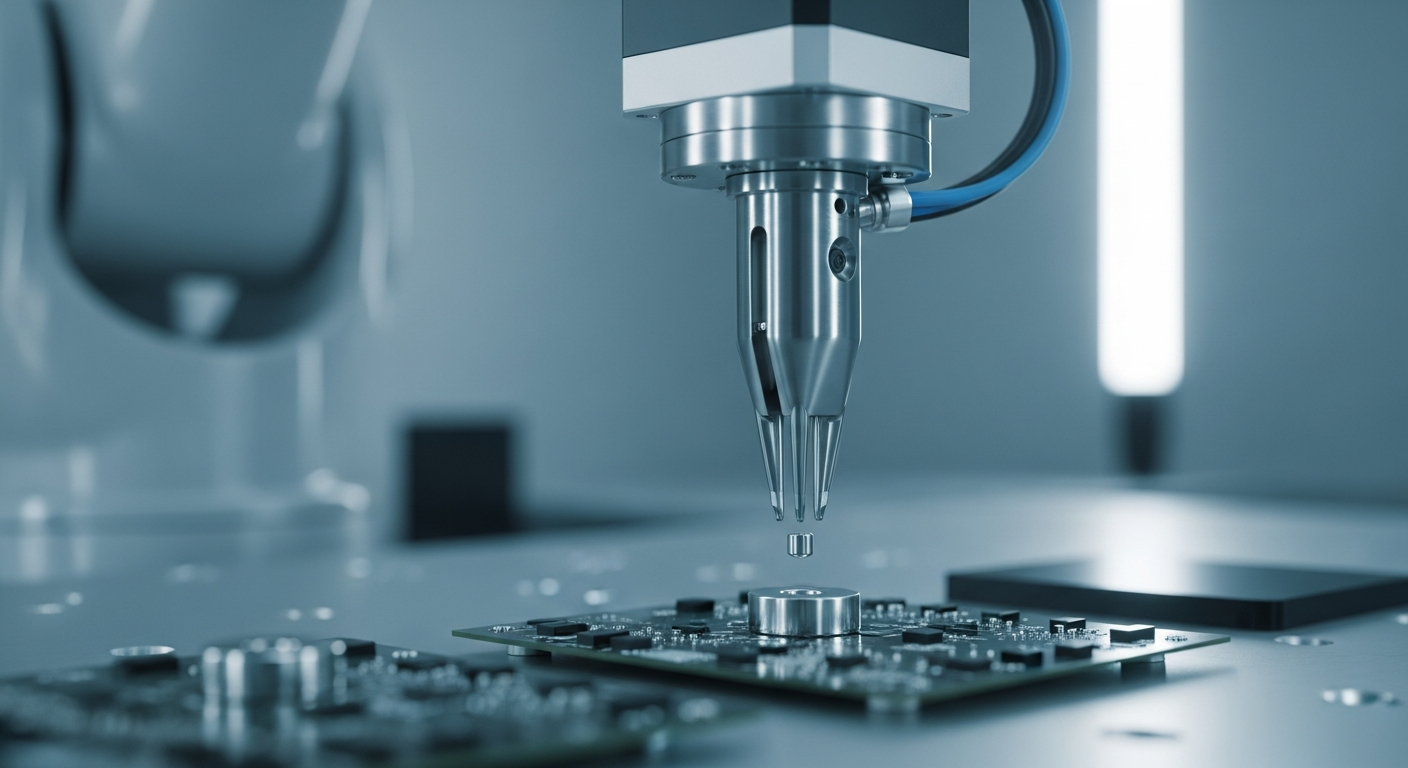
Automated Precision: EmGi's Auto-Reloading Magnet Dispenser Revolutionizes Assembly Lines
In an era where precision and efficiency define industrial prowess, the manual handling of minuscule components remains a significant bottleneck. The introduction of auto-reloading magnet dispensers, exemplified by [EmGi]'s latest innovation, marks a pivotal advancement, promising to revolutionize assembly lines by eliminating human error, enhancing operational speed, and ensuring unerring accuracy in magnet placement across critical manufacturing sectors. This development is poised to profoundly impact productivity and quality control in industries ranging from electronics to automotive.
Key Takeaways:
-
Enhanced Efficiency: Automates a historically manual, time-consuming process, significantly boosting throughput.
-
Precision and Quality: Guarantees correct polarity and placement every time, reducing defects and rework.
-
Reduced Labour Strain: Minimizes repetitive strain injuries and the need for highly dexterous manual operations.
-
Cost Savings: Leads to lower operational costs through reduced waste, faster production cycles, and optimized labour utilization.
-
Broader Industrial Application: Applicable across diverse high-precision manufacturing sectors, from electronics to medical devices.
-
Catalyst for Automation: Reinforces the drive towards fully automated assembly lines in the rapidly evolving industrial landscape.
The Enduring Challenge of Precision Magnet Placement
For decades, the delicate task of placing small magnets into assemblies has been a critical, yet often cumbersome, step in many manufacturing processes. Magnets, essential components in countless modern devices from smartphones to electric motors, demand not only precise physical positioning but also correct polarity to function as intended. Manual placement, while seemingly straightforward, is fraught with challenges. Operators face the twin perils of finger fumbling, which slows down production and increases waste, and the risk of incorrect polarity, leading to product defects that are costly to rectify. This manual bottleneck has long presented a paradox: vital for functionality, yet detrimental to efficiency and quality in high-volume production environments.
Evolving Solutions: From Manual Dexterity to Automated Assistance
The first significant step in addressing these challenges came with the introduction of basic magnet placement tools. These devices offered a dedicated mechanism to pick up and position magnets, often incorporating features to ensure correct polarity. They effectively reduced finger fumbling and improved initial placement accuracy. However, even with these tools, the operator still had to manually feed each magnet into the tool, interrupting the flow and limiting the potential for continuous operation. The dependency on manual feeding meant that the overall speed of the assembly line remained constrained by human reaction times and fatigue.
[EmGi]'s Leap Forward: The Auto-Reloading Dispenser
This is where [EmGi]'s auto-reloading magnet dispenser emerges as a game-changer. By integrating an automated feeding mechanism, [EmGi] has essentially eliminated the manual reload step, transforming the tool into a self-sufficient unit. Conceptually, the dispenser likely incorporates a hopper or magazine filled with magnets, which are then automatically sorted and fed, one by one, to the dispensing point. This continuous supply ensures that the tool is always ready for the next placement, enabling uninterrupted operation.
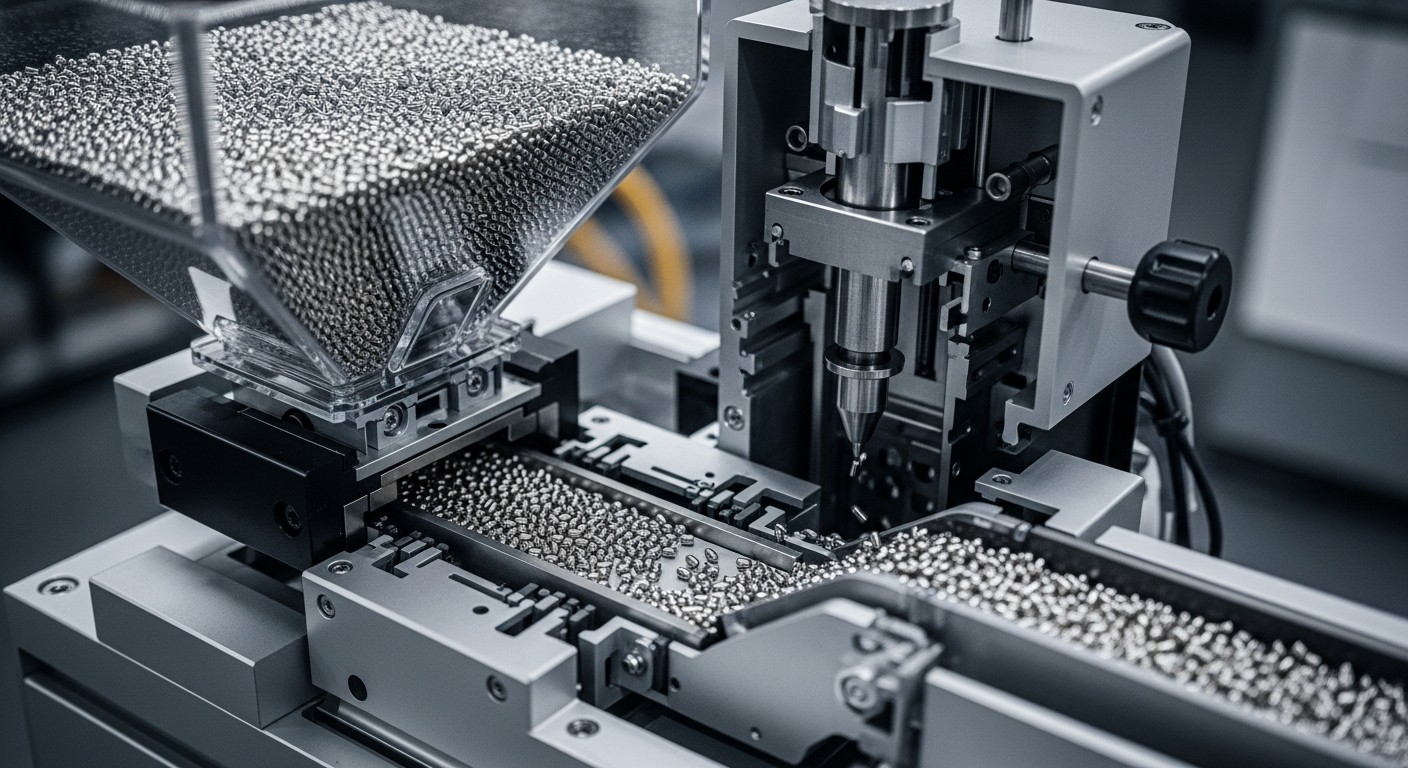
The immediate benefits are manifold: significantly increased throughput, as the cycle time per placement is drastically reduced; enhanced consistency, as the automated feed mechanism delivers magnets with uniform reliability; and further reduction in human error, as the system takes over the repetitive, detail-oriented task. For industries grappling with tight production schedules and stringent quality requirements, this innovation represents a substantial competitive advantage.
Industrial Resonance in India and Beyond
The implications of such an innovation are particularly pertinent for India's burgeoning manufacturing sector. With the "Make in India" initiative pushing for greater domestic production and higher value-added manufacturing, precision and automation are paramount. Industries like electronics manufacturing, where components are often miniaturized, will find immense value in [EmGi]'s dispenser. From circuit boards populated with tiny sensors to consumer electronics requiring meticulous assembly, the ability to place magnets rapidly and flawlessly can accelerate production cycles and improve end-product reliability.
Similarly, the automotive sector, rapidly moving towards electric vehicles and advanced driver-assistance systems (ADAS), relies heavily on precise magnet placement in motors, sensors, and various control units. The medical device industry, demanding uncompromising accuracy and sterility, can also leverage such technology to assemble intricate instruments and diagnostic equipment. This auto-feeding capability not only supports existing production needs but also paves the way for deeper integration into fully robotic and lights-out manufacturing environments.
Economic Upside: Efficiency, Quality, and Competitiveness
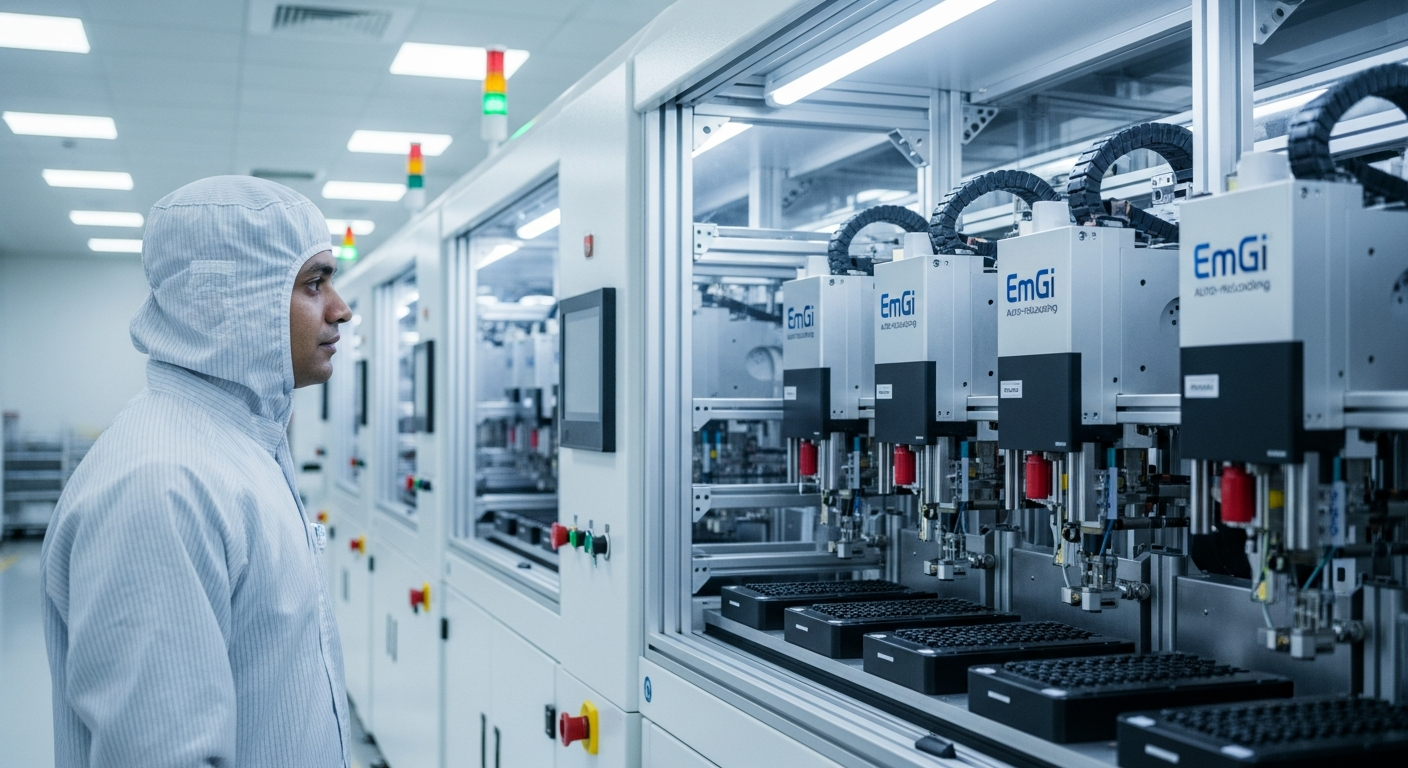
Beyond the immediate operational improvements, the auto-reloading magnet dispenser offers substantial economic benefits. Reduced labor intervention translates into lower operational costs and a potential reallocation of human capital to more complex, value-adding tasks. The sharp decline in defective products due to incorrect magnet placement directly impacts waste reduction and customer satisfaction. Furthermore, faster assembly times mean quicker market entry for products, giving companies a vital edge in competitive global markets. This innovation aligns perfectly with the broader industrial trend towards Industry 4.0, emphasizing smart, interconnected, and highly automated manufacturing processes.
Public Sentiment:
"This is precisely the kind of innovation we need," commented Ms. Priya Sharma, Production Manager at a leading electronics firm in Bengaluru. "Manual magnet placement is a pain point for us – it's slow, prone to errors, and tough on our staff. An auto-feeding system means we can finally scale production without compromising on our exacting quality standards."
Mr. Raj Mehta, an automation engineer from Pune, echoed this sentiment: "The time saved on reloading alone is immense. It's not just about speed; it's about the consistency and reliability that an automated feed brings. This frees up our operators to focus on quality control and oversight, rather than repetitive tasks."
"We've been looking for solutions to minimize repetitive strain injuries in our assembly line," shared Dr. Anil Kumar, Head of Operations at a medical device manufacturer. "If this dispenser delivers on its promise of continuous, hands-off feeding, it will be a major step forward for both our productivity and employee well-being."
Conclusion:
[EmGi]'s auto-reloading magnet dispenser represents more than just an incremental improvement; it signifies a strategic advancement in precision manufacturing. By automating one of the most persistent bottlenecks in assembly lines – the accurate and continuous placement of small magnets – this technology promises to unlock new levels of efficiency, quality, and economic competitiveness. For industries striving for the pinnacle of automation and demanding flawless execution, this innovation is not merely beneficial; it is poised to become an indispensable tool, driving the next wave of industrial productivity and setting new benchmarks for intelligent manufacturing.