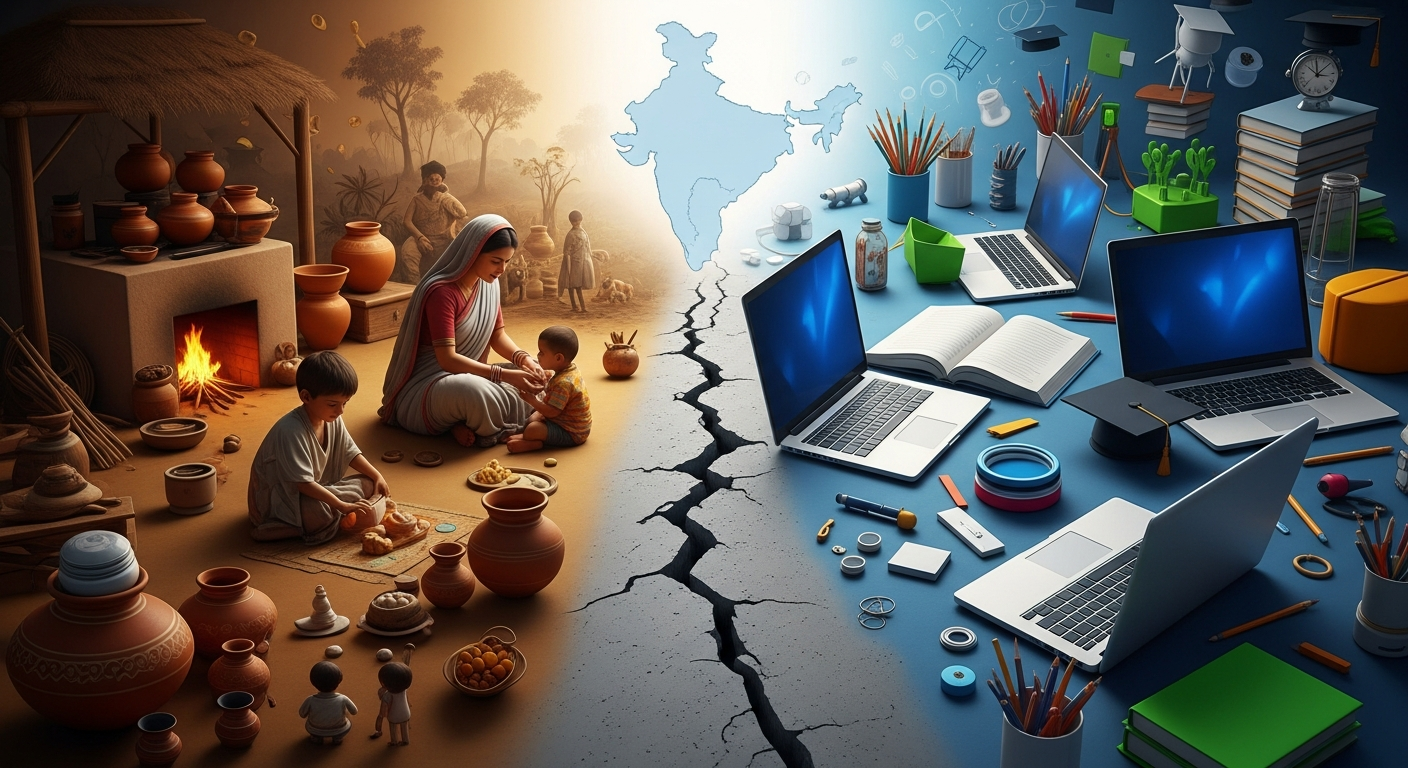
In a nation grappling with persistent regional and cultural divides, political rhetoric holds immense power to unite or fracture. The recent comments by DMK MP Dayanidhi Maran, seemingly contrasting the aspirations and roles of women in North India with those in Tamil Nadu, have thrown a harsh spotlight on this sensitive fault line, raising crucial questions about responsible leadership and the true spirit of national unity.
Key Takeaways
-
DMK MP Dayanidhi Maran's controversial comparison of North Indian and Tamil Nadu women's roles ignited a major political row.
-
Maran claimed North Indian women are told to stay home, cook, and bear children, while TN women are encouraged to study and pursue careers.
-
BJP leaders vehemently condemned the remarks as divisive, disrespectful to Indian culture, and lacking common sense.
-
DMK defended Maran, stating his intent was to motivate Tamil Nadu women and highlight the state's focus on empowerment and educational progress.
-
The incident underscores the growing regional friction and the weaponization of identity politics in India.
The Speech That Stirred a Storm
During a laptop distribution event at Quaid-E-Millath Government College for Women in Chennai, DMK MP Dayanidhi Maran, a four-time MP, delivered remarks that quickly escalated into a national political firestorm. Addressing students, Maran starkly contrasted the perceived expectations for women in North India with those in Tamil Nadu.
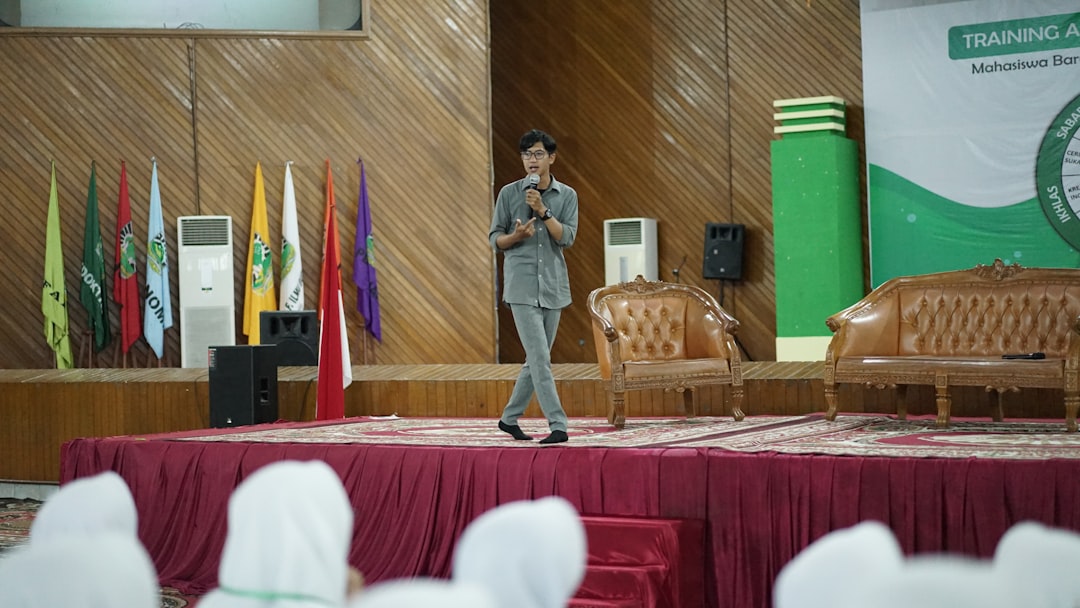
"Our girls ought to be confident and proud with a laptop, whether you attend an interview or pursue postgraduation. That confidence is in Tamil Nadu where we ask girls to study and study. What do they say in the North? Girls? Don't go to work, be at home, be in the kitchen, bear a child, that's your job," Maran stated directly. He then linked Tamil Nadu's focus on education to its identity as a "Dravidian state" and its economic prosperity, claiming global companies are attracted to Chennai due to the educated populace, fluent in both Tamil and English. This rhetoric, delivered amidst the celebration of women's education, immediately drew sharp criticism for its divisive undertones.
Deputy Chief Minister Udhayanidhi Stalin, who distributed laptops under the 'Ulagam Ungal Kaiyil' scheme at the same event, focused his speech on the importance of women's education and their contribution to society, seemingly oblivious or intentionally distanced from Maran's contentious framing.
A Tale of Two Defenses and Denials
The backlash was swift and intense. BJP leaders condemned Maran's comments as "unfortunate" and "divisive." Anila Singh, a BJP leader, expressed frustration, stating, "This divisive politics is not going to work. He has forgotten that he lives in Bharat and Bharat worships Shakti. If he thinks that Shakti can be divided into North, South, East and West, he doesn't understand our culture." Narayanan Thirupathy, BJP spokesperson in Tamil Nadu, called Maran's remarks an abuse of North Indian people, questioning his common sense and highlighting a pattern of such rhetoric from the DMK.

Conversely, the DMK quickly moved to defend Maran. DMK's TKS Elangovan argued that the focus was on women's empowerment, stating, "It depends on the party that is ruling the state. Here in Tamil Nadu, we fought for women and empowered them. We gave them education. We gave them employment. In the north, there is nobody to fight for the women. That's all." DMK sources, keen to control the narrative, explained Maran's intent was to motivate women students, proudly noting that "Tamil Nadu alone accounts for more than 40% of the industrial women workforce in the country." While acknowledging the comparison might be "debatable," they insisted there was a "message" intended.
Beyond the Rhetoric: What Does it Mean for National Unity?
This incident is more than just a political spat; it's a stark reminder of the deep-seated regional tensions that can be easily inflamed by careless or calculated rhetoric. While celebrating a state's achievements in education and women's empowerment is commendable, doing so by drawing demeaning comparisons to other regions risks undermining the very fabric of national unity. It creates an 'us vs. them' narrative that can foster resentment and division, rather than constructive dialogue and shared progress.
Such comments from public figures, especially during events meant to inspire, often do more harm than good. They trivialize the diverse realities of women across India, ignoring local efforts and achievements, and reduce complex socio-economic issues to simplistic, politically charged statements. For a nation striving for equitable development, leaders must transcend narrow regionalism and focus on solutions that benefit all citizens, rather than widening existing fissures.
Public Sentiment
Synthesized from various online platforms and media reactions, the public sentiment often reflects frustration and dismay:
-
"It's tiring to constantly hear politicians pit regions against each other. Women everywhere deserve respect and opportunities, regardless of where they live."
-
"Maran's comments feel like a cheap shot, ignoring the diverse realities across India. Empowerment shouldn't come at the cost of insulting other communities."
-
"While Tamil Nadu's focus on education is commendable, framing it by denigrating other regions is unacceptable and only creates more friction. We need unity, not division."
Conclusion
The controversy sparked by DMK MP Dayanidhi Maran's remarks serves as a critical informational moment, highlighting the delicate balance between regional pride and national cohesion. While the intent, as claimed by the DMK, was to motivate and celebrate Tamil Nadu's progress in women's empowerment, the chosen method of comparison has proven deeply divisive and counterproductive. In a pluralistic democracy like India, responsible leadership demands a nuanced approach that champions progress without resorting to rhetoric that disparages or alienates. The path to genuine empowerment for all Indian women lies in collaborative efforts and mutual respect, not in creating an artificial chasm between North and South.