The Persistent Appeal of Morse and the Modern Dilemma
Morse code, a cornerstone of early telecommunications, retains a fascinating place in history and specialized modern applications, from amateur radio to emergency communication. Its elegance lies in simplicity – a sequence of dots and dashes – yet its manual transcription demands considerable concentration, skill, and patience. For those who encounter it regularly, or even occasionally, the act of decoding can quickly shift from engaging to profoundly tedious. This very friction between historical utility and modern demands often ignites the spark of innovation.
The Architect of Automation: '101 Things' and the Pi Pico
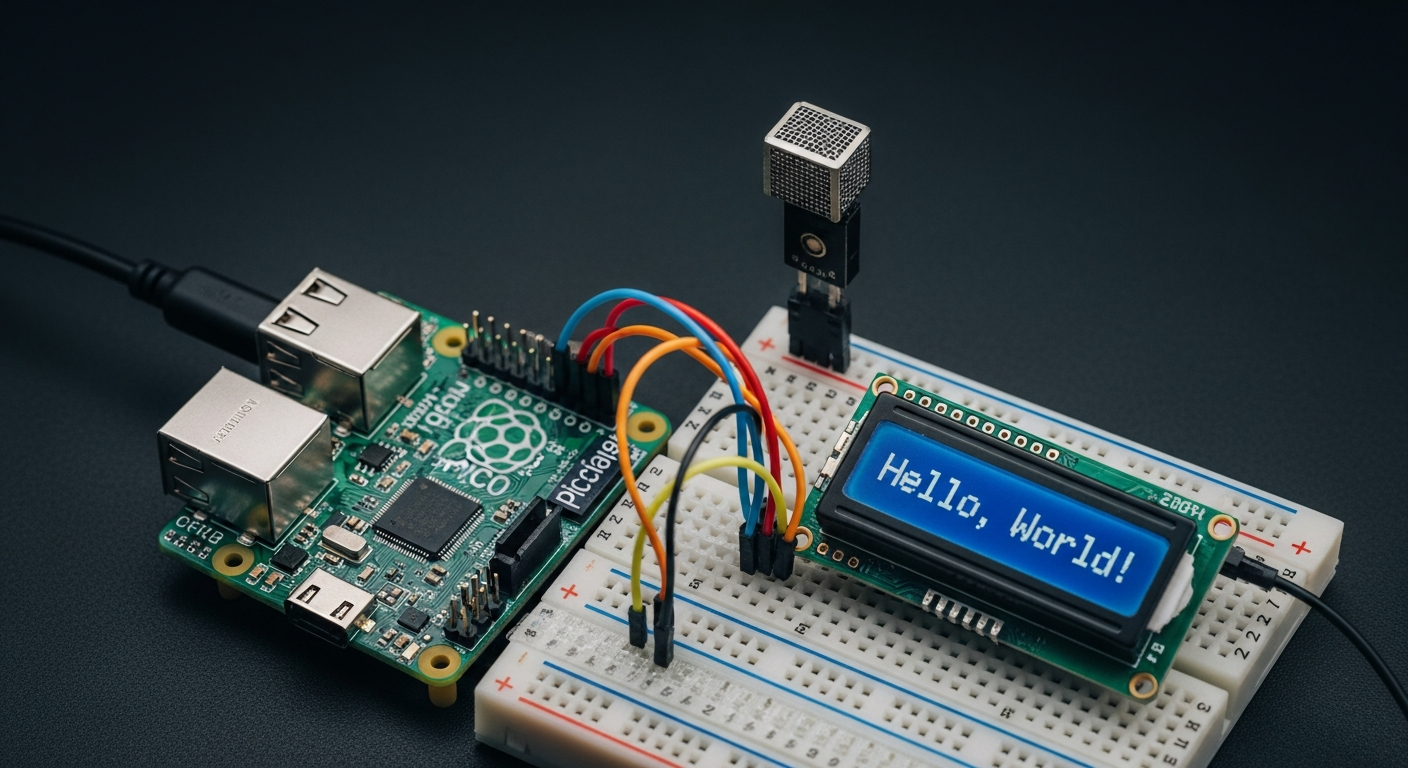
It was precisely this challenge that prompted a developer, known pseudonymously as '[101 Things]', to seek an automated solution. Rather than endure the repetitive task of copying Morse code manually, they embarked on a project to delegate the chore to a machine. The chosen tool for this venture? The Raspberry Pi Pico – a compact, low-cost microcontroller renowned for its versatility and robust processing power, especially suited for embedded applications.
The Pi Pico’s appeal for such a task is multifold: its affordability makes it an accessible platform for experimentation; its small form factor allows for integration into various setups; and its dual-core ARM Cortex-M0+ processor provides ample grunt for signal processing and real-time interpretation. These attributes make it an ideal candidate for projects demanding precision without the overhead of a full-fledged single-board computer like a standard Raspberry Pi.
From Signal to Script: How It Works
The core challenge in automating Morse code transcription lies in accurately distinguishing between dots (short signals), dashes (long signals), and the crucial spaces that separate characters and words. The Pi Pico system likely ingests audio signals (via a microphone) or optical signals (via a photodiode, if reading light-based Morse) and then processes these inputs.
The microcontroller's firmware, written in MicroPython or C/C++, would then employ algorithms to:
-
Detect Signal Onset and Offset: Identifying when a sound or light pulse begins and ends.
-
Measure Duration: Precisely timing the length of each 'on' signal (dot or dash) and 'off' signal (inter-element, inter-character, or inter-word spaces).
-
Pattern Recognition: Differentiating between dots and dashes based on their relative durations, and then assembling these into known Morse character patterns.
-
Output Translation: Converting the recognized Morse characters into human-readable text, often displayed on an LCD screen, sent to a serial monitor, or even logged to a file.
This process, while seemingly straightforward in description, involves careful calibration and robust error handling to account for variations in signal quality and transmission speed. The '101 Things' project demonstrates a successful implementation of these principles, turning raw electrical or acoustic signals into coherent text through the judicious application of embedded computing.
Beyond the Dot and Dash: Implications for DIY & Industry
While the immediate practical utility for many might be limited to niche interests, the broader implications of this project are significant. It underscores a powerful trend: the democratization of advanced automation. What once required specialized equipment and expertise can now be achieved with readily available, low-cost hardware and open-source software tools.
This Pi Pico Morse code interpreter is more than just a clever gadget; it's a microcosm of the maker movement at large. It exemplifies how personal inconvenience can be a powerful catalyst for innovative problem-solving, driving individuals to develop bespoke solutions that are often more efficient and tailored than commercial alternatives. Furthermore, the principles demonstrated here — real-time signal processing, pattern recognition, and robust embedded control — are directly applicable to a vast array of industrial and consumer applications, from data logging in remote sensors to smart home automation systems.
Projects like these inspire further exploration, encouraging enthusiasts and professionals alike to consider how compact, efficient microcontrollers can tackle seemingly complex challenges, ultimately enhancing productivity and accessibility across various domains.
Public Sentiment
The public's reaction to such projects often oscillates between admiration for ingenuity and a pragmatic appreciation for problem-solving. Comments frequently highlight the 'why didn't I think of that?' sentiment, coupled with praise for the accessibility of modern electronics. Phrases like "Brilliant application of a Pi Pico!" and "Turning a tedious task into a fascinating project – that's real innovation" are common. There's also a recurring theme of inspiration, with many expressing how such builds spark ideas for their own automation challenges, reaffirming the vibrant, collaborative spirit of the global maker community.