Key Takeaways
-
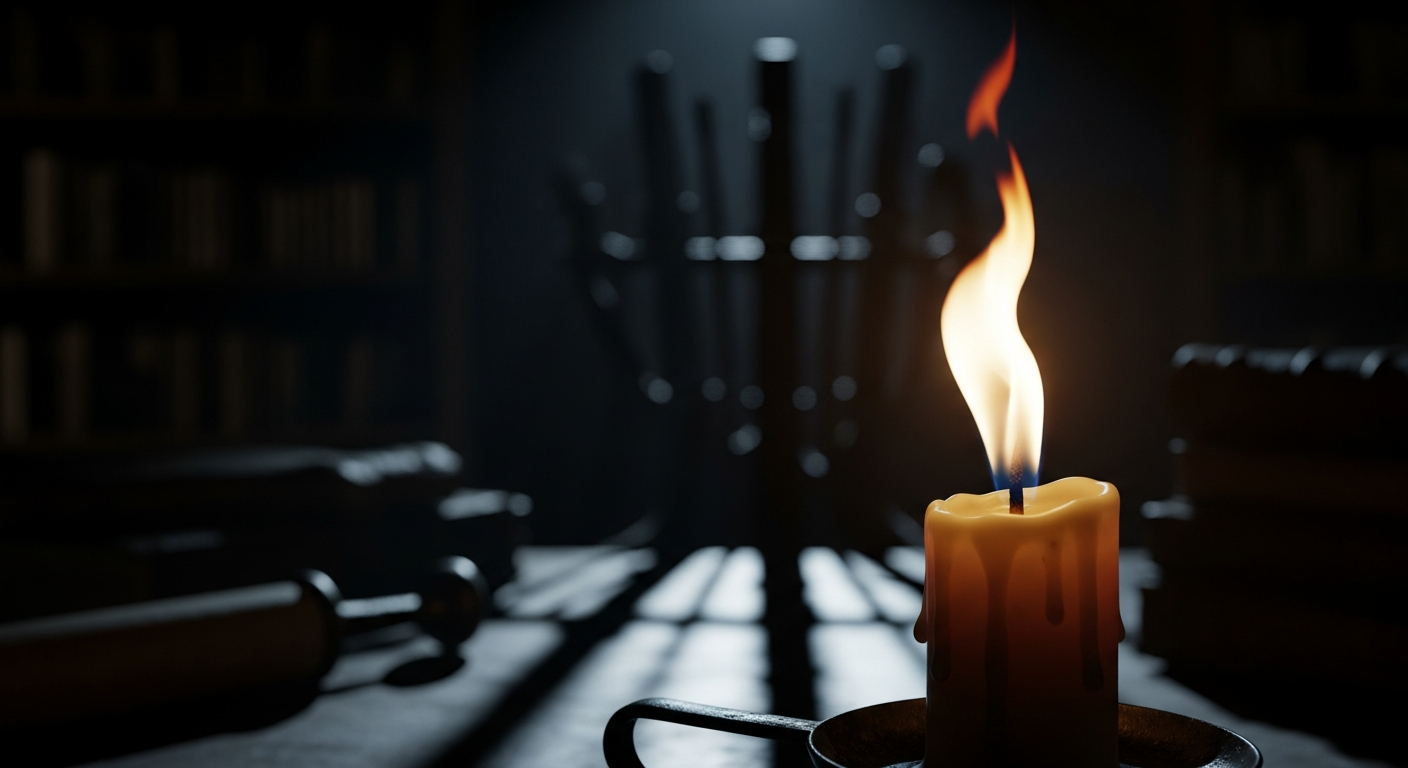
For 2,000 years, humanity relied almost exclusively on open flames (candles, oil lamps) for light after sundown.
-
This period predates fossil fuels, meaning lighting technology was rudimentary, inefficient, and remarkably hazardous.
-
Innovation in nocturnal illumination was, by modern standards, breathtakingly slow, epitomizing a 'if it ain't broke, just barely illuminate it' philosophy.
-
Our ancestors endured persistent dimness, smoky interiors, and a constant, low-level risk of accidental incineration, all in the name of seeing just enough.
The Ancient Glow-Up (Or Lack Thereof)
[FEATURED]
For millennia, after the sun begrudgingly dipped below the horizon, our forebears had two primary options for avoiding existential darkness: a wick in a pool of fat, or a wick in a pool of oil. Truly, an embarrassment of riches for the pre-electrical age. This remarkably consistent technological plateau, spanning from roughly 3000 BCE well into the 18th century CE, showcases humanity's unwavering commitment to incremental, rather than disruptive, progress in the realm of domestic illumination. One must marvel at the sheer dedication to mediocrity, the unwavering commitment to a light source that could simultaneously illuminate your parchment and set fire to your drapes.
While the concept of harnessing fire for light was, admittedly, a groundbreaking achievement for early hominids, its subsequent refinement often resembled less a sprint and more a leisurely stroll through a dimly lit meadow. The humble candle, a stick of rendered animal fat or wax with a fibrous core, and the oil lamp, a simple vessel holding oil and a wick, were the pinnacle of nocturnal engineering for longer than the Roman Empire endured.
The Luminary Limitations: A Constant Battle with Dimness and Danger
These weren't lumens, they were 'lumen-ish' — barely enough to read by without developing severe eyestrain, let alone perform complex surgery. The typical output of an early candle or oil lamp hovered around a single lumen, a number so minuscule that it makes your smartphone's flashlight look like a supernova. Contrast this with a modern LED bulb, which casually spits out hundreds, if not thousands, of lumens, and you begin to grasp the sheer visual deprivation our ancestors regularly endured.
Beyond the profound inefficiency, there was the minor inconvenience of living in what often smelled like a perpetually smoldering campfire. The air quality of an ancient Roman villa after dark likely rivaled a modern-day campfire, albeit one where everyone was trying to write poetry. And, of course, every evening was a low-stakes gamble against spontaneous combustion. The term 'fire safety' was, for all intents and purposes, 'don't fall asleep with a lit taper near the hay.'

A Flimsy Beacon of Progress: When Innovation Takes a Holiday
Two millennia. Think about that. That's enough time for entire empires to rise and fall, philosophies to be born and die, and yet, our primary nightlight remained stubbornly, gloriously similar. One could argue this period was less about innovation and more about collective resignation. Was it a lack of ingenuity? A general contentment with flickering obscurity? Or perhaps the truly innovative minds were all too busy inventing new ways to irrigate crops or forge swords to bother with the triviality of seeing one's dinner plate clearly?
The improvements that did occur were often comically minor: a slightly better wick, a less drippy wax, or a lamp design that minimized, but never entirely eliminated, the ever-present smoke plume. It wasn't until the 18th and 19th centuries, with the advent of whale oil lamps and eventually kerosene, that truly significant advancements began to illuminate the path forward – ironically, paving the way for the fossil fuel era that would make such rudimentary solutions obsolete.
The Modern Paradox: Blinding Light and Historical Hindsight
Today, we flick a switch and bask in a glow so powerful it could probably guide an intercontinental ballistic missile. We complain when our smartphone battery dips below 50%, yet our ancestors were thrilled if their candle lasted through a particularly lengthy epic poem. Our smart homes adjust their luminosity based on our mood, while our forebears just hoped their candle wouldn't blow out in a sudden gust of wind.
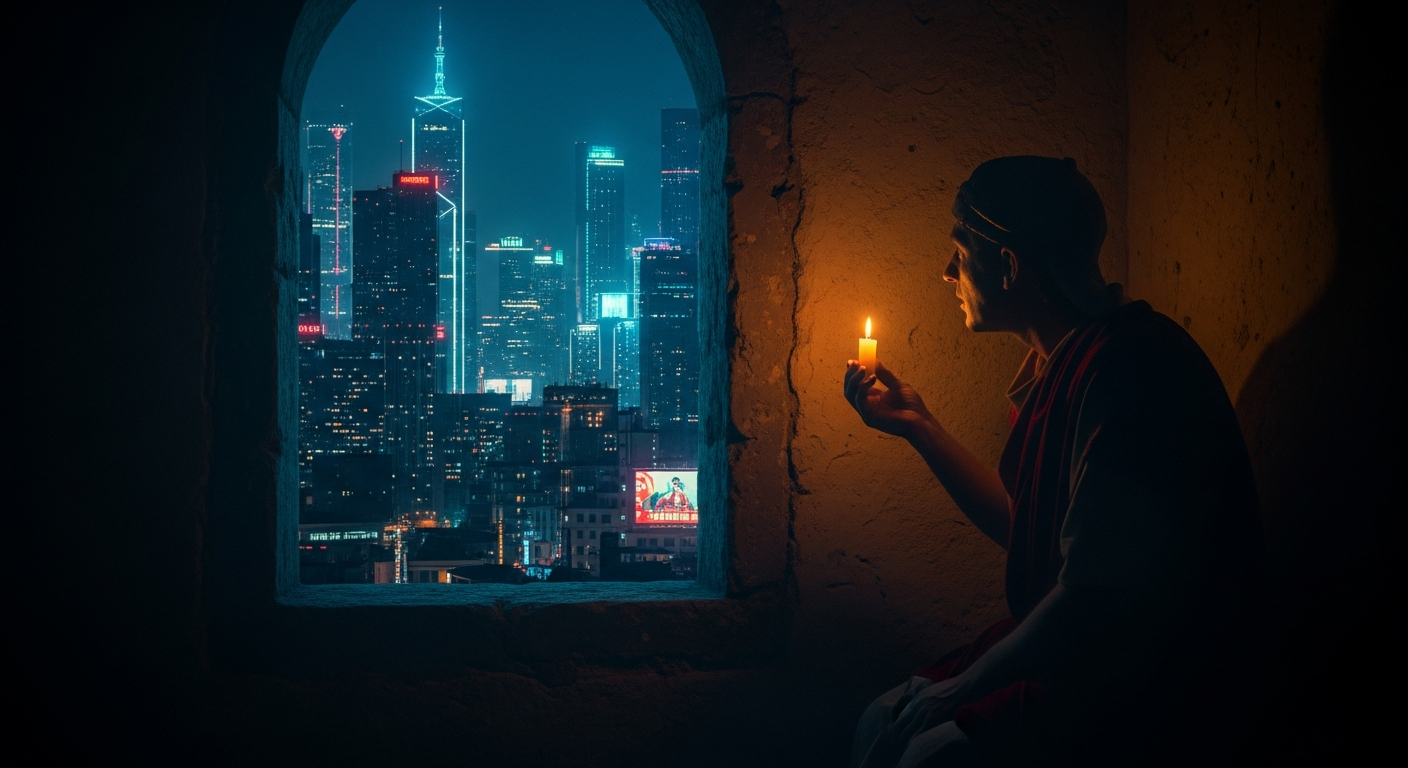
It truly makes one appreciate the sheer audacity of our modern complaints about slow Wi-Fi, considering our forebears often couldn't even find their Wi-Fi router in the dark. The journey from a lone, sputtering flame to the ubiquitous, instant illumination we now take for granted is not just a technological narrative; it's a testament to humanity's remarkable capacity for both enduring inconvenience and, eventually, solving it with often overwhelming efficiency.
Public Sentiment
Across the ages, the sentiment regarding these ancient illuminators was consistently one of grudging acceptance. One ancient Roman blogger, 'Lucius_Light_Lover,' reportedly lamented, 'Is it too much to ask for a light that doesn't constantly threaten to burn down my villa, or at least one that doesn't smell like rancid animal fat?' A medieval serf, interviewed posthumously, is quoted as saying, 'If only I had a shilling for every time I stubbed my toe on a goat in the dark, I'd have enough shillings to... well, probably buy another candle.' A Renaissance scholar, known only as 'The Dark Knight,' supposedly mused, 'My greatest invention? A bigger window. For natural light, you see. The alternatives are just dreadful.'
Conclusion
While we may chuckle at the quaint inefficiency of a candle-powered world, it serves as a powerful, albeit dimly lit, testament to human endurance, adaptation, and perhaps, a stubborn refusal to rush things. So, next time your smart bulb connects a millisecond too slowly, spare a thought for those who genuinely thought a flickering flame was the pinnacle of home automation. They truly lived in a darker age, in more ways than one.