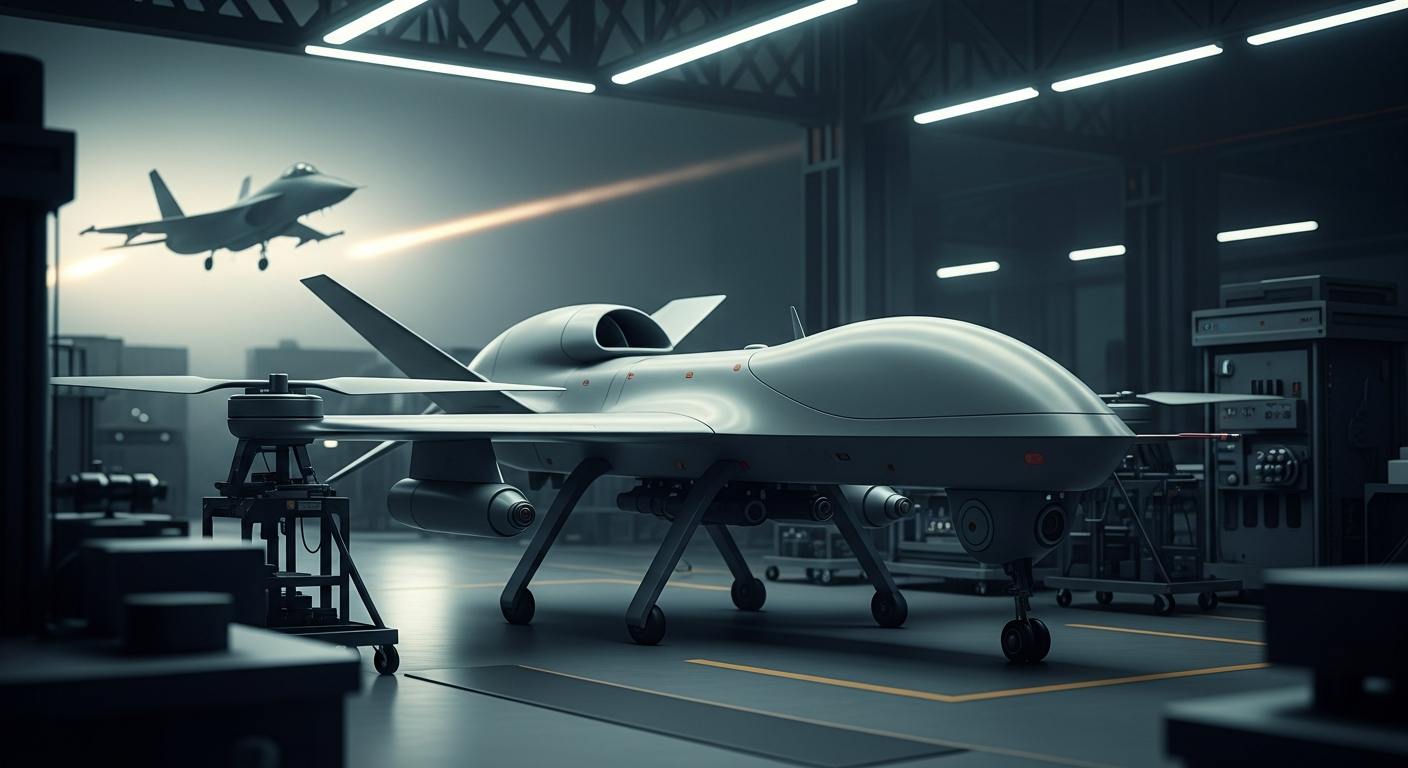
The landscape of corporate strategic planning has long been characterized by an almost dogmatic adherence to metrics: proximity to talent, logistical efficiencies, tax incentives, and the ever-elusive 'synergy.' Yet, into this well-trodden terrain steps Anduril Industries, the defense technology firm led by founder Palmer Luckey, with an announcement that, while fiscally substantial, introduces an entirely new, and frankly exhilarating, dimension to the decision-making process. The establishment of a major campus in Long Beach, the very crucible of Luckey's formative years, was not, it seems, primarily driven by the standard lexicon of corporate expansion. Instead, according to Luckey himself, the paramount allure – the 'coolest thing' – was the presence of fighter jets.
The Sonic Boom as Strategic Imperative
This declaration is, at minimum, a refreshingly candid departure from the sanitized corporate press releases typically disseminated in such circumstances. It implies a strategic pivot where the intangible, the awe-inspiring, and indeed, the purely aesthetic, can hold sway over what might otherwise be deemed pragmatic considerations. One might envision future board meetings where proposals for new facilities are evaluated not merely on CAPEX and operational expenditures, but on a 'Coolness Index,' potentially factoring in proximity to supersonic airframes or the likelihood of witnessing aerial maneuvers during lunch breaks. Long Beach, it appears, is not merely a logistical hub; it is an arena for profound, visceral experience, a veritable amphitheater of aerospace prowess.
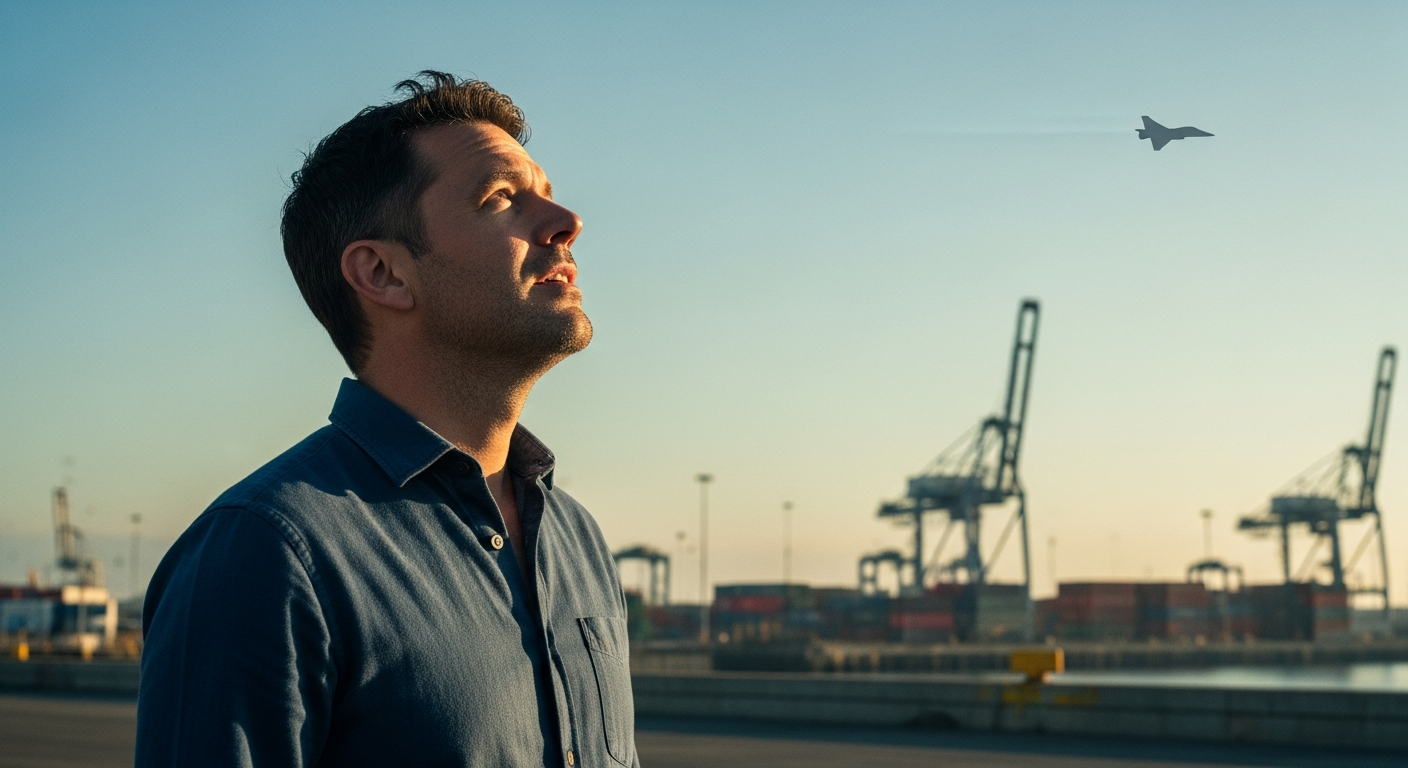
Such an approach challenges conventional wisdom. Economists and urban planners, long accustomed to modeling optimal locations based on supply chain integration and workforce demographics, may now need to integrate variables such as 'proximity to afterburner' or 'frequency of sonic boom events.' One can almost hear the revised algorithms humming: Maximize shareholder value... subject to adequate jet-watching opportunities. This isn't merely a quaint personal preference; when articulated by the founder of a significant defense contractor, it retroactively imbues the entire expansion with an almost romantic, albeit militarily-tinged, rationale. It suggests that for some, the essence of defense innovation is not merely utilitarian, but performative – a spectacle to be appreciated, perhaps even inspiring the very engineers and developers tasked with crafting the next generation of autonomous systems.
The Long Beach Litmus Test: Nostalgia Meets National Security
Long Beach itself, beyond its undeniable strategic location and rich aerospace history, now assumes a new significance. It is not just the site of a new campus; it is the backdrop for a specific, personalized vision of technological advancement. The town where Luckey grew up transforms from a mere geographical coordinate into a sentimental anchor, where the echoes of childhood fascination with powerful machinery can now be professionally actualized. This confluence of personal history and industrial future is compelling, if slightly disorienting. It posits a world where corporate headquarters are not just built where it makes logical sense, but where the heart (and ear) of the founder feels most engaged. One wonders if future site selection committees will be required to administer Rorschach tests or psychological profiles to determine a founder's deepest, most primal enthusiasms.
Anduril, known for its cutting-edge autonomous defense systems, now appears to be integrating a unique 'environmental inspiration' into its corporate ethos. The company's innovative spirit, often lauded for its ability to attract top talent from Silicon Valley, may now also be attracting those who appreciate the symphony of a F-18 performing a low pass. This could, paradoxically, be a genius move. In a competitive talent market, perhaps the allure of high-octane aerospace theater is the ultimate differentiator, trumping even comprehensive benefits packages or equity options. Who needs a foosball table when you have an F-35? It is a bold gambit, positioning visceral spectacle as a non-negotiable amenity.
Public Sentiment: Echoes of the Afterburner
The public's reaction to this revelation has been, predictably, a cocktail of fascination, bemusement, and an almost reluctant admiration for such unvarnished candor.
-
"Finally, a CEO who tells it like it is! Forget 'synergy' and 'market opportunities.' Give me jets!" – A self-proclaimed 'Aviation Enthusiast' from Pasadena
-
"While traditional business models might question the quantifiable ROI of 'jet coolness,' one cannot deny the motivational power of a deeply personal connection to one's operational environment. A truly disruptive approach to HR, perhaps?" – Dr. Eleanor Vance, Organizational Psychologist
-
"I just hope they don't block my view of the planes from the pier. Long Beach has its priorities, and jets are definitely up there." – A Long Beach resident
Conclusion: The Future is Loud (and Cool)
Anduril's expansion into Long Beach, underscored by Palmer Luckey's refreshingly uncorporate enthusiasm for fighter jets, presents a compelling case study. It suggests that the future of industrial development, particularly in high-stakes sectors like defense tech, might not be solely dictated by spreadsheets and logistical flowcharts. Instead, it might also be shaped by the deeply personal, the viscerally thrilling, and the undeniably 'cool.' As the company establishes its foothold, one can only anticipate that the rhythm of innovation within its new campus will be punctuated, and perhaps even inspired, by the regular, magnificent roar of jets overhead. The message is clear: when charting the course of disruptive technology, sometimes the most compelling data point isn't on a spreadsheet, but in the sky. It is, after all, very 'cool.'